

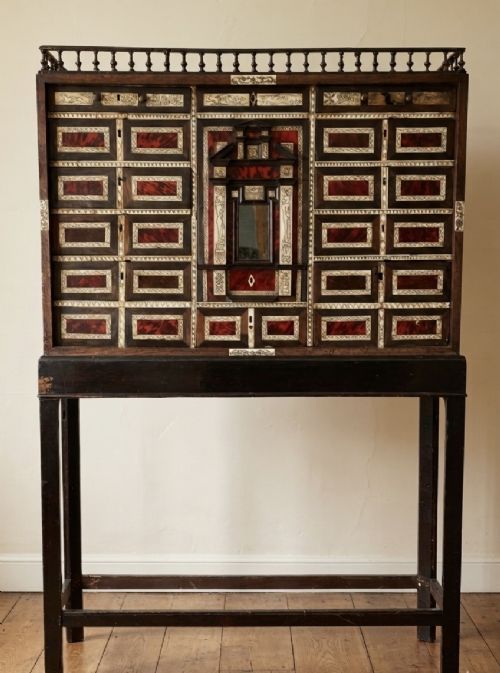


Ebony Inlaid Chest
An ebony inlaid chest brings dark timber and crisp contrasting borders together into a striking focal point for any traditional room.
Ebony Inlaid Chest
The ebony inlaid chest groups together small tea caddies, larger commodes, and substantial storage trunks built over several centuries. Buyers searching this phrase encounter pieces ranging from Regency mahogany caddies to seventeenth-century Flemish cabinets and nineteenth-century colonial trunks.
Mahogany and satinwood form the main body for the majority of these pieces, while teak and walnut appear in colonial and revival examples. The dark hardwood inlay creates sharp geometric or linear contrast against the lighter background timbers.
How they were made
Cabinetmakers constructed the carcase from solid timbers such as mahogany, teak, or walnut, adding panels of contrasting woods. They cut shallow channels into the primary surface to receive strips of ebony, bone, or tortoiseshell.
Brass mounts and handles reinforced the corners and drawers of larger chests and trunks, while specialised tea caddies received fitted internal compartments. Artisans secured the decorative elements with traditional animal glues and fine pins.
Tea caddies often retain faint aromas of stale black tea trapped inside their wooden compartments for centuries.
What varies in quality
The precision of the inlay work marks the distinction between standard workshop production and superior craftsmanship. Cleanly fitted joints without excessive filler show the skill of the original maker.
The selection of the primary timber grain and the complexity of the contrasting borders determine the overall standing of the piece. Well-balanced proportions and original hardware elevate the desirability of a chest.
The Ebony Inlaid Chest Glossary
- Ebony
- A dense, black hardwood prized for its dark colour and smooth finish when polished. It provides a sharp visual contrast against lighter timbers.
- Inlay
- A decorative technique where pieces of contrasting material are inserted into recessed portions of a base timber. This creates a flush, patterned surface.
- Commode
- A low chest of drawers or cabinet dating primarily from the eighteenth and nineteenth centuries. These pieces often feature decorative line inlay.
- Boulle
- A method of marquetry using brass and tortoiseshell developed in seventeenth-century France. Pieces utilising this technique display elaborate metallic patterns.
- Line inlay
- Thin strips of contrasting wood or bone set into narrow channels along the edges of furniture. It frames the panels and defines the structural lines.
Ebony Inlaid Chest: Frequently Asked Questions
How do I care for my chest?
Keep the timber away from direct heat sources and sudden humidity changes to prevent the wood from splitting. Apply a suitable wax polish occasionally to nourish the surface.
Avoid using harsh chemical sprays or abrasive cloths that might damage the delicate ebony and bone details. Gentle dusting with a dry microfibre cloth is sufficient for daily maintenance.
Where were these chests made?
The pieces originate from various regions including Britain, continental Europe, and British colonial territories such as Ceylon and India. Each region utilised local timbers alongside imported ebony.
Local workshop traditions heavily influenced the construction methods and decorative motifs found on individual items. This geographic spread creates significant stylistic diversity within the category.
How do I identify a Regency period piece?
Regency items typically feature clean neoclassical proportions, dark mahogany carcases, and precise ebony line inlay. Brass feet and ring handles are common decorative additions from this era.
Check the secondary timbers inside the drawers to confirm the period construction methods. Georgian and Regency pieces generally display hand-cut dovetails and older fixings.
What is a tea caddy?
A tea caddy is a small box designed to store precious tea leaves safely under lock and key. Wealthy households displayed them prominently in reception rooms.
Inside, you often find fitted wooden compartments or foil-lined canisters for different tea varieties. The exterior decoration mirrored the larger furniture styles of the period.