


Ceylonese Ebony Furniture
Ceylonese ebony furniture comprises nineteenth-century colonial seating and tables shaped from dark exotic timbers for British residents abroad.
Ceylonese Ebony Furniture
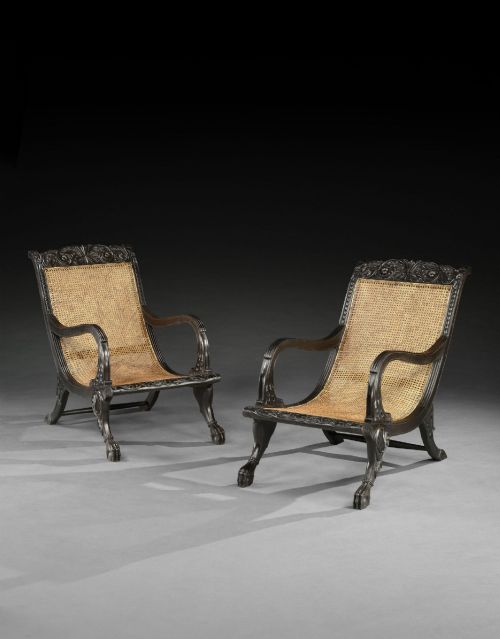
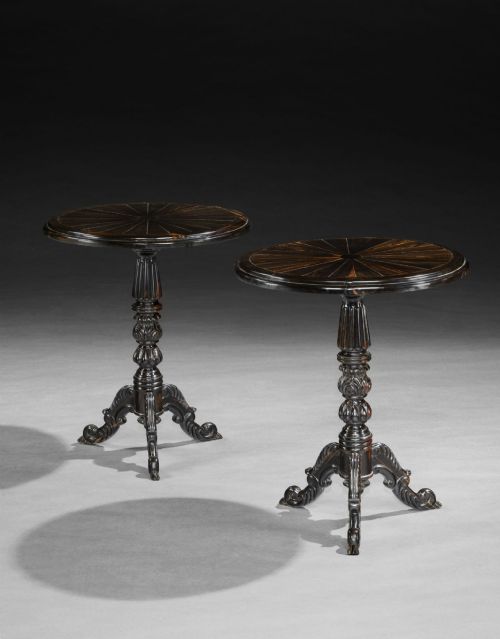
Ceylonese ebony furniture encompasses nineteenth-century British colonial pieces produced in Ceylon, including armchairs, centre tables, occasional tables, settees, and chests. These forms combine dense tropical hardwoods with domestic room functions tailored for colonial officials and merchants.
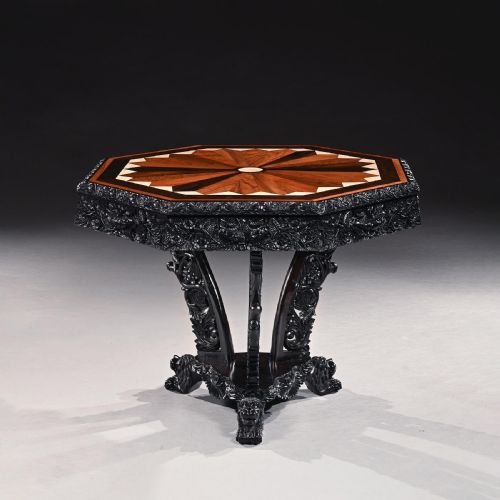
The version most commonly encountered on this page is the nineteenth-century occasional or centre table, alongside carved solid ebony armchairs and side chairs. Many examples incorporate secondary timbers or geometric parquetry alongside the primary black wood.
Originating predominantly from the nineteenth century, these objects bridge British Regency tastes with South Asian woodworking traditions. Pieces often reflect specific regional output, such as work associated with the Galle district.
How they were made
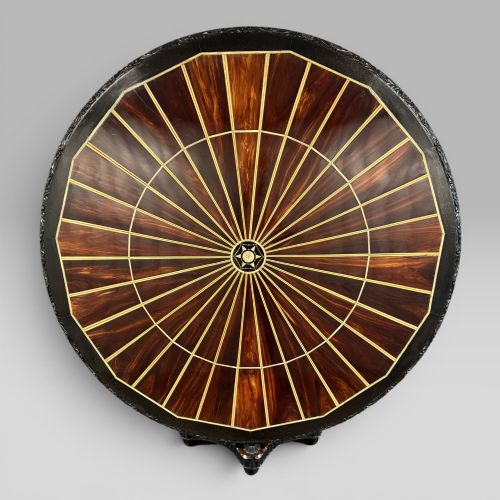
Makers utilised solid ebony alongside contrasting timbers like calamander, satinwood, and exotic specimen woods to create visual depth and striking grain variation. Dense dark wood serves as the structural base for intricate hand-carved surface ornament.
Construction techniques integrate traditional British furniture forms with local joinery methods suited to tropical hardwoods. Secondary materials such as bone inlay and brass hardware appear on select tables and chests.
Cane seating elements and turned components demonstrate specialised lathe work and weaving practices utilised in nineteenth-century colonial workshops.
Form types recorded across these listings include centre tables, armchairs, side tables, occasional tables, settees, sofas, chests, coffers, and etageres.
What varies in quality
The standard of a piece rests upon the crispness of the hand-carving and the selectivity of the timber matching. Superior examples display deeply undercut foliage and figures that retain sharp definition across solid ebony surfaces.
Material combination dictates the visual hierarchy, where well-judged contrasts between ebony, satinwood, and specimen woods elevate a simpler form. The structural integration of secondary elements like bone inlay or turned legs separates proficient regional output from standard utility work.
The Ceylonese Ebony Furniture Glossary
- Calamander
- A heavy, durable South Asian timber featuring distinctive dark brown and light brown wavy grain. It often contrasts against darker ebony surfaces on tabletops.
- Specimen wood
- An assortment of various native or exotic timbers arranged in geometric patterns or panels. This technique showcases the colourful variety of regional forests.
- Etagere
- A set of open shelves supported by columns or pillars used for displaying small objects. Nineteenth-century examples in colonial contexts often feature exotic woods.
- Porcupine sofa
- A nineteenth-century seating form associated with Ceylonese manufacture. The name derives from the decorative arrangement of turned wooden spikes or quill-like spindle work.
Ceylonese Ebony Furniture: Frequently Asked Questions
What is Ceylonese ebony furniture?
It is nineteenth-century colonial woodwork produced in Ceylon using dense black ebony alongside contrasting timbers like satinwood and calamander.
These items range from heavy carved armchairs to multi-tiered etageres and centre tables made for British colonial residences.
How do I date these pieces?
The surviving evidence points strictly to the nineteenth century, encompassing Regency and Victorian colonial design periods.
Stylistic markers and material combinations help place individual items within this nineteenth-century timeframe.
How do I live with these tables?
Centre tables and occasional tables function effectively as focal points in a room due to their dark timbers and contrasting specimen wood tops.
Keep them away from direct heat sources to protect the dense tropical woods and intricate carved details.