

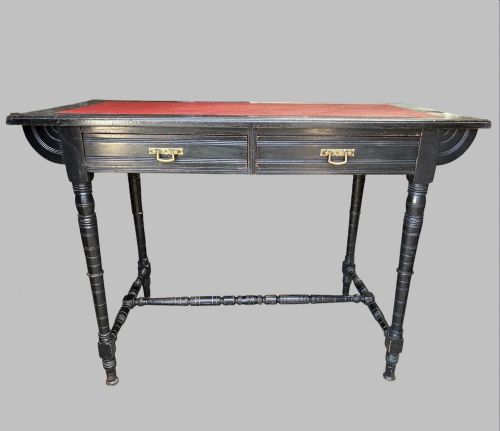
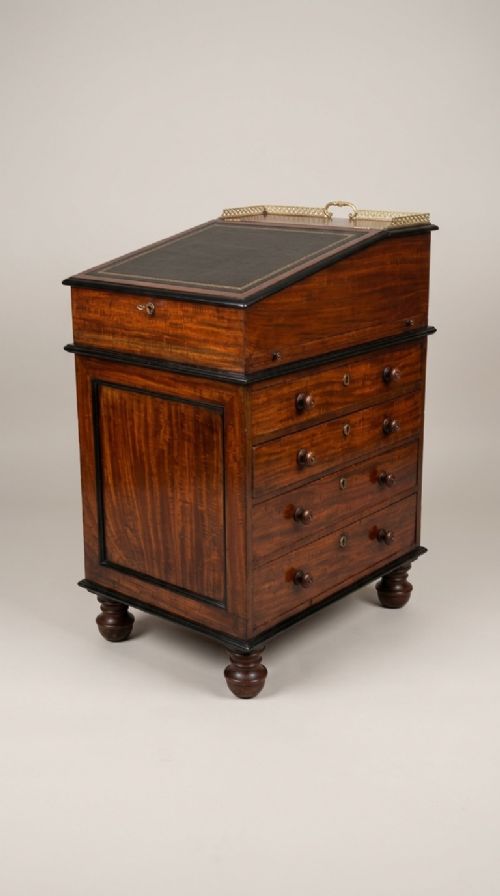
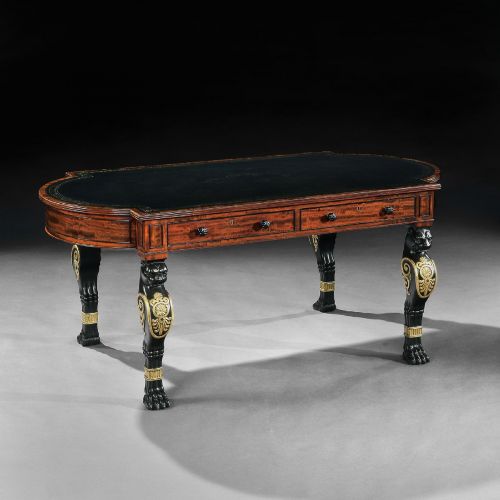
Ebonized Writing Desk
An ebonized writing desk brings dark, polished elegance to a room, combining practical work surfaces with striking nineteenth-century cabinetwork.
Ebonized Writing Desk
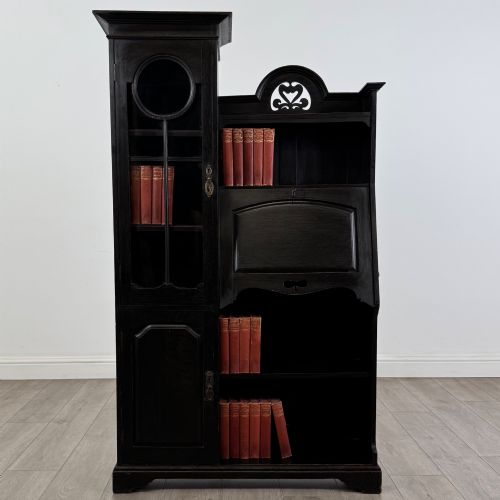
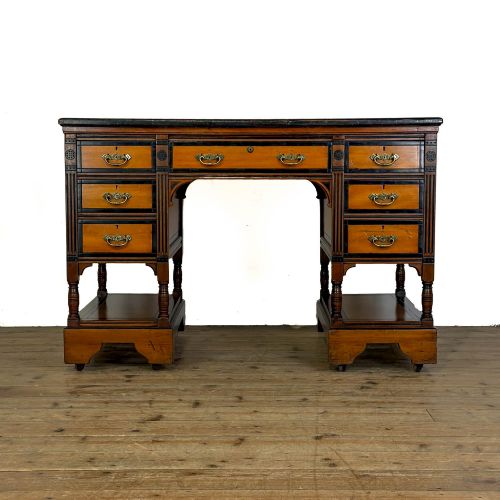
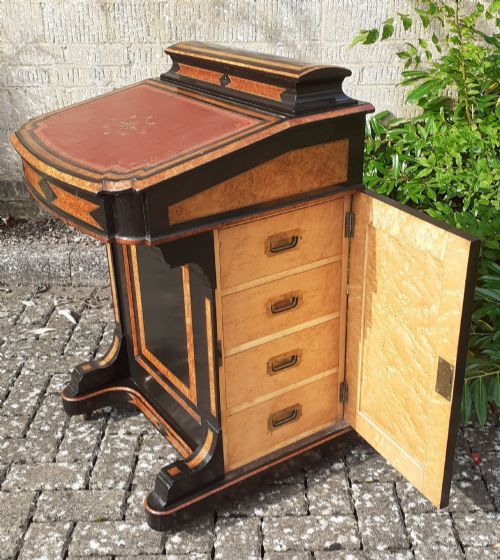
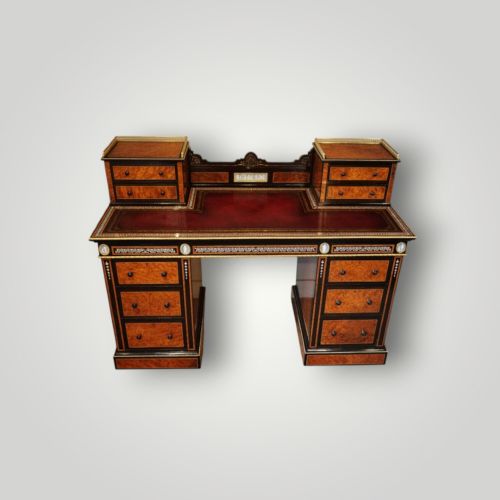
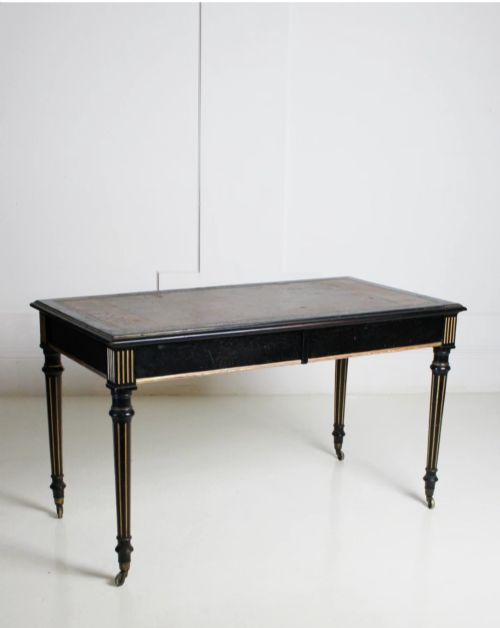
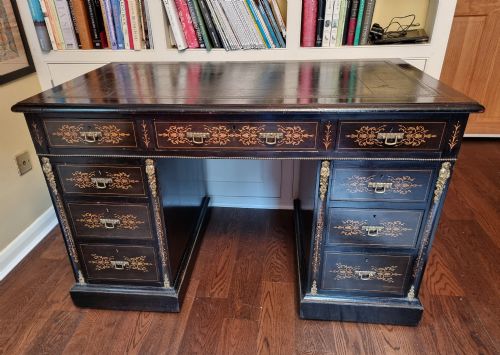
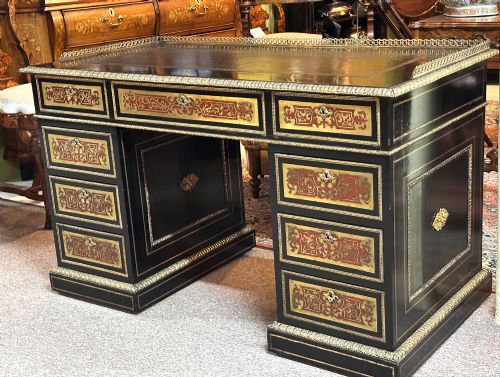
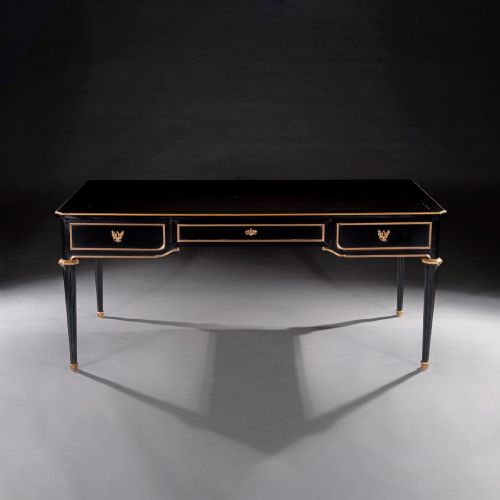
An ebonized writing desk appears most frequently in Victorian, Edwardian, and nineteenth-century French Napoleon III styles. The selection spans compact lady's desks and Davenport writing desks to larger partners desks, pedestal desks, and bureau plat tables.
Makers and workshops of the period applied dark finishes to woods to imitate solid ebony, often incorporating French aesthetics, Louis XV revivals, and Aesthetic Movement principles.
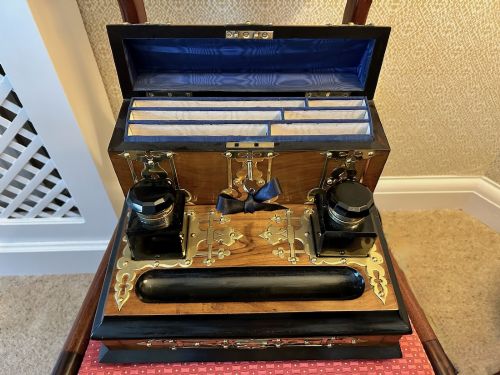
Buyers seeking this specific furniture form will encounter pieces designed both as freestanding centre tables and fitted writing cabinets with drawers and compartments.
Materials and construction
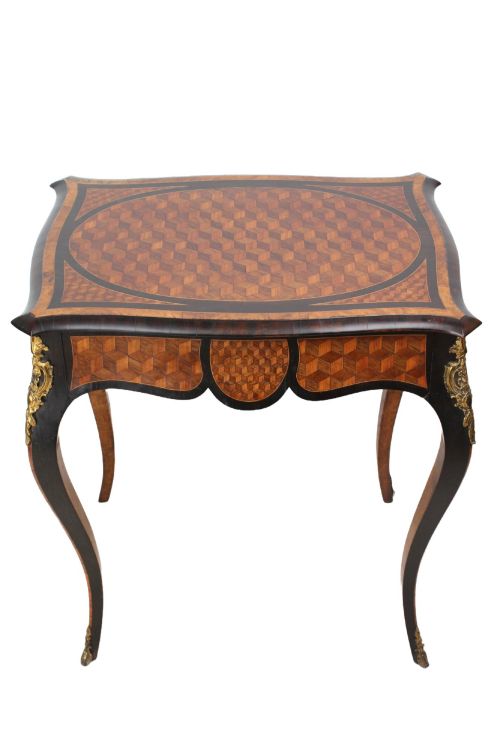
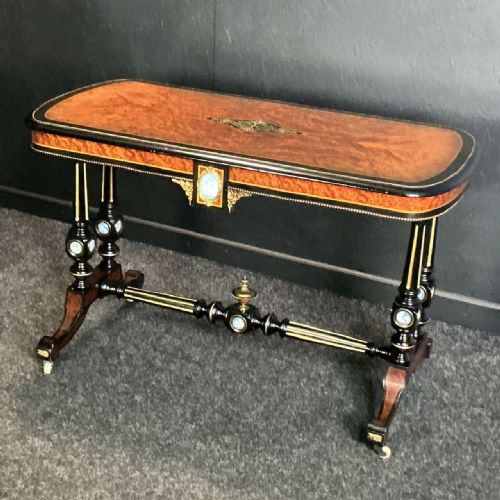
Craftsmen utilised woods such as walnut, amboyna, mahogany, and burr walnut, applying ebonisation to achieve a deep black finish. Surfaces are frequently enhanced with contrasting brass inlay, ormolu mounts, porcelain plaques, and leather writing inserts.
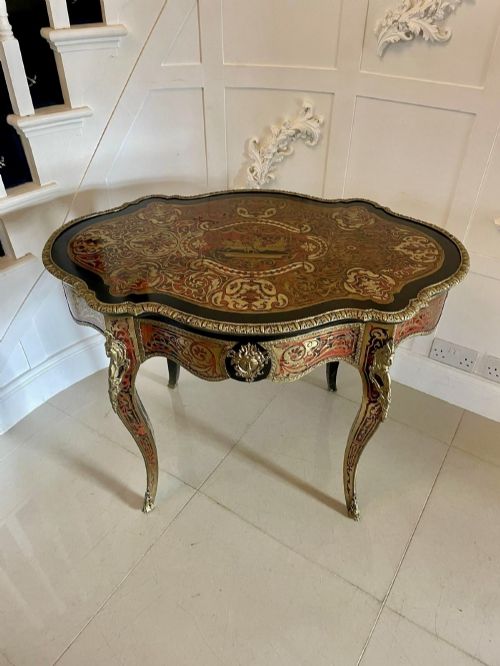
More ornate examples incorporate intricate Boulle work, parquetry, and ivory inlay, supported by structural elements of oak and birch.
Some nineteenth-century desk drawers still retain old ink stains, whispering of long-forgotten letters written by candlelight.
Judging execution and detail
Quality rests in the crispness of the brass and ormolu mounts, the precision of the parquetry or Boulle work, and the depth of the ebonised finish. Finer pieces display secondary timbers of high grade, careful crossbanding, and integrated porcelain plaques.
Construction rigidity, drawer dovetailing, and the preservation of original leather writing surfaces separate standard utility writing tables from exceptional exhibition pieces.
JAS Shoolbred·Jackson and Graham·Edwards and Roberts·Maison Millet·Paul Sormani
The Ebonized Writing Desk Glossary
- Ebonised Wood
- Timber treated with stain or paint to resemble solid ebony. This finish became especially popular during the Victorian and Napoleon III periods for dramatic contrast.
- Bonheur du Jour
- A small, light lady's writing desk featuring a tiered superstructure with drawers or pigeonholes above the main writing surface. It originated in France during the eighteenth century and was widely revived in the nineteenth.
- Boulle
- Marquetry technique utilising tortoiseshell and brass inlay, named after cabinetmaker André-Charles Boulle. It appeared frequently on nineteenth-century French writing tables.
- Partners Desk
- A large double-sided desk designed for two people to work opposite one another. These pieces feature drawers and cupboards accessible from both sides.
- Ormolu
- Gilded bronze mounts applied to furniture for decoration. High quality examples display crisp chased detail and secure fixing.
Ebonized Writing Desk: Frequently Asked Questions
What is an ebonized writing desk?
An ebonized writing desk is a piece of furniture finished with a dark, polished stain or coating to imitate solid ebony. These desks date primarily from the nineteenth and early twentieth centuries.
They appear in various forms including Davenport desks, pedestal desks, and French bureau plat tables, often incorporating brass inlay and leather inserts.
How do I date a Victorian writing desk?
Dating a Victorian writing desk involves examining the secondary timbers, construction methods, and decorative styles used. Mid-nineteenth-century pieces frequently display elaborate Boulle work or amboyna veneers.
Later Victorian examples often reflect Aesthetic Movement simplicity or later revival tastes, while specific maker stamps can narrow the origin further.
Where were these desks made?
These desks were produced in English workshops, Scottish cabinetmakers' studios, and major French furniture houses. Makers in London and Paris utilised exotic woods and imported veneers.
Continental pieces frequently show distinct Napoleon III or Louis XV revival styling with extensive gilt bronze mounts.
How do I care for ebonised wood?
Caring for ebonised wood requires protecting the dark finish from direct sunlight and excessive moisture. Regular dusting with a soft, dry cloth preserves the polished surface without dulling the sheen.
Leather inserts benefit from specialised leather dressings applied sparingly to prevent cracking over time.