



French Study Furniture
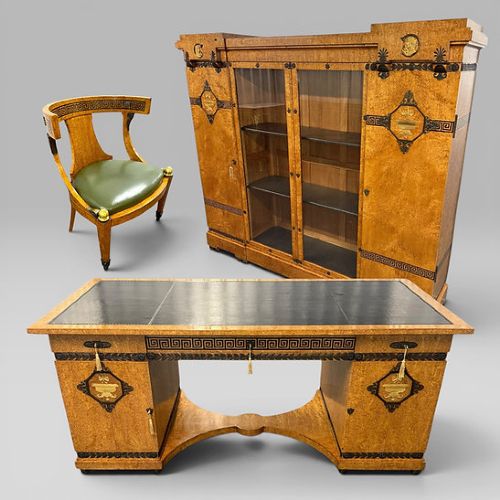
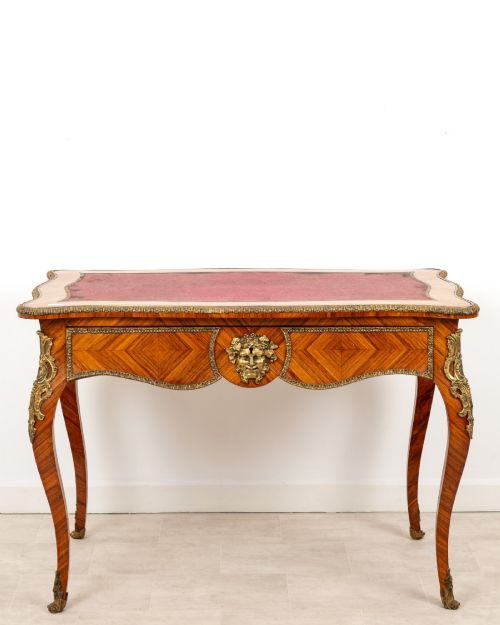
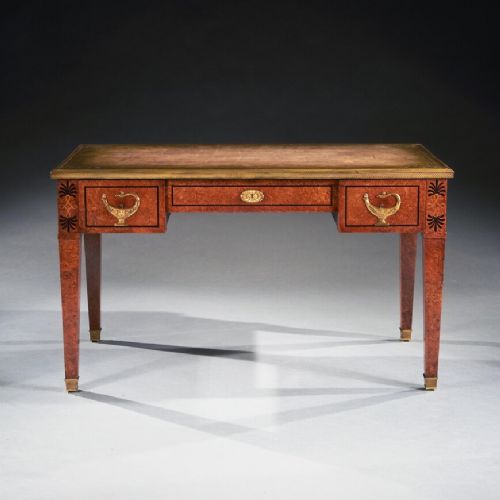
French study furniture brings together desks, writing tables and office sets crafted in kingwood, mahogany and rosewood with ornate ormolu mounts.
French Study Furniture
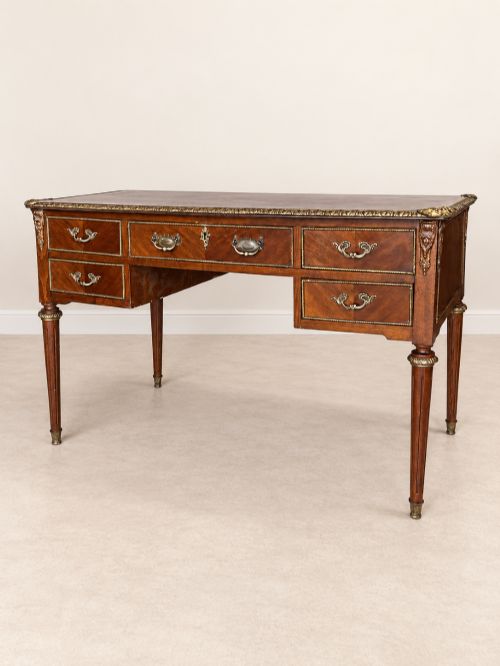
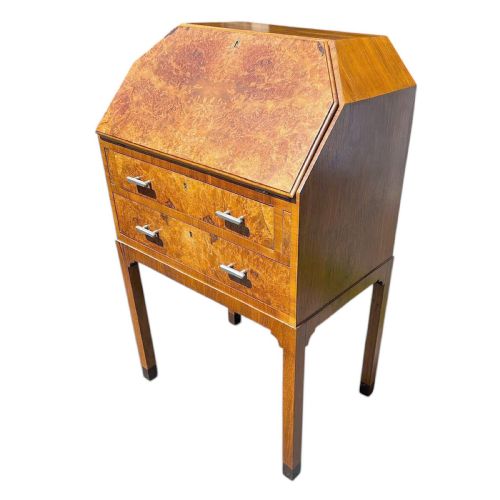
French study furniture encompasses writing desks, bureau plats, cylinder desks and office sets designed for domestic and official workspaces. Buyers searching for french study furniture will encounter pieces originating predominantly from the nineteenth century alongside select twentieth century examples.
The selection ranges from kidney shaped writing tables in burr walnut and rosewood to monumental partners desks and delicate ladies desks in the bureau du dame style. Neoclassical, Louis XVI style and Empire revivals dominate the forms, reflecting continental design traditions adopted across European workshops.
How they were made
Cabinetmakers utilised dense hardwoods including kingwood, mahogany, rosewood and satinwood, frequently laid as parquetry or intricate floral marquetry across structural carcases. Surfaces often incorporate leather writing inserts surrounded by shaped wooden borders.
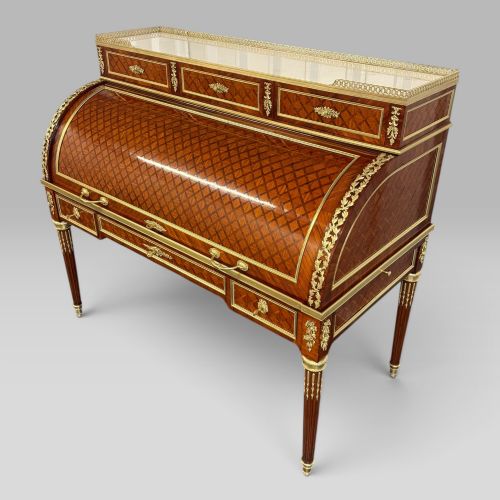
Gilt bronze and ormolu mounts punctuate corners, aprons and drawer fronts, cast and chased in classical motifs. Brass hardware secures functional elements while maintaining the decorative symmetry demanded by revivalist aesthetics.
A solitary watercolour design on paper preserves the blueprint of a cabinet long before the timber ever met the bench.
What varies in quality
The caliber of french study furniture rests upon the precision of the cabinetwork and the weight of the cast ormolu mounts. Finer examples display continuous timber grain matching, crisp hand chiselling on bronze mounts and seamless parquetry geometry.
Subtleties in proportion and the integration of secondary timbers distinguish standard production items from workshop outputs attributed to notable makers. The quality of the leather working surface and the fluidity of curved forms dictate the standing of individual tables and desks.
Mercier Frères·Donald Ross·Maison Krieger
The French Study Furniture Glossary
- Ormolu
- Gilt bronze mounts applied to furniture edges and corners. This decorative technique adds metallic contrast to dark woods.
- Bureau Plat
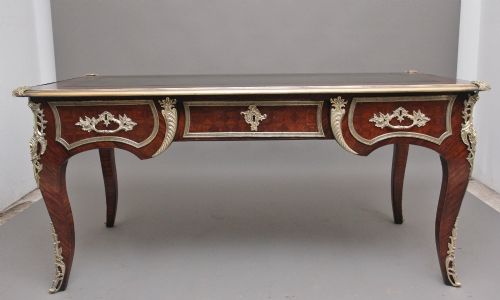
- A freestanding writing table fitted with drawers across the frieze. These tables traditionally occupy the centre of a room rather than sitting against a wall.
- Parquetry
- Geometric patterns formed by fitted wood veneer pieces. Cabinetmakers arrange contrasting timbers to create visual depth on tabletops.
- Cylinder Desk
- A writing desk featuring a rotating curved wooden shutter that conceals pigeonholes and writing surfaces. It offers a secure method of closing the desk while keeping papers arranged.
French Study Furniture: Frequently Asked Questions
How do I identify a bureau plat?
A bureau plat is a rectangular writing table featuring a finished back designed to stand in the centre of a room rather than against a wall. It typically incorporates frieze drawers and stands on cabriole or tapered legs.
These tables often feature leather inset writing surfaces bordered by gilt bronze or ormolu mounts. Their balanced proportions set them apart from standard wall desks.
Where should I place a kidney table?
Kidney shaped writing tables suit open room layouts because their curved silhouette allows them to float away from straight walls. They function effectively as freestanding centrepieces in studies or drawing rooms.
Position them where light crosses the leather writing surface from the side. This placement highlights the inlaid burr walnut or rosewood veneers without causing glare.
What is the difference between Empire and Louis XVI styles?
Louis XVI style furniture relies on straight fluted legs, symmetrical neoclassical geometry and restrained gilt mounts. It references classical antiquity through proportion and understated floral marquetry.
Empire style favours heavier ebonised finishes, bolder ormolu mounts and imposing architectural silhouettes. It reflects nineteenth century revivals of Roman imperial power.
How are partners desks configured?
Partners desks provide dual workspaces with drawers and cupboards accessible from both sides simultaneously. They accommodate two people working opposite one another across a shared leather top.
These large desks typically incorporate substantial timber carcases in kingwood or mahogany. Their scale requires ample floor space within a dedicated study.