


Ebonised Wood Display Stand
An ebonised wood display stand brings dark, dramatic weight to a room, lifting ceramics and bronzes into proper focus.
Ebonised Wood Display Stand
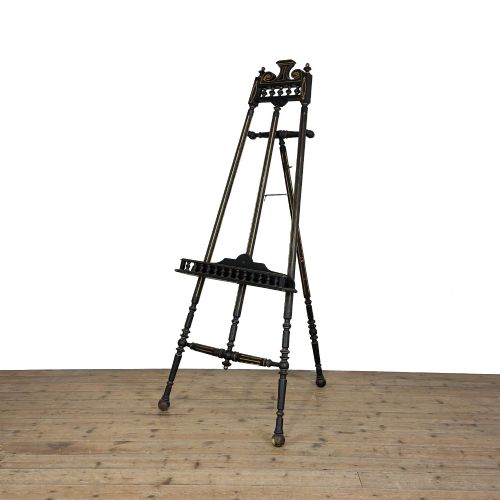
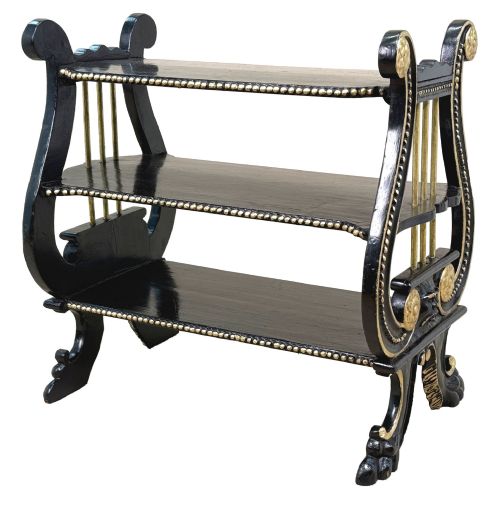
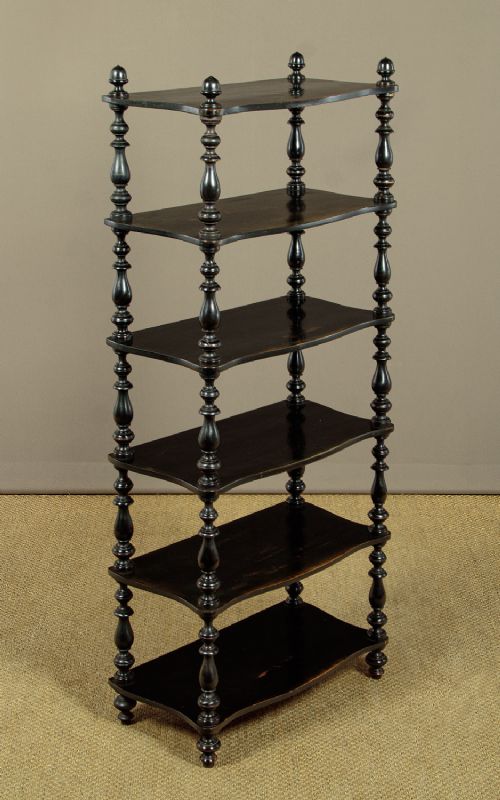
An ebonised wood display stand takes several distinct forms across the nineteenth and early twentieth centuries, functioning primarily to elevate objects of curiosity. You will encounter tall pedestals, multi-tiered étagères, plant stands, and small tables designed to hold specimens or decorative pieces.
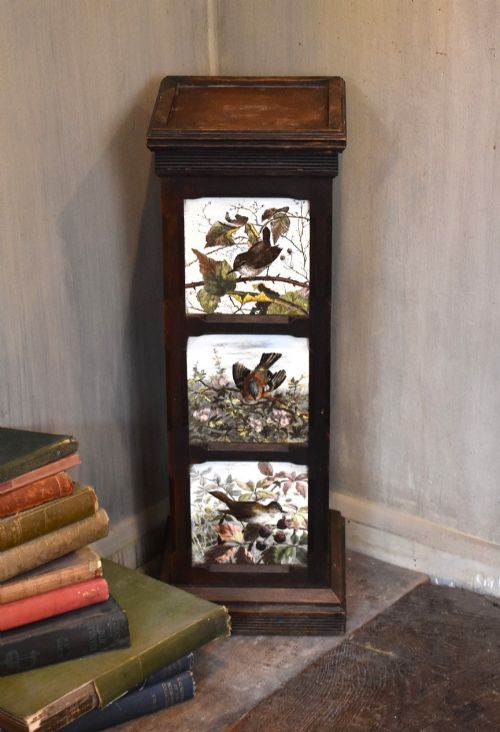
The pieces on this page draw from Victorian, Aesthetic Movement, and early twentieth-century traditions, often reflecting international design influences such as Japanese Meiji or Chinese craftsmanship. These stands range from simple wooden plinths to elaborate multitiered towers mounted with porcelain or marble.
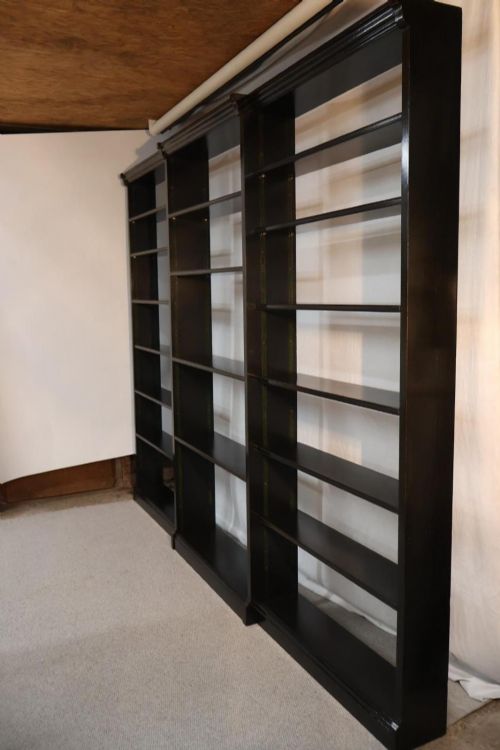
While some items serve specifically as vase stands or torchères, others double as compact cabinets or open bookshelves adapted for display. The dark finish provides a neutral, high-contrast backdrop that allows bright porcelain, coral, or bronze to stand out.
Materials and Construction
Makers achieved the dense, black surface of an ebonised wood display stand by staining or painting cheaper timbers like hardwood and elm, or by working directly with naturally dark woods such as ebony. This dark finish was frequently paired with contrasting materials, incorporating parcel gilding, ormolu mounts, and ceramic tile insets.
Structural complexity varies from turned columns and carved plant stands to multi-tiered étagères joined with precise joinery. Cabinet makers utilised walnut, amboyna, and rosewood alongside ebonised elements, sometimes adding marble tops to withstand the weight of heavy vases and figures.
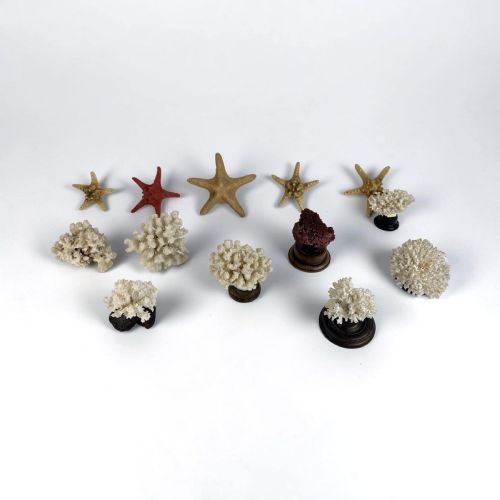
Some stands even come equipped to hold coral, starfish, or a crouching figure.
Assessing Quality and Execution
The quality of an ebonised wood display stand rests on the crispness of its carving and the stability of its construction. Superior examples exhibit fine detailing in turned columns, intricate parcel gilding, and secure joints that support heavy marble or porcelain tops without wobble.
Finer pieces often bear association with notable retail houses or workshops, showing thoughtful proportion and integration of materials such as ormolu mounts or inlaid porcelain. Lesser examples rely on simple turned timber with basic black paint, lacking the structural rigour and refined surface depth of exhibition-standard work.
Liberty of London·Gillow and Co
The Ebonised Wood Display Stand Glossary
- Ebonised
- Timber treated with stain, dye, or polish to imitate the deep black appearance of genuine ebony. This finish gained immense popularity during the Victorian period, particularly within the Aesthetic Movement.
- Étagère
- A piece of furniture consisting of open shelves for displaying small objects or ornaments. These tiers allow items to be viewed from multiple angles.
- Torchère
- A tall, slender stand or candlestick holder designed to elevate a light source, plant, or decorative sculpture. They often feature carved shafts and circular tops.
- Parcel Gilt
- Woodwork partially decorated with gold leaf or gold paint to highlight specific carved details or mouldings. This technique provides sharp contrast against an ebonised background.
- Aesthetic Movement
- A late nineteenth-century design philosophy that emphasised visual beauty over narrative or moral content. It frequently incorporated Japanese motifs and ebonised finishes.
Ebonised Wood Display Stand: Frequently Asked Questions
What is an ebonised wood display stand used for?
These stands are built to elevate decorative objects, plants, urns, and specimens so they sit at a proper viewing height. They act as architectural pedestals that draw the eye toward specific prized possessions in a room.
Historically, they also served practical domestic roles as side tables, smoking stands, or corner storage units. Their dark surfaces provide visual grounding for brightly coloured ceramics or bronzes.
How do I date a Victorian display stand?
Dating relies on examining the timber types, joinery methods, and stylistic cues present in the piece. Victorian examples often blend gothic revival influences with dark ebonised finishes and parcel gilding.
Later pieces from the early twentieth century may show influences from the Arts and Crafts movement or Japanese export styles. Checking the underside and interior joints helps confirm the period of manufacture.
How do I care for an ebonised finish?
Maintain the surface by dusting gently with a soft, dry cloth to prevent grit from scratching the dark finish. Avoid using modern aerosol polishes or silicone sprays, which can build up and dull the lustre over time.
Keep the stand away from direct sunlight and strong heat sources to prevent the wood from warping and the ebonising from fading. Occasional application of a suitable wax preserves the deep sheen.
Can these stands support heavy vases?
Many stands, particularly those featuring marble tops or sturdy hardwood frames, were engineered specifically to bear the weight of heavy stone vases and jardinières. You should check the internal bracing and leg stability before placing exceptionally heavy objects on top.
Stands with multiple tiers or delicate turned columns are better suited for lighter porcelain figures, clocks, or natural history specimens rather than massive bronze sculptures.