
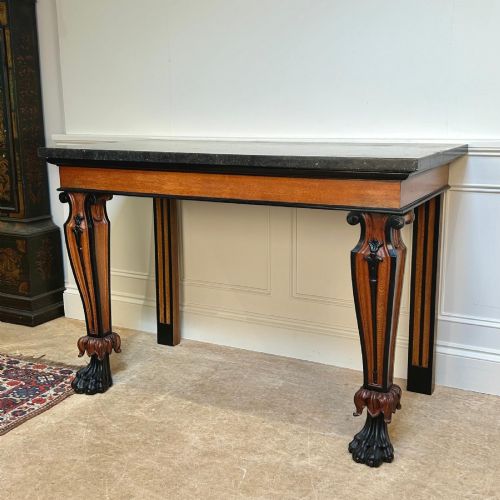


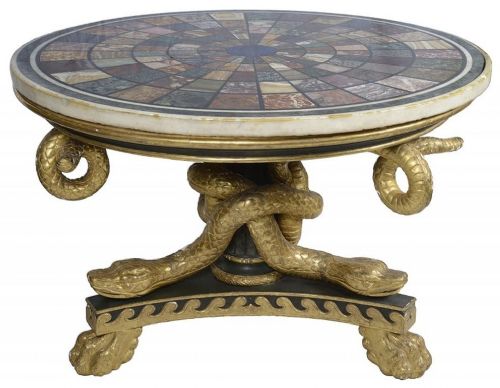


Ebonised Marble Side Table
These ebonised marble side table pieces combine dark wood with stone tops for interiors requiring formal structure and classical proportion.
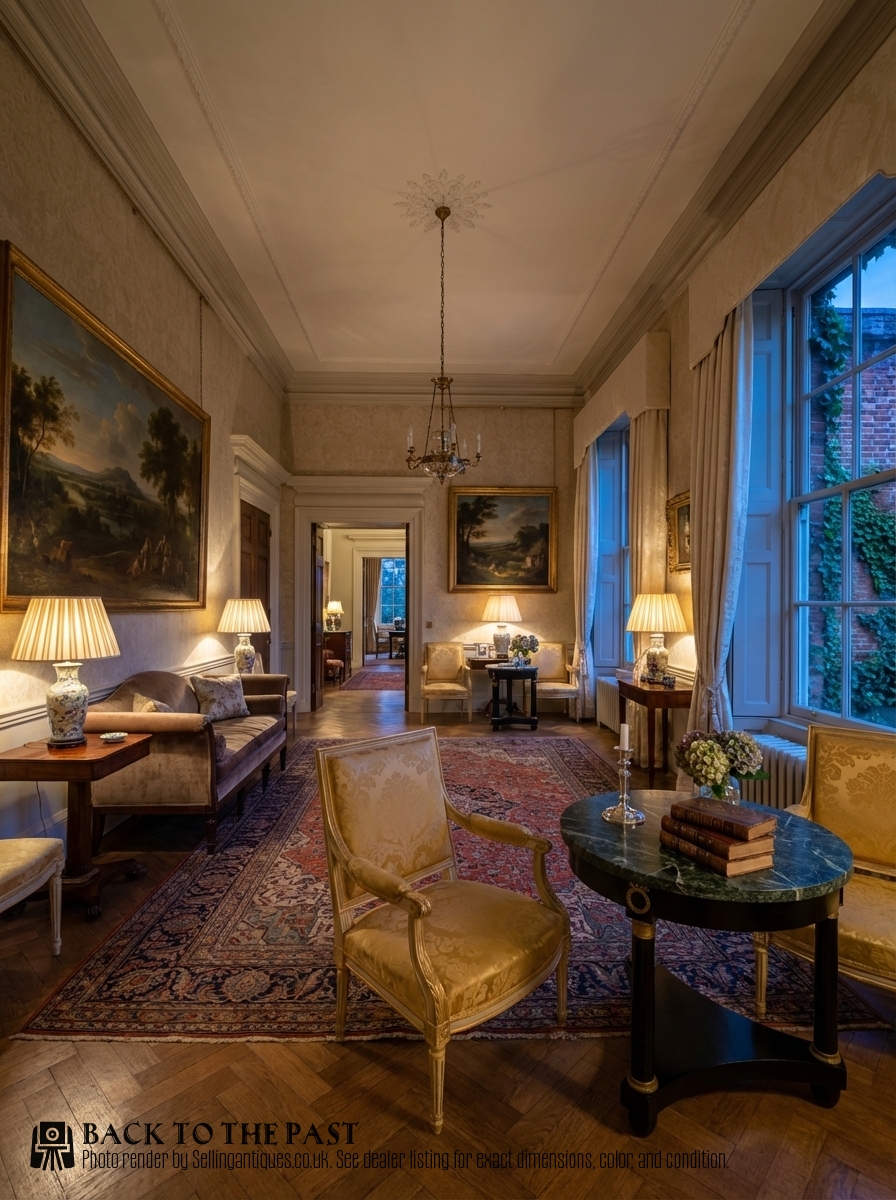
Ebonised Marble Side Table
When searching for an ebonised marble side table, buyers encounter forms ranging from circular lamp tables and console tables to kidney-shaped and occasional designs. These items frequently appear from the nineteenth century, including Regency, Victorian, and later revival periods.
The evidence shows various origins, with pieces reflecting French, English, Chinese, and Italian workshops. Forms vary from small plant stands and guéridons to larger centre tables and console tables featuring inset stone surfaces.
Judging quality in these tables
Quality depends upon the precision of the timber ebonising and the selection of the marble top. Finely figured marble and rich specimen stone inserts distinguish superior examples from plain variants.
Construction details such as carved elements, gilt or brass mounts, and stable joinery separate standard items from pieces with exceptional craftsmanship from French or English makers.
Listings feature pieces spanning the nineteenth century alongside later revival periods, utilising marble, ebonised wood, and brass.
The Ebonised Marble Side Table Glossary
- Ebonised wood
- Timber treated to resemble ebony through staining or painting. This dark finish creates a stark contrast against light marble tops.
- Guéridon
- A small French table, often round and supported by a central pillar or three legs. These serve well as lamp or occasional tables.
- Specimen marble
- A top composed of various coloured marbles arranged in geometric or pictorial patterns. Such tops require high skill to cut and assemble.
- Console table
- A table designed to stand against a wall, frequently secured with brackets. They often feature elaborate legs and marble surfaces.
Ebonised Marble Side Table: Frequently Asked Questions
Where should I place a side table?
These tables suit hallways, drawing rooms, or bedrooms as lamp stands or decorative surfaces.
Their narrow profiles allow them to fit easily beside seating or against walls without dominating the room.
How do I clean marble tops?
Wipe the surface with a damp cloth and mild soap, avoiding acidic cleaners that etch stone.
Dry thoroughly with a soft cloth to maintain the polished finish of the marble.
Are these tables sturdy enough for daily use?
Solid construction from hardwoods ensures durability for holding lamps, books, or decorative objects.
Heavy stone tops provide natural stability to the overall frame.
How do I identify a revival period piece?
Revival pieces incorporate stylistic elements from earlier eras like Regency or Louis XVI.
Construction methods and material patination help distinguish older originals from later interpretations.