


Black Ebonised Coffee Table
A black ebonised coffee table brings a dramatic, dark silhouette to a room, offering both a functional surface and a striking historical decorative accent.
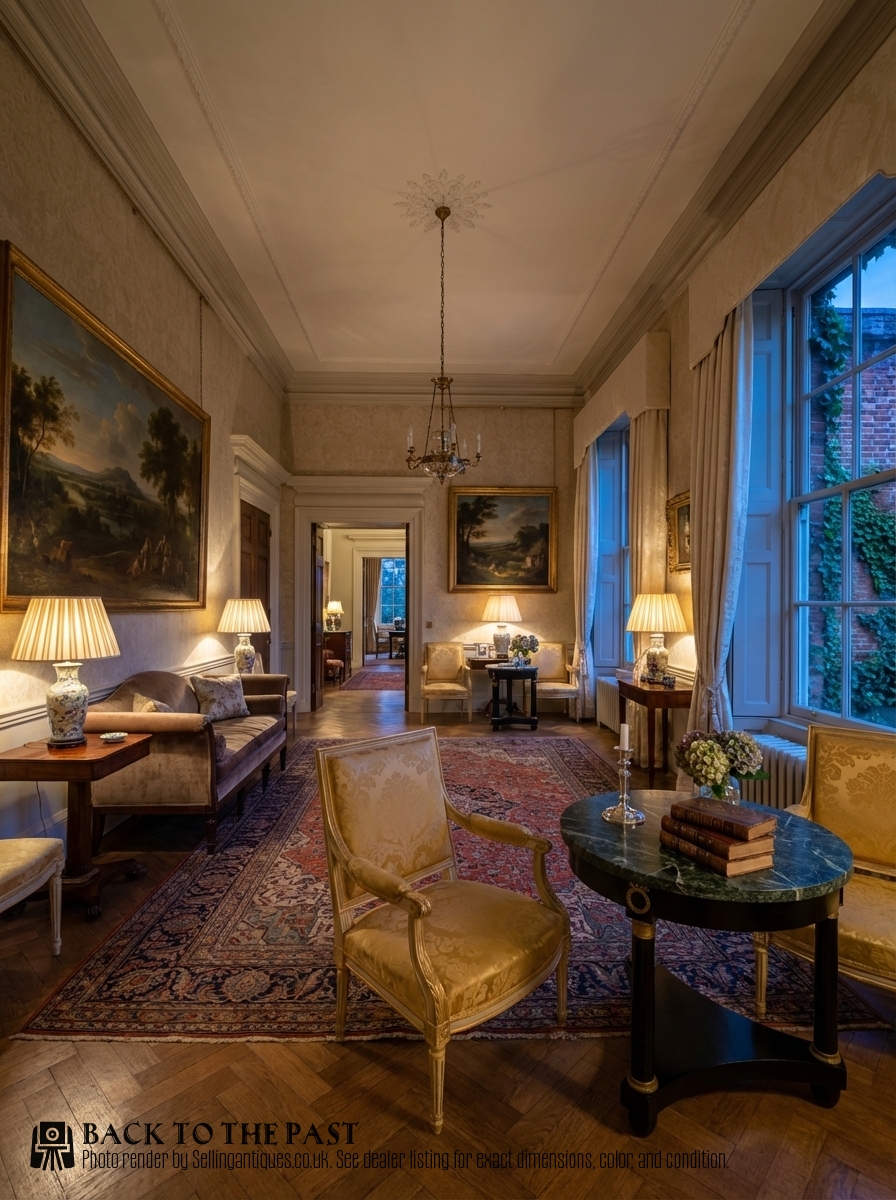
Black Ebonised Coffee Table
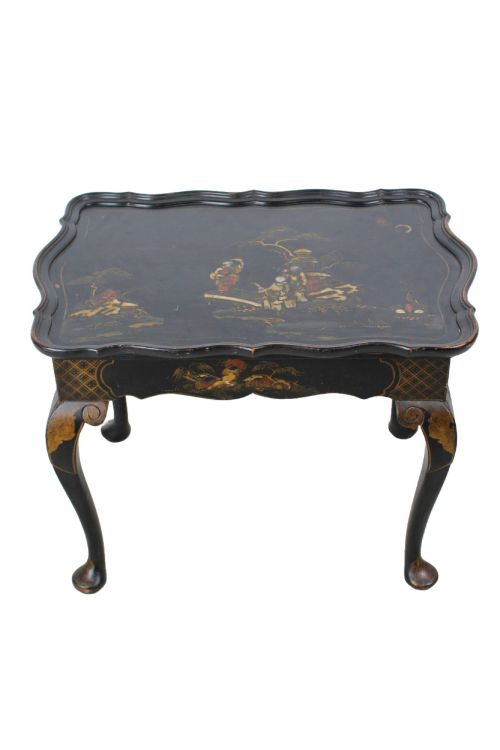
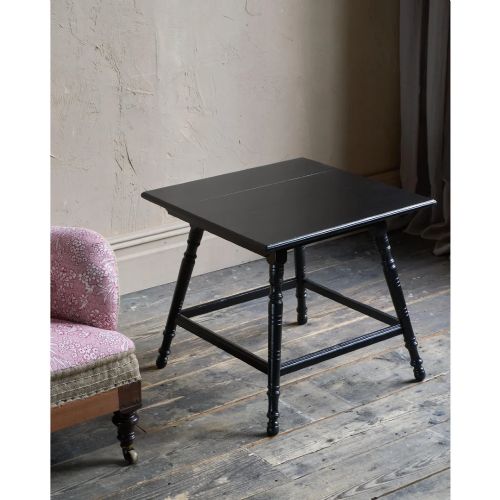
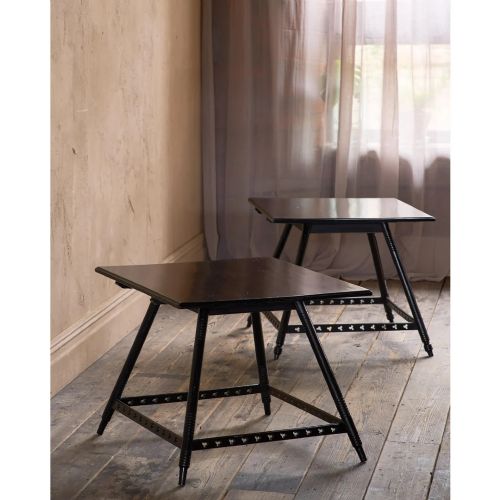
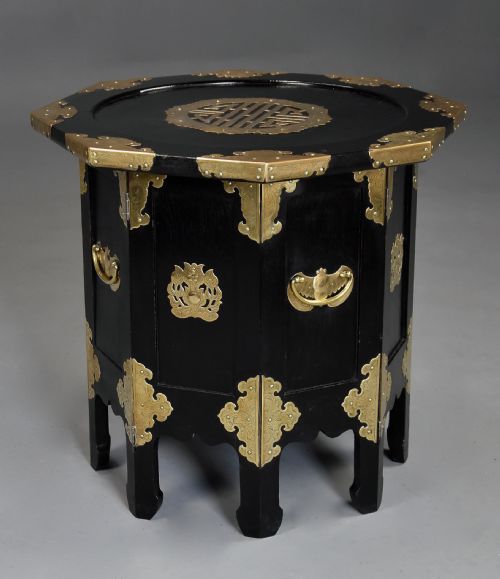
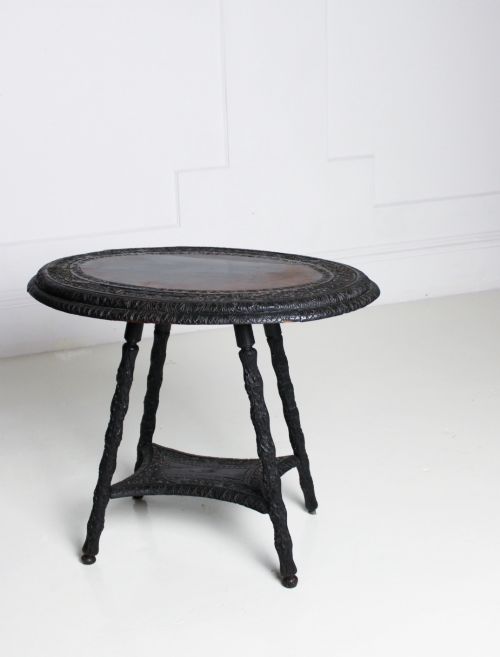
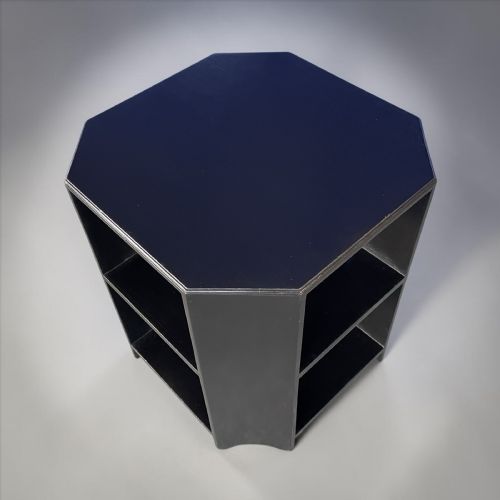
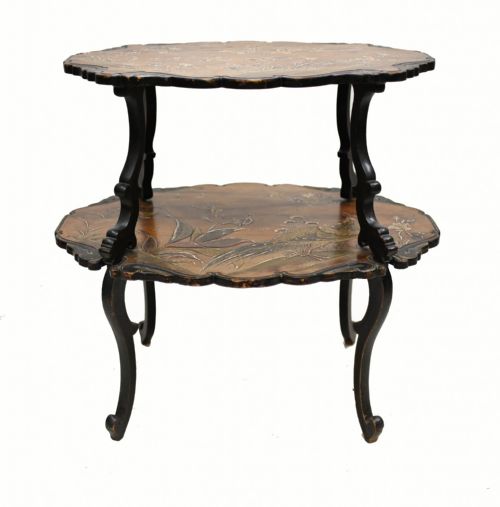
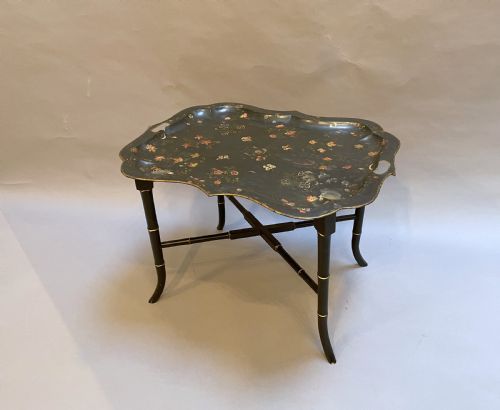
A black ebonised coffee table encompasses low-slung occasional pieces, adapted serving trays on stands, and low oriental tables spanning from the Victorian and Edwardian eras into the Art Deco period. Buyers seeking a black ebonised coffee table will encounter various forms, including tray tables, octagonal occasional tables, and papier-mâché or lacquer designs.
The selection ranges from nineteenth-century Victorian and Aesthetic Movement pieces with Chinoiserie or Japonisme motifs to early twentieth-century Art Deco interpretations in solid oak, walnut, and ebonised wood. Many examples originate as serving trays elevated on custom stands or low tables adapted over time for modern living spaces.
How they were made
Craftsmen utilised various hardwoods and papier-mâché bases, applying dark ebonisation finishes to simulate costly ebony wood. Surfaces frequently incorporated intricate hand-painted Chinoiserie decoration, japanning, or lacquer work.
Metal elements such as brass appeared on corners and edges, while tables from later decades utilised solid oak, walnut, and gilt accents to enhance the decorative finish.
Current listings feature pieces from the Victorian, Edwardian, and Art Deco periods, utilising ebonised wood, papier-mâché, lacquer, and brass.
What varies in quality
The sophistication of the hand-painted Chinoiserie or japanning details distinguishes standard production from finer artisan work. Crisp execution in the surface lacquer and the integration of the tray with its supporting stand dictate the overall refinement of the piece.
The choice of underlying material, whether high-grade papier-mâché, solid walnut, or dense hardwood, influences the structural integrity and longevity of the dark finish.
Hindley and Sons
The Black Ebonised Coffee Table Glossary
- Ebonised wood
- Timber treated with stain or black finish to imitate ebony. This technique gained popularity during the nineteenth century for furniture requiring a dark, uniform appearance.
- Chinoiserie
- European decorative style reflecting Chinese artistic influences. It appears frequently on lacquer and papier-mâché surfaces with gold and coloured motifs.
- Japanning
- European imitation of Japanese and Chinese lacquerwork. The process involves layered varnishes cured and polished to a hard sheen.
- Papier-mâché
- Composite material made from paper pulp or sheets mixed with glue and resin, pressed and dried into sturdy table tops and trays before being lacquered.
- Tray table
- A removable serving tray supported by a folding or fixed wooden stand. Many antique examples were converted into low coffee tables in subsequent decades.
Black Ebonised Coffee Table: Frequently Asked Questions
What is a black ebonised coffee table?
A black ebonised coffee table is a low surface featuring a dark, ebonised wood finish, lacquer, or japanning. These pieces often originate from the nineteenth and early twentieth centuries as occasional tables, side tables, or converted serving trays.
They bring distinct dark tones and historical decorative motifs like Chinoiserie into contemporary interiors.
How do I style a black ebonised coffee table?
Pair the dark surface with contrasting neutral textiles, ceramics, or metallic objects to highlight the reflective lacquer or painted details. The bold silhouette anchors a seating area effectively.
Keep surrounding lighting bright to let the polished dark finish and subtle surface patterns stand out.
Are these tables original low coffee tables?
Many items listed as coffee tables were originally serving trays mounted onto custom stands during later periods. Other examples began life as nineteenth-century occasional or side tables.
Both converted trays and traditional low forms function well as coffee tables in modern homes.
What materials are used in these tables?
Construction materials include ebonised wood, hardwood, papier-mâché, and walnut. Surfaces frequently feature lacquer, japanning, brass details, and gilt decoration.
Art Deco examples often showcase natural wood grains alongside ebonised elements.