
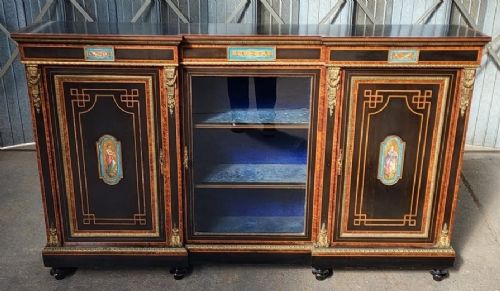

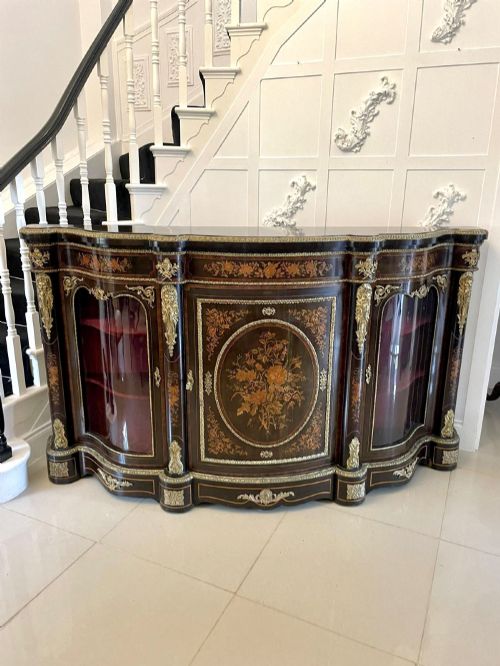
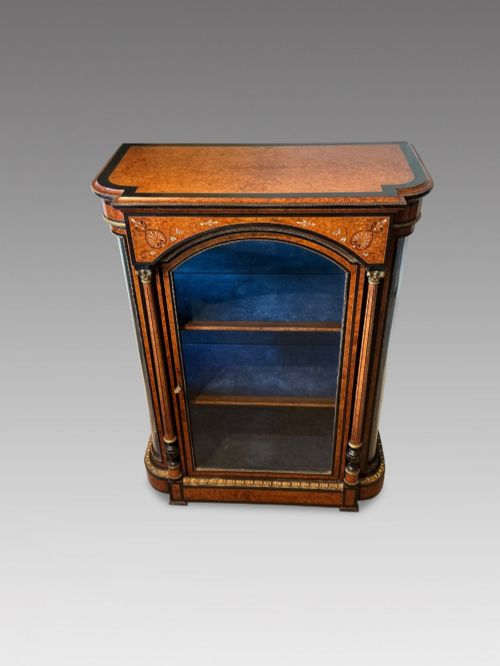
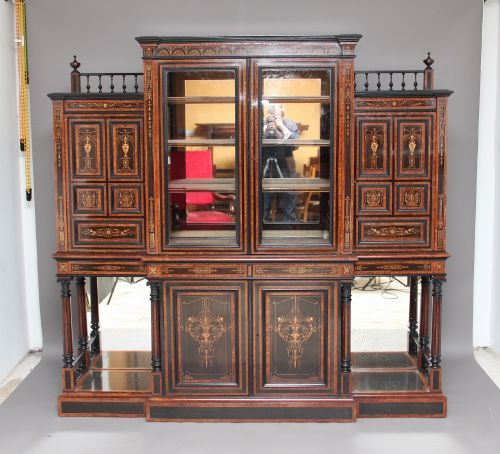
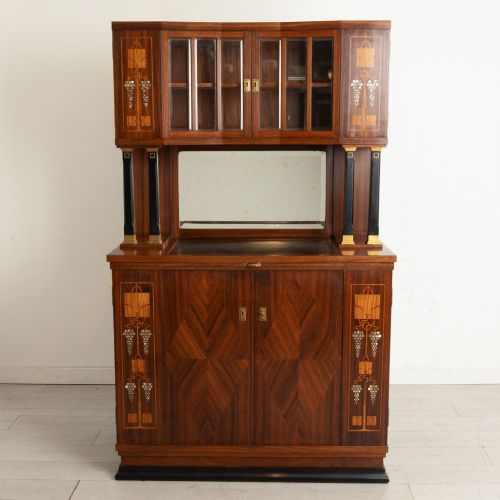
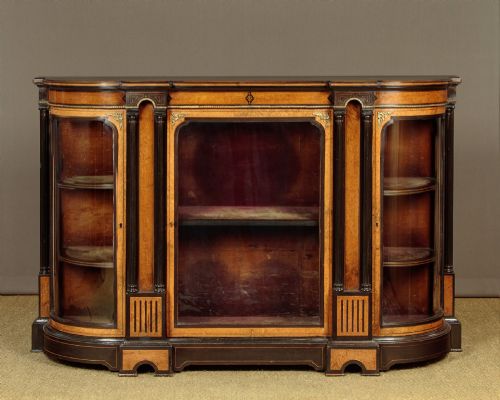
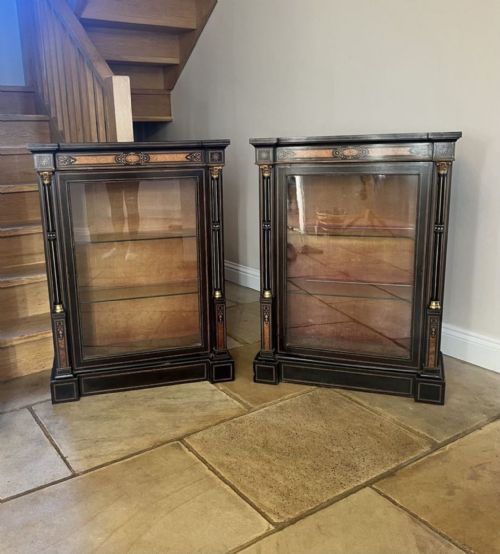
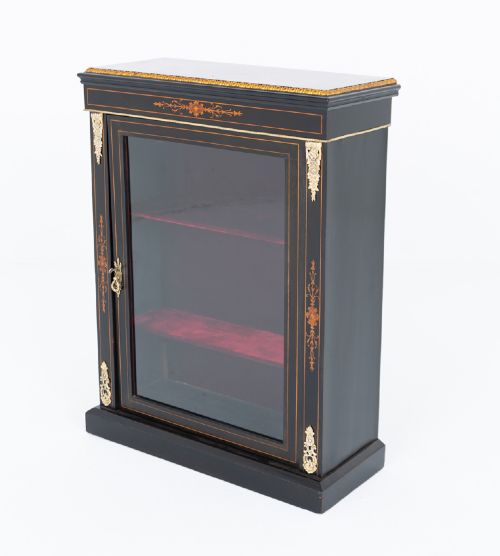


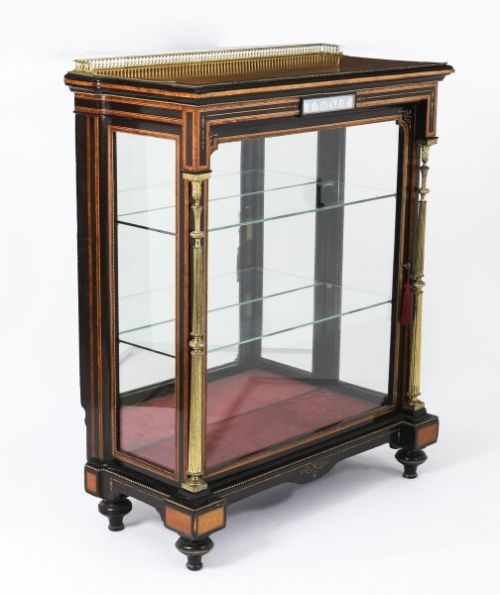


Ebonised Glazed Display Cabinet
An ebonised glazed display cabinet brings dark timber and glass together to showcase prized possessions with nineteenth-century gravitas.
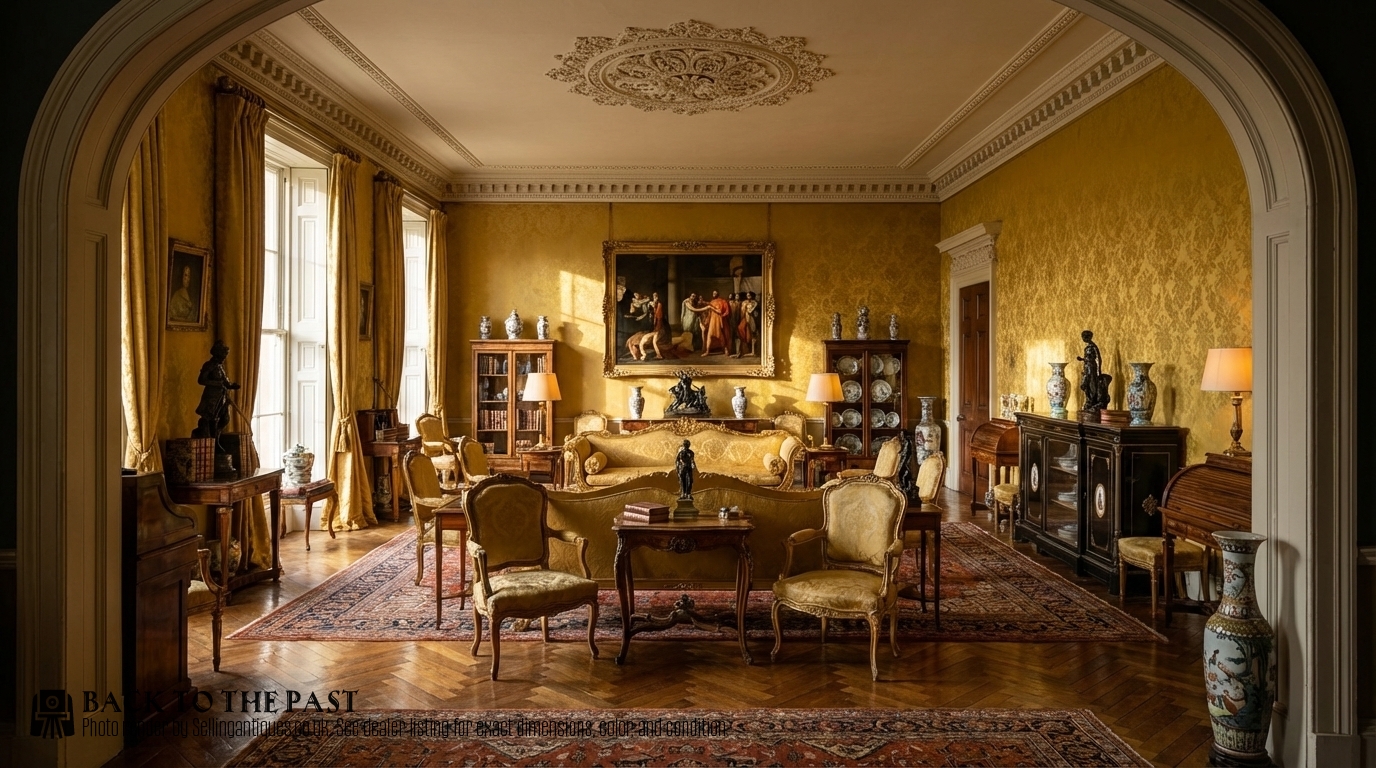
Ebonised Glazed Display Cabinet
An ebonised glazed display cabinet typically takes the form of a Victorian or nineteenth-century pier cabinet, credenza, or breakfront bookcase. These pieces are designed to protect and exhibit porcelain, books, and decorative objects behind glass doors.
The Victorian era dominates the selection, alongside French Napoleon III and Aesthetic Movement examples from the middle and late nineteenth century. Buyers frequently encounter smaller pier cabinets or larger multi-door credenzas featuring dark finishes.
Materials and construction
Cabinet makers utilised a dark wood substrate, such as walnut or mahogany, or ebonised timber to achieve a dense black finish that mimics costly ebony. Glass panels are fitted into doors to enclose the interior shelves.
Ornaments of brass, ormolu, and tortoiseshell provide contrast against the dark timber. Inlaid marquetry in contrasting woods and parcel-gilt detailing frequently embellish the main body of the cabinet.
Craftsmanship and mounts
The standard of the brass or ormolu mounts dictates much of the distinction between pieces, with finely chased metalwork marking superior production. Crispness in the marquetry inlay and the precision of the timber ebonising also separate standard pieces from finer examples.
Structural integrity, including the smooth operation of glazed doors and the presence of original adjustable shelving, determines the level of preservation in surviving nineteenth-century examples.
Lamb of Manchester·August Ungethüm·Gillow
The Ebonised Glazed Display Cabinet Glossary
- Ebonised
- Timber treated with stain, dye, or paint to simulate the dark, dense appearance of genuine ebony.
- Ormolu
- Gilded bronze mounted to furniture as a decorative trim, common in Victorian and French pieces.
- Marquetry
- Decorative veneer applied to furniture in patterns using different woods, metals, or shell.
- Pier cabinet
- A narrow cabinet designed to fit the wall space between windows.
- Vitrine
- A glass-sided display cabinet intended for the presentation of porcelain and objets d'art.
Ebonised Glazed Display Cabinet: Frequently Asked Questions
What fits inside an ebonised glazed display cabinet?
These cabinets house collections of porcelain, small ceramics, and bound books behind their glass doors. The adjustable shelving allows for the arrangement of objects of varying heights.
The enclosed glass structure protects delicate items from dust while keeping them fully visible within a room.
Where should I place a pier cabinet?
A pier cabinet fits narrow wall spaces, specifically the masonry pier between two windows. Their compact footprints suit sitting rooms and reception halls.
Positioning them away from direct sunlight protects both the ebonised timber finish and the objects displayed inside.
How do I identify a Victorian ebonised cabinet?
Nineteenth-century examples frequently feature ebonised wood combined with marquetry inlay, brass stringing, or ormolu mounts. Construction details such as timber backs and hand-cut joints point to this period.
Stylistic influences range from French Napoleon III to the British Aesthetic Movement.
How do I care for ebonised wood?
Dust the timber regularly with a soft, dry cloth to prevent accumulation. Avoid commercial silicone polishes that can degrade the dark surface finish over time.
Keep the cabinet in a stable environment away from extreme temperature fluctuations to protect the veneer and glass settings.