


Victorian 3 Door Credenza
A victorian 3 door credenza provides stately presence and generous low-level storage, uniting display with architectural timber work.
Victorian 3 Door Credenza
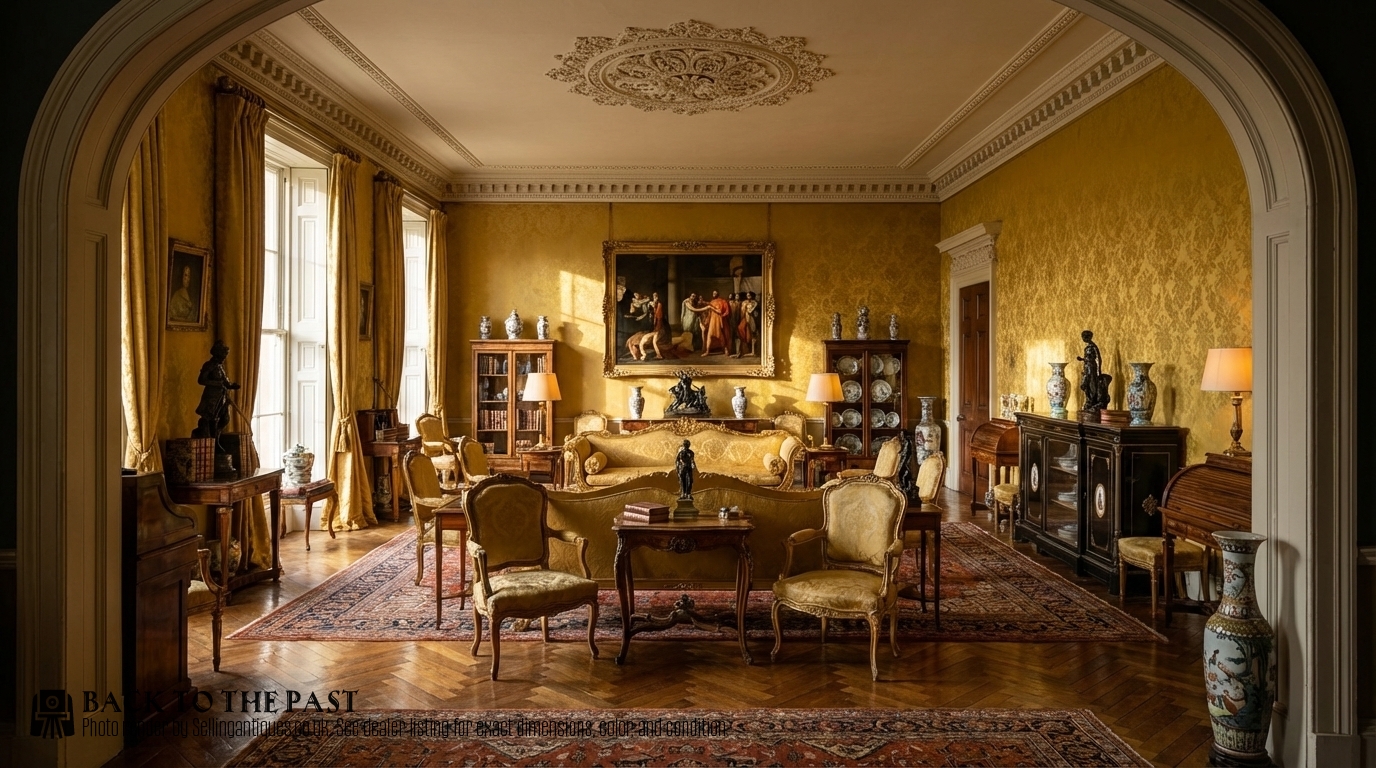
A victorian 3 door credenza sits low to the floor, traditionally anchoring a formal drawing room or parlour with its expansive horizontal surface and central cupboard flanked by side doors. These pieces evolved from sideboards and chiffoniers into grand display furniture designed to exhibit ceramics and collectibles behind glass.
The versions most frequently met on this page span the mid-nineteenth century, predominantly displaying the figured grain of burr walnut, rosewood, or ebonised finishes. They often feature curved serpentine or bow ends that soften the linear geometry of the room.
Makers utilised architectural symmetry, placing a large central door alongside matching side compartments, occasionally incorporating mirrored backs or Wedgwood plaques to catch the light. The form serves as both a functional storage cabinet and a primary decorative focal point.
How They Were Made
Cabinet makers constructed these pieces using dense carcases of pine or mahogany as a stable base for highly decorative face veneers. Burr walnut and figured rosewood were expertly sliced to create mirrored grain patterns across the three doors and curved front panels.
Gilded bronze or ormolu mounts punctuate the timber, framing doors and outlining pilasters alongside delicate floral marquetry and boxwood stringing. Glass panels were secured within wooden frames to protect interior shelves lined for display.
Several pieces conceal tiny internal velvet-lined compartments once reserved for storing clandestine love letters and parlor keys.
What Varies in Quality
The division between standard workshop production and superior cabinet making rests in the selection of timbers and the crispness of the gilt bronze mounts. Exceptional examples exhibit meticulously matched veneers that flow seamlessly across the three doors without awkward interruptions.
Hand-chased ormolu mounts with deep relief work and intricate marquetry detailing indicate a higher workshop standard than mass-produced stamped brass elements. The fluidity of serpentine curves and the tight tolerances of closing doors separate ambitious commissions from routine furniture.
Gillows
The Victorian 3 Door Credenza Glossary
- Credenza
- A low dining or drawing room cabinet featuring cupboards, originating from Renaissance Italy and revived in the nineteenth century. It typically stands without the superstructure of a traditional sideboard.
- Ormolu
- Gilded bronze mounts applied to furniture for decorative contrast against dark timbers. The technique involves a mercury-gilding process common on high-end nineteenth-century pieces.
- Marquetry
- Elaborate decorative patterns created by fitting different veneers into a wood ground. Floral motifs and geometric scrolls are common examples seen on Victorian cabinet doors.
- Burr Walnut
- Timber taken from walnut tree growths, yielding intricate swirling grain patterns. It was highly prized by Victorian cabinet makers for principal surface veneers.
- Serpentine
- A furniture front shape characterised by a concave central section flanked by convex ends. This undulating contour requires skilled woodworking to follow the precise curves.
Victorian 3 Door Credenza: Frequently Asked Questions
What is a victorian 3 door credenza?
A low nineteenth-century cabinet featuring a central door flanked by two side doors, often embellished with marquetry, ormolu, and glass panels.
Designed for formal reception rooms, it combines display space with enclosed storage for china and decorative objects.
Where were they placed in homes?
These cabinets traditionally stood against the main wall of a Victorian drawing room or parlour, positioned where guests could admire the timber grain and decorative mounts.
The low profile allowed mirrors or artwork to be hung directly above the surface.
How do I care for burr walnut?
Keep the timber away from direct sunlight and strong heat sources to prevent the delicate face veneers from drying or lifting.
Apply a traditional wax polish sparingly to maintain the natural lustre of the polished surface.
Are all credenzas fitted with glass?
Many examples feature glazed central or side doors intended for displaying porcelain and glass collections.
Solid timber panel doors also appear across the period, offering completely concealed storage.