



Ebonised Glass Cloche
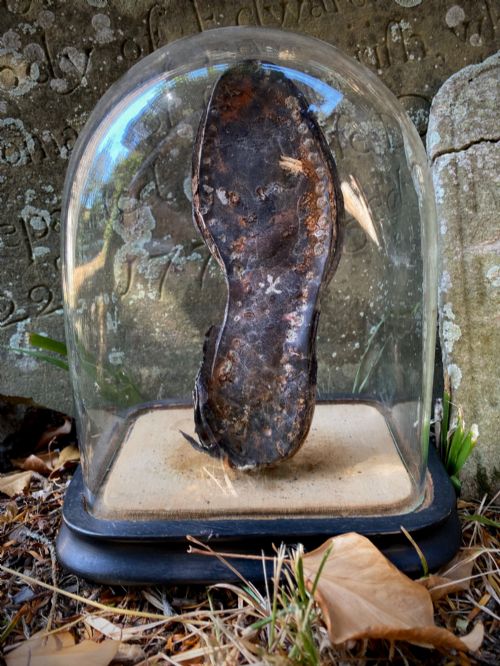
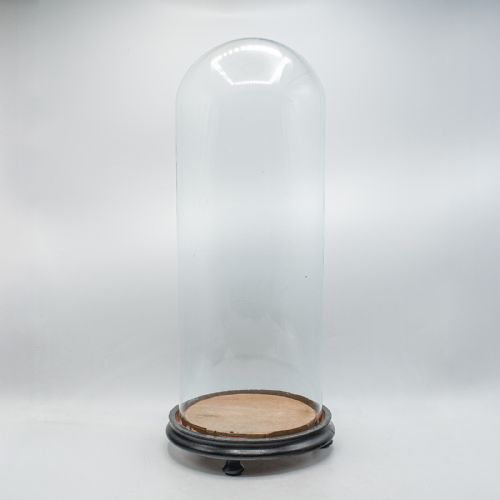
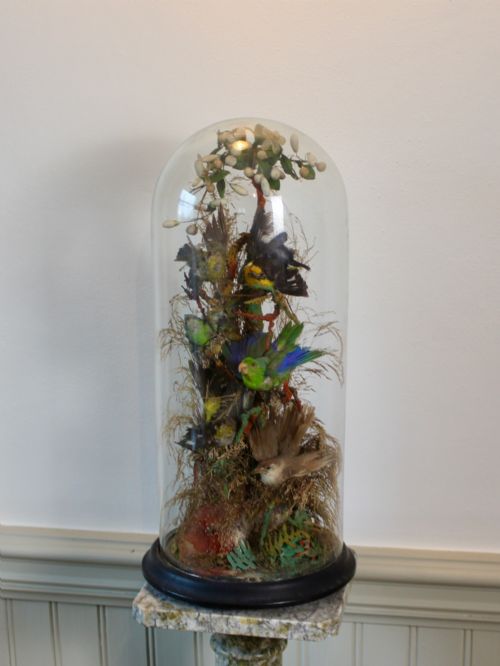
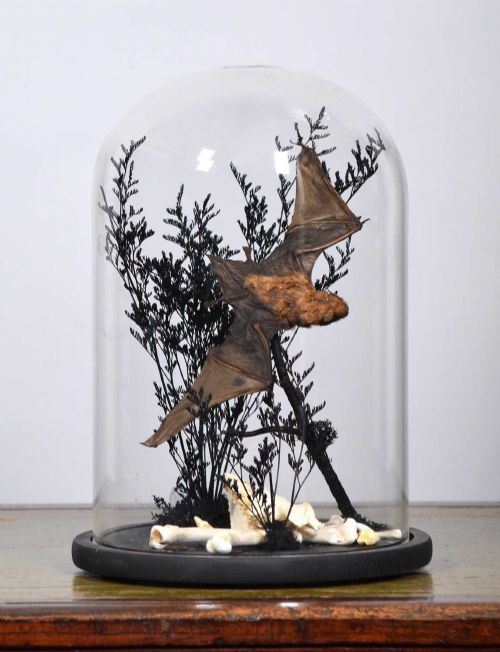
An ebonised glass cloche protects delicate curiosities and taxidermy specimens beneath clear blown glass upon a blackened wooden base.
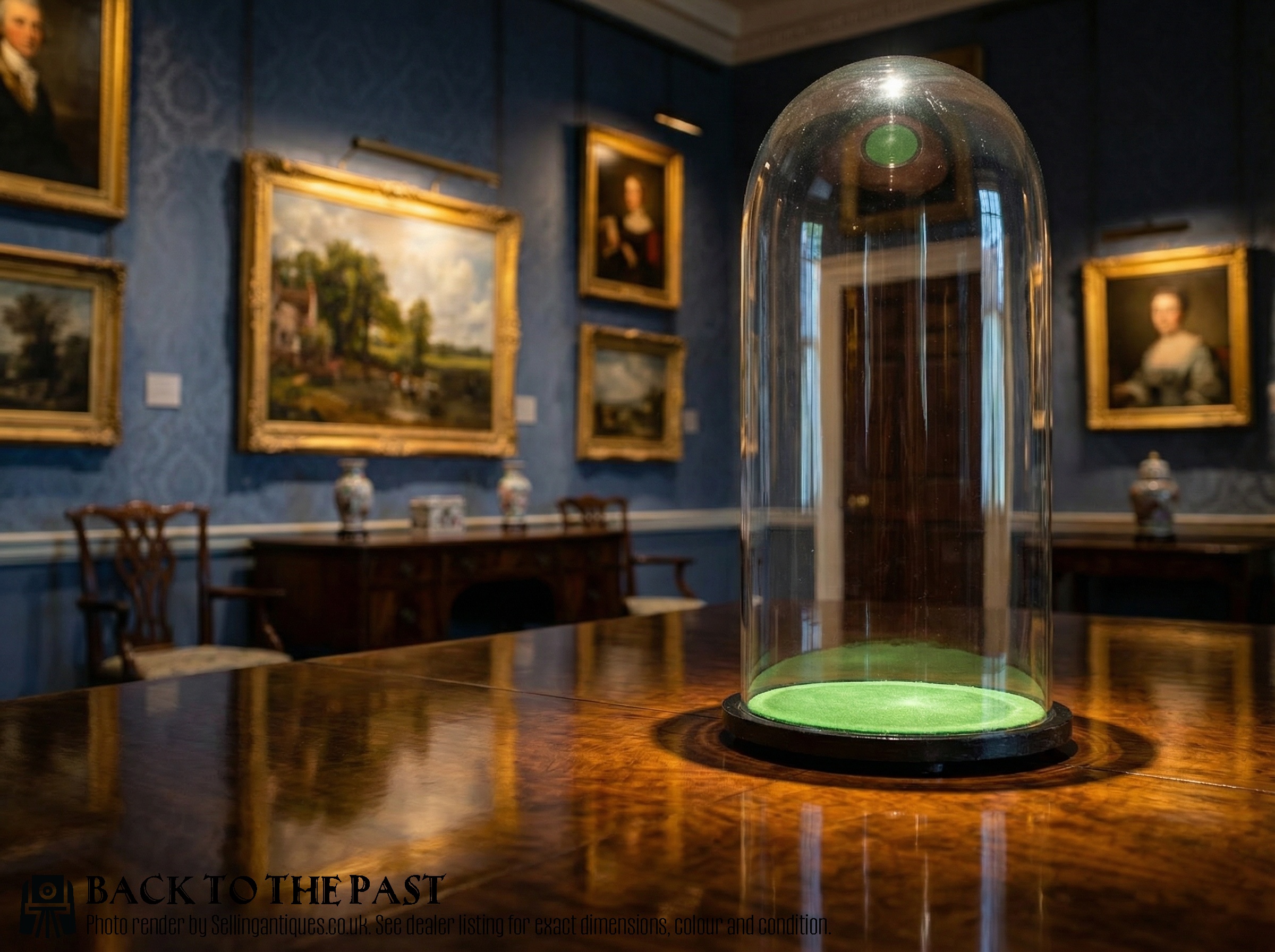
Ebonised Glass Cloche
When you search for an ebonised glass cloche, you encounter tall and wide display domes originating from the Victorian and Edwardian eras. These protective glass covers rest upon dark wooden bases of ebonised wood, pine, or similar timber, often lined with fabric, felt, velvet, or baize.
The majority of pieces meeting this description house taxidermy specimens, birds, fruit compositions, or collector items rather than serving purely domestic functions. They reflect nineteenth-century and early twentieth-century tastes for natural history display and preservation.
Materials and construction
The primary materials visible in these pieces are clear blown glass and ebonised wood or pine, combined to form a protective cover and a secure base. Bases frequently feature interior linings of velvet, baize, felt, or fabric to cushion the display items.
Makers shaped the glass into tall, oval, ovoid, or flat-sided domes designed to fit snugly into grooves within the wooden plinths. Wood surfaces received dark ebonised finishes to mimic more expensive materials and provide a neutral background for specimens.
Ebonised Glass Cloche Retail Price Guide 2026
Typical asking prices for ebonised glass cloche among the pieces listed under this phrase on Sellingantiques today, from the lower quarter to the upper quarter. They describe what is for sale here now, not the wider market.
Object forms include tall display domes, flat-sided domes, oval diorama cases, and clock domes adapted for specimens.
Assessing quality and proportion
Quality reveals itself in the clarity and weight of the glass dome, where older blown glass often exhibits subtle ripples or thickness variations rather than modern machine uniformity. The joinery and finish of the ebonised wooden base also indicate the maker's care.
Proportion between the height of the glass and the profile of the wooden plinth determines the visual balance of the object. Superior examples maintain crisp ebonisation and undamaged interior linings that have survived decades of display.
A Pollard·James Gardner
The Ebonised Glass Cloche Glossary
- Ebonised
- Wood treated with a stain, dye, or polish to imitate the dark, dense appearance of ebony. This finish was common on Victorian display bases.
- Cloche
- A bell-shaped glass cover used to protect plants, food, or decorative objects. In this context, it refers to display domes protecting specimens.
- Baize
- A coarse woolen fabric resembling felt, frequently used to line the interior floors of display domes. It provides a soft, textured surface for items to rest upon.
- Diorama
- A three-dimensional scene containing taxidermy specimens or models arranged within a naturalistic setting. These arrangements sit securely beneath large glass covers.
Ebonised Glass Cloche: Frequently Asked Questions
What fits inside an ebonised glass cloche?
These glass covers typically house taxidermy specimens, birds, botanical preparations, fruit compositions, and clocks. Collectors historically used them to protect fragile items from dust and atmospheric damage.
Interior bases lined with velvet, baize, or felt provided a stable platform for arranging these delicate displays. The enclosed environment kept specimens preserved in domestic settings.
How do I clean the glass dome?
Cleaning requires lifting the glass carefully from its wooden base and washing it with warm water and mild soap. Avoid harsh chemical cleaners that might damage historical glass.
The ebonised wooden base should remain dry, wiped gently with a soft cloth to remove dust without disturbing any original fabric or baize linings.
How do I date these glass domes?
Dating relies upon stylistic clues in the wooden base, the thickness and manufacture of the glass, and any accompanying labels. Pieces from the Victorian and Edwardian periods often display specific turned profiles on the timber plinths.
Thicker glass with minor bubbles or irregularities typically points to nineteenth-century production methods. Finer details like baize linings and original paper labels help narrow down the decade of manufacture.