



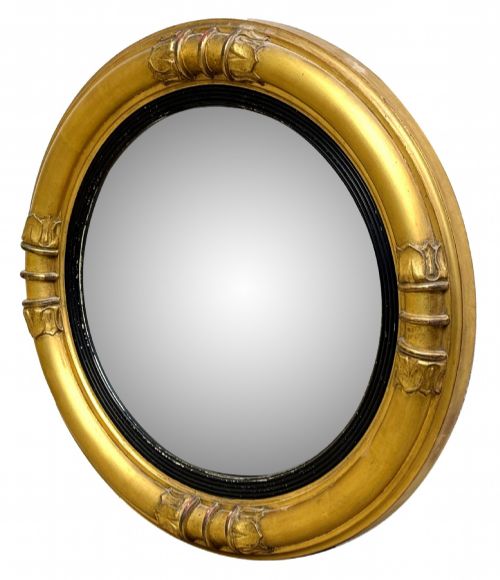


Ebonised Gilt Frame Mirror
An ebonised gilt frame mirror brings together dark wood and bright metal to catch the light in any room.
Ebonised Gilt Frame Mirror
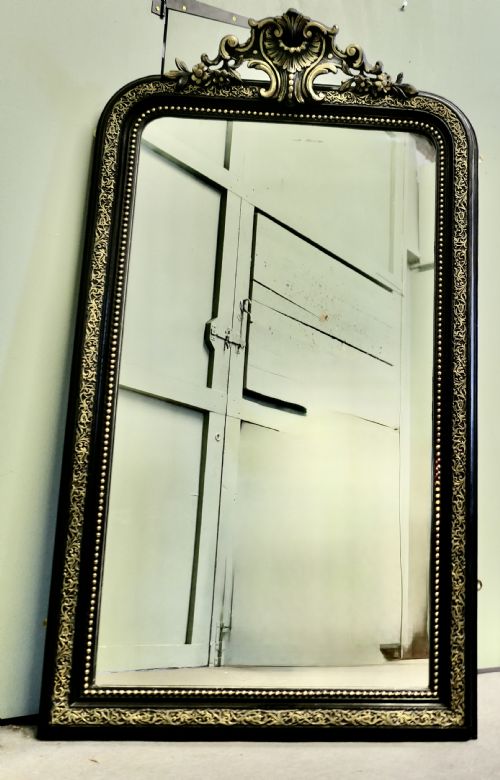
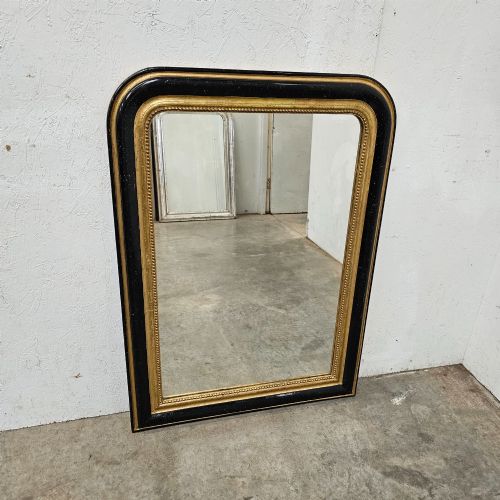
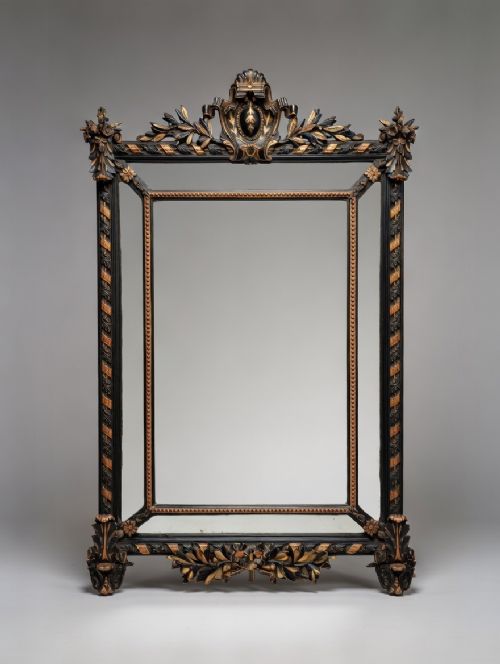
An ebonised gilt frame mirror brings together dark ebonised surfaces and bright parcel-gilt detailing across various historical periods. The selection here spans the Regency, Victorian, and Napoleon III eras, showing how makers combined black finishes with gold leaf.
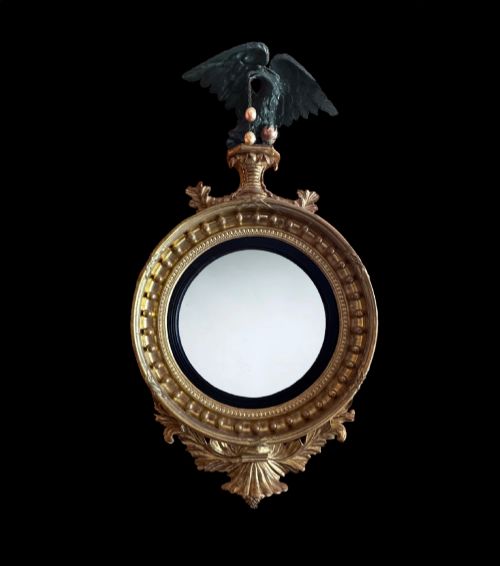
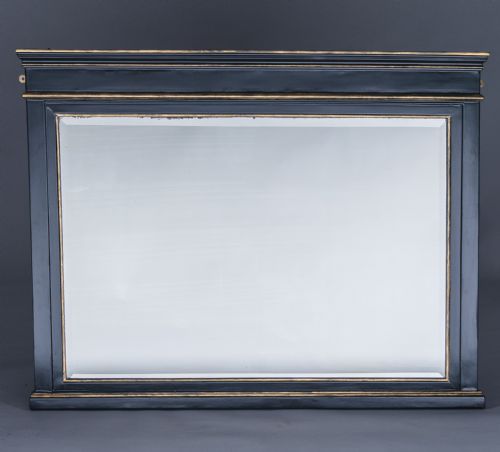
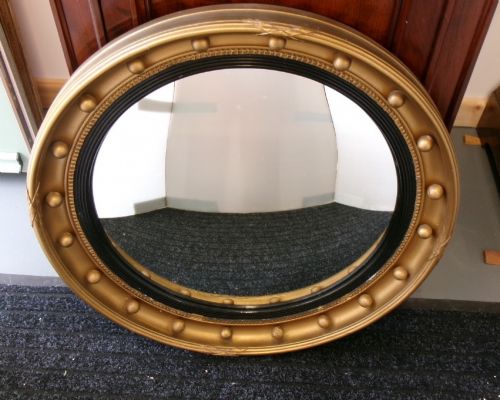
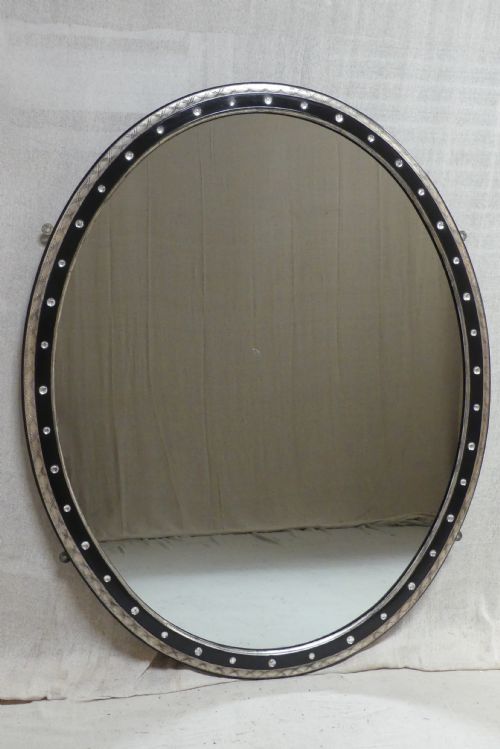
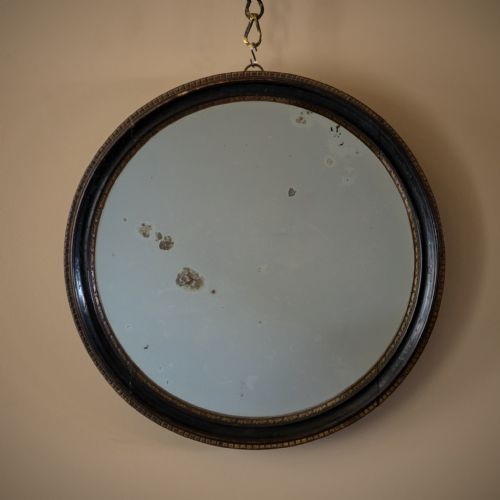
Forms range from large overmantle mirrors intended for chimneypieces to circular convex glasses and tall pier mirrors designed for tight wall spaces. You will encounter rectangular overmantles alongside oval wall mirrors and cushion-moulded frames.
Origins include English workshops and French ateliers, each interpreting dark-wood framing with different carving traditions and scale. These pieces serve practical functions while introducing distinct period character to an interior.
Materials and construction
Makers shaped timber frames from wood and gesso before applying a deep ebonised finish to create a dark, polished background. Gilders then added gold leaf or parcel-gilt highlights to raised carved details, framing the mirror glass securely within.
Reflective surfaces include flat mirror glass, silver gilt plates, and curved convex glass designed to distort reflections across a room. Frames employ cushion profiles, moulded edges, and brass mounts depending on the regional style.
Convex glasses are historically nicknamed sorcerers' mirrors because their wide-angle view once led superstitious watchers to suspect supernatural surveillance.
Distinguishing quality
The sophistication of the carved wooden ornament and the crisp application of gesso dictate the visual strength of the frame. Skilled hands produced deeply undercut mouldings and precise parcel-gilt accents that retain their contrast over time.
The integrity of the original mirror glass and the stability of the joined wooden structure separate standard examples from finer works. Original backing boards and undisturbed gilding indicate a higher degree of preservation.
The Ebonised Gilt Frame Mirror Glossary
- Ebonised
- Wood treated with a chemical stain or finish to imitate true ebony, producing a dense black surface.
- Parcel-gilt
- A decorative technique where only specific raised portions of an object are gilded, leaving the underlying dark wood exposed elsewhere.
- Convex mirror
- A circular looking glass with a curved spherical surface that reflects a wide, panoramic view of the interior.
- Overmantle mirror
- A large horizontal mirror designed specifically to hang on the wall directly above a fireplace mantelpiece.
- Gesso
- A plaster-like mixture applied to wood frames to create a smooth base for subsequent gilding and carving.
Ebonised Gilt Frame Mirror: Frequently Asked Questions
Where should I hang an overmantle mirror?
These large horizontal mirrors belong above a fireplace mantelpiece where they reflect light and anchor the main wall of a room.
Ensure the wall fixings match the substantial weight of the wooden frame and plaster gesso construction.
What is a convex mirror used for?
Convex mirrors provide a wide-angle view of an entire interior space, making them practical for monitoring activity across a room.
Historical examples often hung in dining rooms or parlours to capture ambient light from candles and windows.
How do I identify a Regency frame?
Regency frames frequently feature classical motifs drawn from the Egyptian revival or neat reeded mouldings around the glass.
Look for circular convex formats topped with carved eagles or spherical ball details within the frame perimeter.