



Ebonised Frame Silhouette Portrait
An ebonised frame silhouette portrait brings distinct Georgian and Regency character to a wall through dark profiles and crisp contrast.
Ebonised Frame Silhouette Portrait
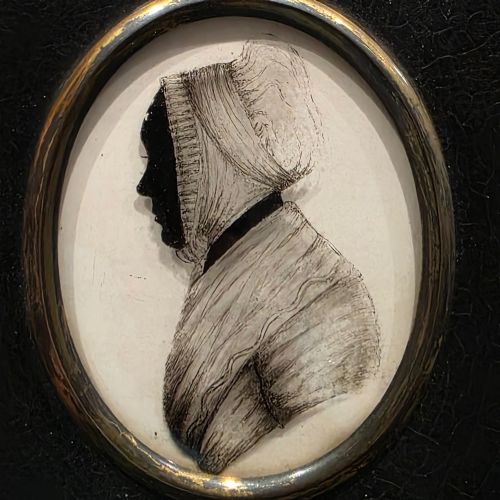
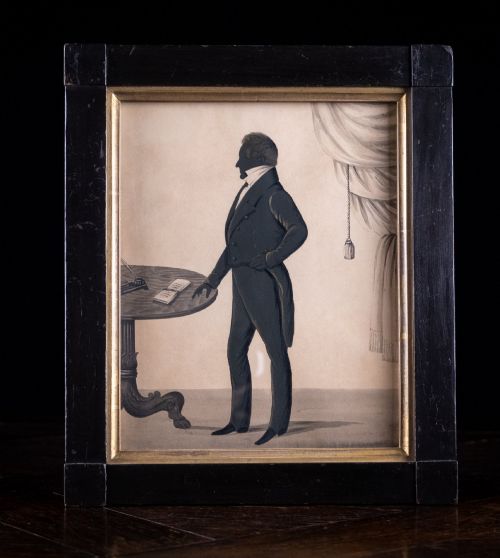
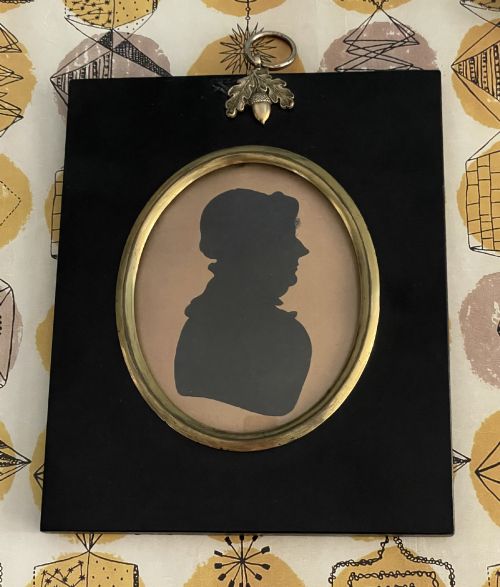
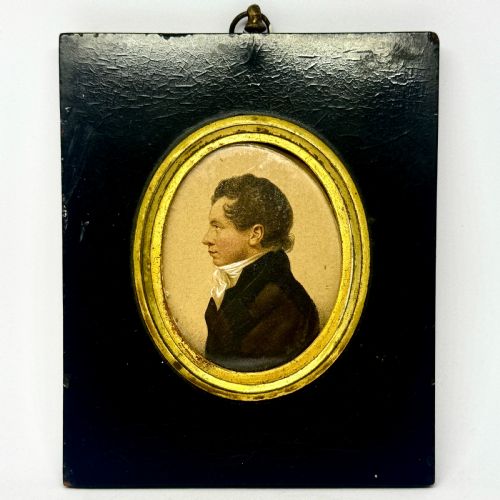
When you search for an ebonised frame silhouette portrait, you encounter miniature likenesses created during the eighteenth and nineteenth centuries. These pieces present profile likenesses of gentlemen, ladies, and children framed in dark wood, often shaped as ovals.
The examples on this page span the Georgian, Regency, and nineteenth-century periods. You meet both painted versions and cut paper profiles, some enhanced with gold leaf details.
How they were made
Maker's workshops built these ebonised wooden frames to house delicate paper profiles or glass panels. Artisans applied black paint or ink directly onto paper, card, or glass to capture the profile likeness.
Many portraits incorporate gilded highlights applied over the dark paint to define clothing and hair. Brass hangers and bezels frequently secure the glass protecting the delicate surface.
Listings feature works from the Georgian, Regency, and nineteenth-century periods, utilising glass, brass, paper, and ebonised wood.
What varies in quality
Quality rests upon the precision of the cutting or the fineness of the brushwork. Skilful portraitists achieved striking likenesses with minimal lines, whereas simpler pieces lack that acute definition.
The preservation of the original ebonised wood frame and glass matters greatly. Finer pieces retain legible inscriptions, dates, or maker details on the reverse.
James Gillespie·Thomas London·George Atkinson·John Miers
The Ebonised Frame Silhouette Portrait Glossary
- Ebonised wood
- Timber treated to resemble ebony, providing a deep black finish suited to framing delicate profiles. This dark border creates a sharp visual boundary around the portrait.
- Silhouette portrait
- A likeness depicted in profile, filled in a solid dark colour against a pale background. These miniature artworks rely entirely on outline and contour for recognition.
- Reverse painted on glass
- A technique where the artist paints the portrait on the reverse side of the glass so it is viewed through the transparent pane. This method gives a glossy depth to the dark pigments.
- Gilded silhouette
- A profile enhanced with gold leaf highlights to describe lace, buttons, or costume details. The bright gold stands out sharply against the black painted surface.
Ebonised Frame Silhouette Portrait: Frequently Asked Questions
How old are these silhouettes?
The pieces span the late eighteenth century through the nineteenth century, covering the Georgian and Regency eras. Most surviving examples date from the Regency period.
Specific dates sometimes appear on the reverse or within accompanying inscriptions left by the original families or makers.
Where should I hang them?
Their small scale suits narrow wall spaces, alcoves, or gallery arrangements alongside other portrait miniatures. Grouping several framed profiles together creates a traditional display.
Keep them away from direct sunlight to protect the paper, paint, and glass from fading over time.
Are the frames original?
Many retain their period ebonised wooden frames, often featuring brass hangers or convex glass. Original frames match the Georgian and Regency methods of construction.
Replacement frames do occur over long centuries of ownership, so inspecting the fit and timber helps determine its age.
How do I identify the sitter?
Some portraits bear handwritten notes, labels, or signatures on the back naming the individual and the date. Researching documented artists helps connect surviving names to known sitters.
Many portraits remain anonymous when family records or inscriptions have been lost across the generations.