



Ebonised Frame Glass Painting
An ebonised frame glass painting brings dark wood contrast and glossy reverse-painted detail to a wall.
Ebonised Frame Glass Painting
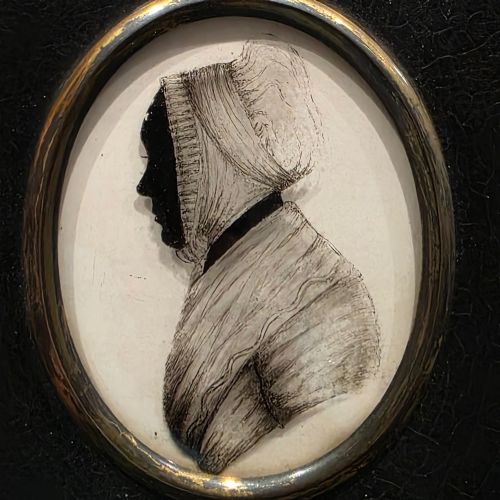
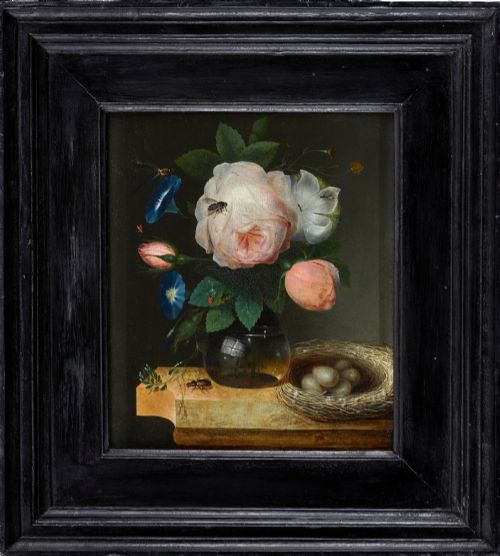
When you search for an ebonised frame glass painting, you are looking at wall art executed directly upon glass and held within darkened wooden surrounds. The pieces listed span several periods, taking the form of reverse glass prints, silhouettes, and mezzotints alongside oil paintings and overmantel mirrors.
The versions you are most likely to meet on this page hail from the Georgian and Regency eras, often featuring portraits, allegorical scenes, or still lifes. Alongside these, 18th-century reverse glass mezzotints and later Victorian Aesthetic Movement pieces appear.
Origins represented across the selection include domestic British portraiture and Chinese export work, showing how widely artists applied pigment and gold leaf behind glass. Each piece relies on the smooth reflective plane of the glass to hold depth and colour in a way canvas cannot.
What separates the grades
Quality rests in the crispness of the reverse painting or mezzotint transfer and the preservation of the pigment behind the glass. Fading, flaking paint, or crude touch-ups detract from the original hand of the artist.
The joinery and finish of the ebonised wood frame also dictate the tier of the piece, with period mouldings and clean gilding marking out finer examples. Original glass free from extensive scratching or replacement holds greater integrity.
Look closely for the stray thumbprint left behind by an 18th-century artisan pressing paint onto glass.
Fletcher·Sebastiaan Vrancx·Gaspar Peeter Verbruggen·W. Bishop
The Ebonised Frame Glass Painting Glossary
- Reverse glass painting
- An artwork painted directly onto the back of a glass sheet so that the final image is viewed through the front. This technique creates a glossy finish that protects the pigments from atmospheric wear.
- Ebonised wood
- Timber treated with stains, black polish, or paint to simulate solid ebony. It was widely used in frames to provide a dark, uniform contrast against gilt details and bright imagery.
- Mezzotint
- A printmaking method of the intaglio family where the surface is roughened to achieve tones and shades rather than simple lines. When adapted for glass, the printed sheet is transferred and coloured from behind.
- Aesthetic Movement
- A late-nineteenth-century design current that emphasised visual beauty over narrative or moral function. Pieces from this style often combine ebonised surfaces with bold decorative forms.
Ebonised Frame Glass Painting: Frequently Asked Questions
How do I hang a glass painting safely?
Glass paintings are heavy and fragile, requiring secure fixings attached directly to the wall studs rather than relying on modern picture wire alone.
Ensure the ebonised frame is structurally sound and that the backing boards support the glass evenly before committing the piece to the wall.
Why is the paint on the back?
Painting in reverse forces the artist to lay down highlights and fine details first, finishing with the background layers last.
This method seals the pigment behind the transparent pane, giving the colours a permanent gloss and protecting them from oxidation.
How do I clean an ebonised frame?
Dust the ebonised wood gently with a dry, soft cloth to avoid disturbing any original gilt highlights or aged patination on the frame.
Keep moisture away from the joins where the wooden moulding meets the glass panel to prevent water damage to the backing.
Are these pieces originals or reproductions?
The selection includes period works dating from the seventeenth, eighteenth, and nineteenth centuries, executed with traditional materials like oil paint and gold leaf.
Examining the backboards, the type of glass, and the construction of the ebonised frame helps confirm the age of each piece.