
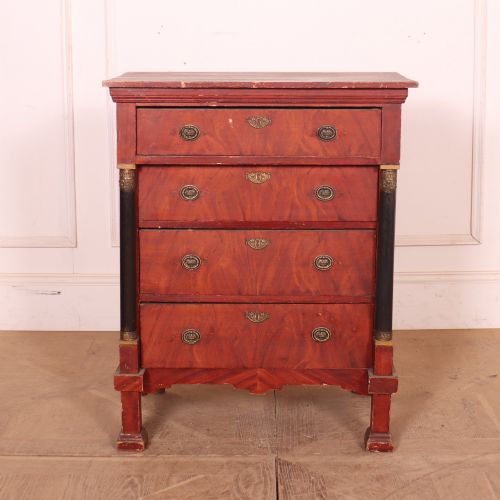


Ebonised Commode Chest
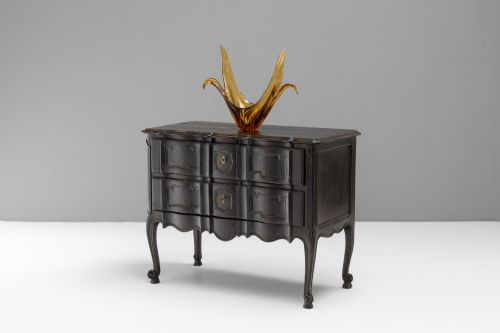
These ebonised commode chest pieces bring dark, architectural presence to a room, offering deep tones and striking silhouettes that collectors seek.
Ebonised Commode Chest
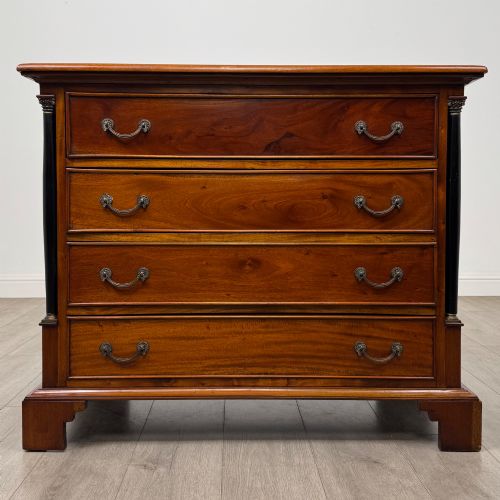
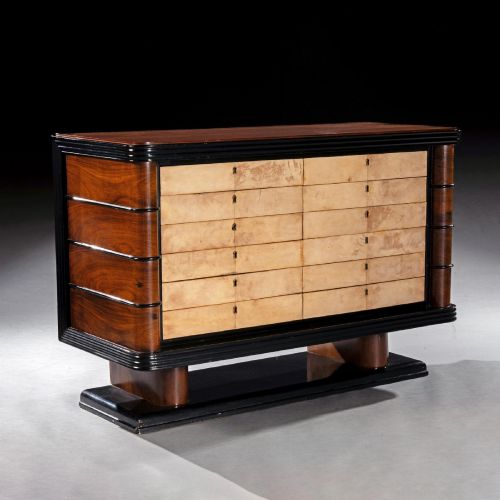
When you search for an ebonised commode chest, you encounter a striking form of storage furniture defined by a darkened, polished finish mimicking ebony wood. The pieces appearing here span centuries from the eighteenth to the twentieth, reflecting diverse stylistic influences including French provincial, Dutch Empire, and Art Deco design.
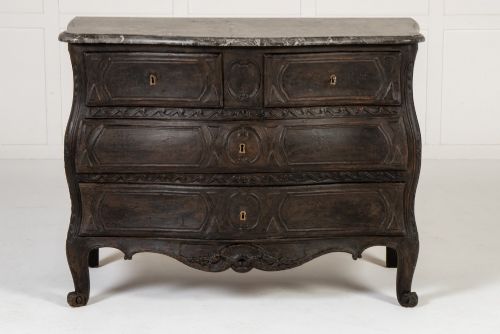
You are most likely to meet examples originating from French and Italian traditions, alongside English adaptations such as bow-fronted or Georgian-style chests. Forms range from bombe silhouettes and serpentine bedside tables to architectural chests topped with marble.
The selection encompasses varying scales, from grand eighteenth-century commodes to compact nineteenth-century pieces and twentieth-century interpretations. Each item serves as a functional chest of drawers while delivering a distinct visual weight through its dark surface.
Materials and construction
Makers achieved the characteristic dark finish of an ebonised commode chest by staining fruitwood, pear, or other timbers to resemble high-status ebony. This dark surface was frequently polished to a high gloss or satin sheen, contrasting sharply with mounts and fittings.
Construction frequently incorporates secondary hardwoods such as mahogany, walnut, or pine beneath the ebonised skin, paired with applied veneers like palisander, birch, or burr elm. Heavy stone surfaces, particularly marble slabs, sit atop many eighteenth and nineteenth-century examples.
Metal detailing plays a crucial role in the fabrication, utilising cast brass handles, escutcheons, and sabots to accent the dark woodwork. Joinery methods reflect the period of origin, from traditional dovetail drawers in early pieces to later twentieth-century framework.
Some chests feature parchment-covered drawers, proving that interior designers a century ago still enjoyed surprising tactile contrasts.
Assessing quality and execution
Quality in these pieces rests upon the depth and durability of the ebonised finish and the integrity of the underlying timber. Superior examples display a smooth, even coloration that has aged gracefully without flaking, revealing the grain subtly beneath the dark tone.
The sophistication of the hardware and secondary materials distinguishes finer items from standard production. Genuine marble tops, finely chased brass mounts, and meticulous hand-cut dovetailing elevate a piece significantly above simpler regional work.
Proportion and silhouette drive the hierarchy of value, where sweeping serpentine fronts, bombe curves, or crisp architectural lines demonstrate superior craftsmanship. The balance between the dark carcass and decorative elements dictates the visual success of the design.
The Ebonised Commode Chest Glossary
- Ebonised
- Wood treated with stain, paint, or chemical processes to imitate costly ebony timber. This dark finish became popular across various stylistic periods to impart a sense of neoclassical sobriety or modern luxury.
- Commode
- A low chest of drawers or cabinet originating in France during the seventeenth century. It typically stands on relatively short legs and provides substantial storage capacity.
- Bombe
- A swelling, outward-curving contour found on the front and sides of case furniture. This exuberant shape requires advanced carpentry to execute successfully.
- Serpentine
- A furniture front or top shaped with a convex centre flanked by concave curves. This undulating line adds dynamic movement to case pieces.
- Escutcheon
- A protective plate surrounding a keyhole, often cast in brass or bronze. On better pieces, it acts as a decorative ornament that complements the surrounding woodwork.
Ebonised Commode Chest: Frequently Asked Questions
How do I clean an ebonised finish?
Dust gently with a soft, dry cloth to prevent micro-scratches on the polished dark surface. Avoid harsh chemical cleaners or excess moisture, which can degrade the ebonising agent over time.
Apply a microcrystalline wax occasionally if the surface appears dry, buffing it lightly to restore the soft sheen characteristic of well-kept antique furniture.
Where should I place a commode chest?
These pieces serve well as statement storage in hallways, living rooms, or bedrooms, providing a strong anchor against lighter walls. Their dark finish contrasts effectively with neutral interior schemes.
Ensure the piece sits away from direct sunlight and heat sources to protect both the ebonised wood and any associated marble tops from thermal shock or fading.
Are marble tops original to these chests?
Many eighteenth and nineteenth-century commodes incorporate fitted marble slabs designed to provide a durable, cooling surface for daily use. These stones were typically selected to complement the dark woodwork.
Inspect the edges and underside of the marble for signs of matching age and wear relative to the wooden carcass beneath.
What defines the Aesthetic Movement style?
Aesthetic period pieces prioritise visual harmony and artistic expression over historical revivalism, often drawing inspiration from Japanese design. The use of pitch pine and ebonised surfaces was common in these British interiors.
Such items generally display clean, disciplined lines with minimal ornamentation, letting the quality of the timber and finish speak for itself.