

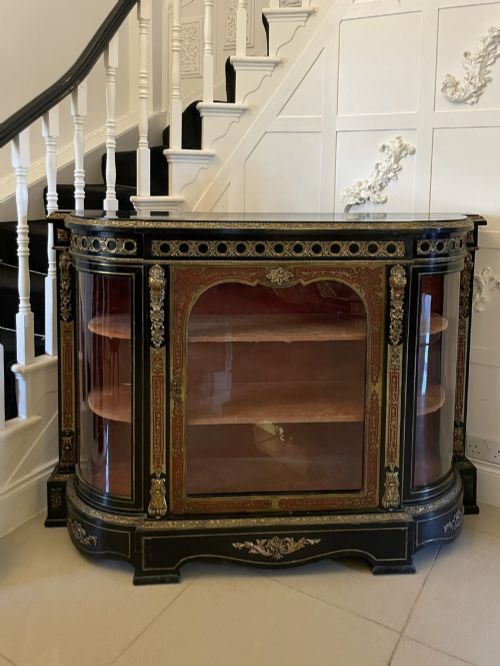


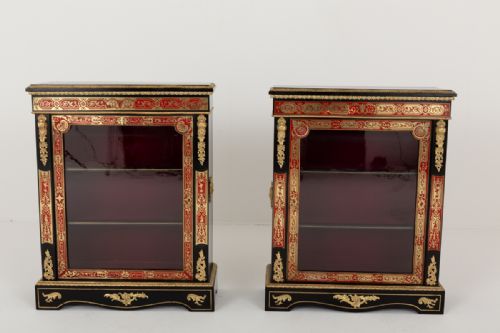


Ebonised Boulle Vitrine
An ebonised boulle vitrine brings French nineteenth-century display to a room through dark polished surfaces and intricate metallic inlay.
Ebonised Boulle Vitrine
An ebonised boulle vitrine is a cabinet designed for displaying prized objects, combining glazed doors with the rich contrast of dark timber and metallic inlay. These pieces date principally from the nineteenth century, including the Victorian era and the Napoleon III style originating in France.
The form appears most frequently as a pier cabinet or a larger display cabinet, and occasionally as a brass inlaid bijouterie table. Buyers find these cabinets serve as focal points in drawing rooms, offering both glass-fronted storage and decorative presence.
Originating largely from French workshops of the eighteen-fifties and eighteen-sixties, the pieces seen on this page reflect the nineteenth-century revival of seventeenth-century marquetry techniques. They combine cabinet-making with metalwork to create furniture intended for formal display.
How they were made
The foundation of these cabinets is ebonised wood, a dark timber finished to imitate ebony, which provides a dramatic contrast for the decorative elements. Craftsmen inlaid this dark surface with brass and tortoiseshell, creating the characteristic patterned patterns associated with boulle work.
Mounts in ormolu, a gilded bronze, frame the glazed doors and corners of the cabinet, adding sculptural weight to the structure. Glass panels complete the display function, secured within frames that showcase the meticulous inlay work.
Ebonised Boulle Vitrine Retail Price Guide 2026
Typical asking prices for ebonised boulle vitrine among the pieces listed under this phrase on Sellingantiques today, from the lower quarter to the upper quarter. They describe what is for sale here now, not the wider market.
Materials recorded across the inventory include ebonised wood, glass, tortoiseshell, brass, ormolu, and brass inlay.
What varies in quality
The finesse of the brass inlay separates standard cabinet-making from exceptional work, with finer pieces displaying intricate, tightly fitted metal and tortoiseshell patterns. The crispness of the ormolu mounts also indicates the maker's investment in detail and finishing.
Proportion and scale dictate the visual impact of the cabinet, where larger or paired pieces require balanced composition to maintain elegance. The depth of the ebonised finish and the preservation of the delicate marquetry further define the standing of each piece.
The Ebonised Boulle Vitrine Glossary
- Ebonised wood
- Timber treated or stained to resemble solid ebony. This finish provides a deep black background that accentuates inlaid metals.
- Boulle work
- A style of marquetry using brass and tortoiseshell developed during the reign of Louis XIV and revived in the nineteenth century. The technique involves cutting matching sheets of metal and shell together.
- Ormolu
- Gilded bronze used for decorative mounts and framing on furniture. This material provides metallic highlights that complement the inlay.
- Pier cabinet
- A narrow cabinet designed to stand against a wall pier between windows. These pieces often feature glazed doors for displaying small collections.
Ebonised Boulle Vitrine: Frequently Asked Questions
Where should I place a vitrine?
These cabinets suit reception rooms and drawing rooms where their glazed panels and dark surfaces can be appreciated. They require stable wall space away from direct sunlight to protect the sensitive inlay materials.
Positioning a pier cabinet between windows or against a prominent wall allows the ormolu mounts and brass work to catch ambient light effectively.
How do I care for ebonised surfaces?
Dusting with a soft, dry cloth is sufficient for routine maintenance of the ebonised timber and glass. Avoid modern spray polishes that can build up a residue and dull the dark finish.
Care must be taken around the brass inlay and tortoiseshell to prevent moisture from seeping into the joints of the marquetry.
How do I identify nineteenth-century pieces?
Nineteenth-century examples frequently exhibit the Napoleon III style revival, combining ebonised wood with brass inlay and ormolu. Construction methods, timber preparation, and the specific character of the brass work point to this Victorian era.
Examining the interior construction and the ageing of the materials helps confirm the period of manufacture.