

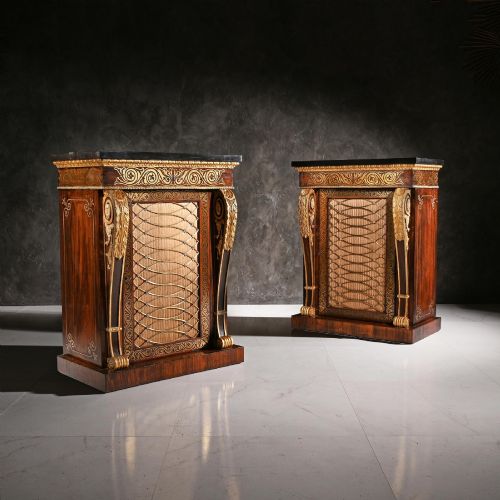
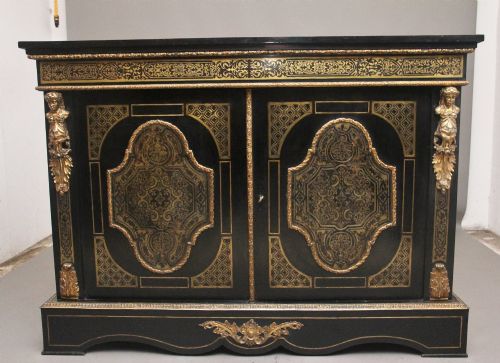
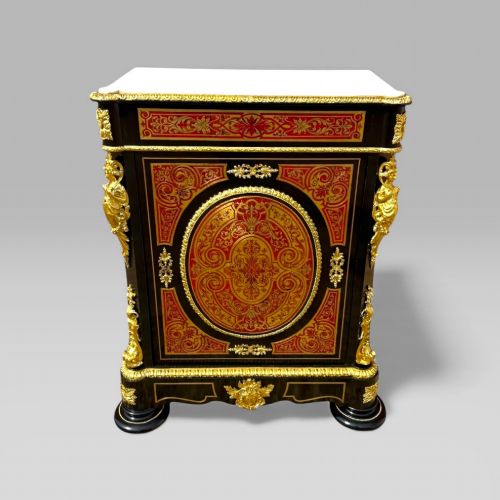


Boulle Work Cabinet
A boulle work cabinet brings dramatic tortoiseshell and brass marquetry into a room, offering both display and storage with distinct nineteenth-century French style.
Boulle Work Cabinet
When you search for a boulle work cabinet, you find pieces originating primarily from the nineteenth century, particularly associated with the French Napoleon III period and Louis XVI style.
The forms on this page range from pier cabinets and side cabinets to larger display cabinets, credenzas, and writing desks like the bonheur du jour.
Most examples combine ebonised wood or ebony with distinctive tortoiseshell and brass marquetry, often fitted with marble tops and glazed doors.
Materials and construction methods
Craftsmen built these cabinets using ebonised wood or ebony as a dark ground to highlight the elaborate marquetry work.
The marquetry itself pairs sheets of brass with tortoiseshell, cut together in matching positive and negative patterns known as premiere partie and contre-partie.
Mounts in ormolu and gilt bronze accent the corners and edges, while glass panels feature on the doors of the display cabinets and bookcases.
Boulle Work Cabinet Retail Price Guide 2026
Typical asking prices for boulle work cabinet among the pieces listed under this phrase on Sellingantiques today, from the lower quarter to the upper quarter. They describe what is for sale here now, not the wider market.
Tortoiseshell inlay was so delicate that makers had to sandwich the shell and brass together, cutting both at once with a fine fretsaw.
Judging the quality of the work
Quality shows in the precision of the brass and tortoiseshell cutting, where finer pieces display intricate scrollwork and tight joints without visible filler.
The crispness and weight of the ormolu mounts distinguish superior examples, as does the depth of the ebonised finish on the underlying timber.
Cabinet proportions and the integration of marble tops or glazed sections indicate the level of ambition in the original workshop.
The Boulle Work Cabinet Glossary
- Boulle
- A form of marquetry using brass and tortoiseshell inlaid into wood, named after the famous cabinetmaker André-Charles Boulle. It creates a striking contrast of metallic glint against dark shell.
- Ormolu
- Gilded bronze used for decorative mounts and framing on furniture. It adds a bright metallic highlight to the edges and feet of the cabinet.
- Pier Cabinet
- A low cabinet designed to fit against the wall space between windows. These are common forms among the nineteenth-century pieces.
- Credenza
- A long, low side cabinet used for storage and display. They frequently feature serpentine fronts and elaborate brass inlays.
- Bonheur du Jour
- A small ladies' writing desk featuring a cabinet or small drawers on the upper surface. This refined form combines writing space with display.
Boulle Work Cabinet: Frequently Asked Questions
How do I clean a boulle work cabinet?
Dust gently with a soft, dry cloth to protect the delicate brass and tortoiseshell surfaces. Avoid modern chemical polishes that can damage the old finish.
Keep the cabinet away from direct sunlight and sudden temperature changes to prevent the tortoiseshell from drying and lifting.
What is the difference between a pier cabinet and a credenza?
A pier cabinet is typically narrower and taller, designed specifically to stand against the wall between two windows. They often have a single glazed door.
A credenza is a wider, lower piece of furniture offering more surface and interior storage space, frequently featuring multiple doors and serpentine shaping.
Are all these cabinets from the nineteenth century?
The pieces listed date from the nineteenth century, spanning the Napoleon III era and the Louis XVI revival styles. Makers of this period revived the techniques first developed in the seventeenth century.
Materials such as ebonised wood, brass, and tortoiseshell are characteristic of these nineteenth-century interpretations.
Can I use a boulle work cabinet as a bookcase?
Some pieces on this page are specifically designated as bibliotheques or bookcases with glass doors. They protect volumes while displaying the elaborate marquetry on the exterior.
Ensure the shelves are adjusted carefully to hold the weight of books without bowing the interior structure.