



Ebonised Boulle Desk
An ebonised boulle desk brings deep dark timber and golden metal inlay together into a striking workspace rooted in nineteenth-century French design.
Ebonised Boulle Desk
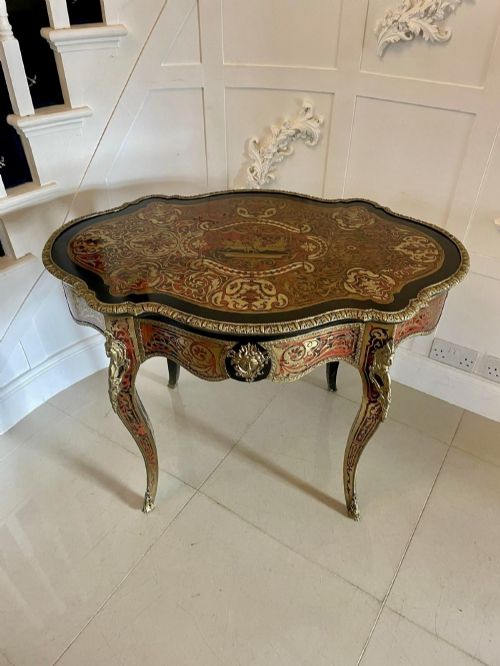
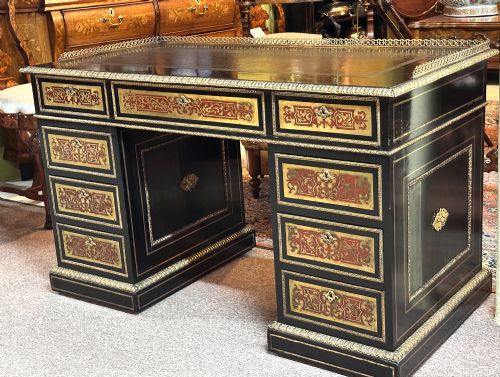
An ebonised boulle desk is a nineteenth-century writing piece defined by dark stained wood and intricate tortoiseshell or metal ornamentation. These furnishings draw heavily on French Napoleon III and Louis XV revival styles, bringing ornate classical silhouettes to practical writing surfaces.
Buyers browsing this selection will most frequently encounter nineteenth-century French writing tables, bureau plats, and freestanding desks. These pieces showcase elaborate brass inlay and rich surface contrast suited for formal studies and grand rooms.
Materials and construction
Craftsmen built these pieces using ebonised wood as a dark, uniform ground that allowed lighter decorative elements to stand out. Brass and tortoiseshell were meticulously cut and inlaid into the timber surface to create elaborate floral and scroll patterns.
Ormolu mounts, leather writing inserts, and glass components frequently complete the construction of these elaborate nineteenth-century furnishings. The combination of cast bronze details and fine marquetry demonstrates advanced workshop techniques of the period.
Ebonised Boulle Desk Retail Price Guide 2026
Typical asking prices for ebonised boulle desk among the pieces listed under this phrase on Sellingantiques today, from the lower quarter to the upper quarter. They describe what is for sale here now, not the wider market.
Materials recorded across the inventory include brass, ebonised wood, tortoiseshell, ormolu, leather, glass, stained wood, and enamel.
Assessing quality and execution
The precision and intricacy of the brass and tortoiseshell marquetry separate standard production from exceptional examples. Finer pieces display crisp, tight joints in the inlay work and sophisticated casting in the surrounding ormolu mounts.
The depth of the ebonised finish and the condition of the underlying wooden structure also dictate the overall character of a desk. Superior examples maintain the integrity of their delicate decorative surfaces through careful historic craftsmanship.
Maison Millet
The Ebonised Boulle Desk Glossary
- Ebonised wood
- Timber treated to resemble ebony through staining or painting. This dark finish provides a dramatic background for metallic inlay.
- Boulle work
- A form of marquetry utilising brass and tortoiseshell developed during the seventeenth century and revived in the nineteenth century. This technique creates a rich, patterned surface across furniture and decorative objects.
- Ormolu
- Gilded bronze used for decorative mounts and accents on furniture. This material adds metallic highlight and structural definition to wooden forms.
- Bureau plat
- A flat-topped freestanding writing desk typically featuring multiple drawers. These tables are finished on all sides for placement in the centre of a room.
- Bonheur du jour
- A small light-duty writing cabinet featuring an upper section with shelves or small drawers. This compact form gained popularity during the nineteenth century.
Ebonised Boulle Desk: Frequently Asked Questions
What is an ebonised boulle desk?
An ebonised boulle desk is a nineteenth-century writing table featuring dark ebonised wood inlaid with brass and tortoiseshell. These pieces often follow French Napoleon III or Louis XV revival styles.
Such furnishings serve as both functional writing surfaces and decorative centrepieces, reflecting nineteenth-century appreciation for historic French design.
Where should I place a freestanding boulle desk?
A freestanding boulle desk is designed to be viewed from all sides, making it suitable for placement in the centre of a room rather than against a wall. This positioning showcases the finished back and detailed marquetry.
Ensure the placement protects delicate tortoiseshell and brass surfaces from direct, harsh sunlight to preserve the materials over time.
What materials are used in boulle furniture?
Boulle furniture primarily combines ebonised wood with brass and tortoiseshell inlay, creating a high-contrast decorative surface. Ormolu mounts and leather writing surfaces are also common supplementary materials.
These combined elements require gentle maintenance to preserve the contrast between the dark timber and the metallic inlay.