





Earthy Tone Landscape Painting
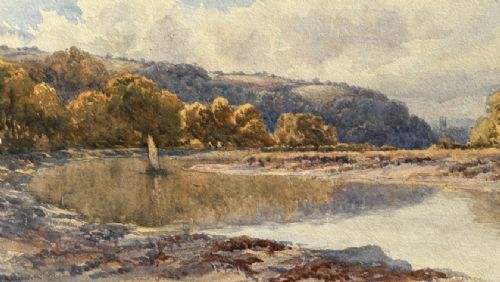
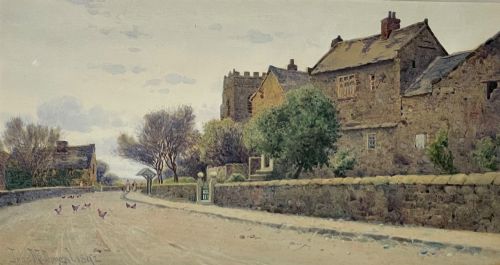
An earthy tone landscape painting captures quiet countryside scenes using muted palettes found across Victorian, Edwardian, and twentieth-century works.
Earthy Tone Landscape Painting
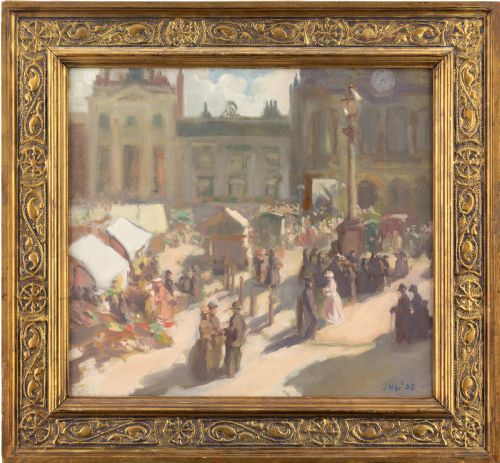
An earthy tone landscape painting brings natural hues of green, brown, ochre, and muted grey into domestic spaces. These works span the nineteenth century through the mid twentieth century, covering British Impressionism, Post-Impressionism, and the Barbizon school.
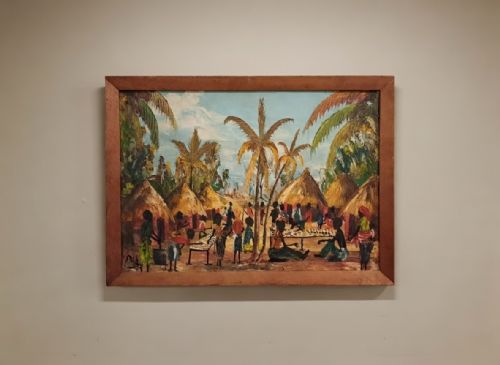
Buyers meet river views, farmyards, moorland streams, and village scenes executed on canvas, board, wood panel, or paper. Scottish and Yorkshire subjects appear frequently alongside French provincial scenes.
How they were made
Artists painted primarily in oil or watercolour, applying pigment to stretched canvas, prepared wooden panels, thick card board, or heavy watercolour paper. Oil paint offers heavy brushwork and rich impasto, while watercolour utilises translucent washes on paper.
Supports range from sturdy wood panels used for panel paintings to fine canvas grains that catch the texture of the brush. Many works retain their period wooden frames, which protect the edges of the canvas and paper.
Earthy Tone Landscape Painting Retail Price Guide 2026
Typical asking prices for earthy tone landscape painting among the pieces listed under this phrase on Sellingantiques today, from the lower quarter to the upper quarter. They describe what is for sale here now, not the wider market.
Several sheep and working horses clearly posed for their portraits alongside human farm workers.
What varies in quality
Quality rests in the handling of light and the sureness of the brushwork across the landscape. Stronger compositions capture atmospheric depth through confident strokes and subtle colour blending.
Condition of the surface material matters greatly, particularly regarding the stability of oil paint on canvas or panel, and the preservation of paper free from heavy foxing in watercolours.
David Law·Tom Campbell·John McDougal·John Hodgson Lobley·Raimond Louis Lecourt·Herbert Royle·William JB Jenkins·Reginald Grange Brundrit·John Atkinson·John Frederick Herring·G Villiers Stuart·Paul Jones·Thomas Creswick·Owen Bowen·Charles H Poingdestre·Ernest Higgins Rigg·Rowland Henry Hill·Kershaw Schofield·George F Wetherbee·William Greaves·Francis William Topham·Maurice Asselin·Fred C Jones·John D Walker·William Kay Blacklock
The Earthy Tone Landscape Painting Glossary
- Canvas
- A heavy woven fabric stretched across a wooden frame to serve as a painting surface. It provides a flexible yet durable support for oil paint.
- Watercolour
- A painting method where coloured pigments are suspended in a water-soluble binder. It is traditionally applied to paper to create luminous, transparent effects.
- Wood Panel
- A flat wooden board utilised as a rigid support for oil paintings. Artists valued panels for their smooth, stable surfaces.
- Impressionism
- An art movement focusing on accurate depiction of light and ordinary subject matter. Painters used visible brushstrokes and open compositions.
- Barbizon School
- A group of French landscape painters working from nature during the mid nineteenth century. They emphasised atmospheric moods and earthy colour palettes.
Earthy Tone Landscape Painting: Frequently Asked Questions
How do I hang an antique painting?
Secure picture wire to sturdy D-rings on the wooden frame back. Hang the piece on a solid wall away from direct sunlight and strong heat sources to protect the paint.
Keep the room humidity stable to prevent wood panels from warping or canvas from slackening over time.
Are these paintings signed by the artist?
Many works bear visible signatures or initials from the artist, often placed neatly in a lower corner. Some pieces also include gallery labels or studio sale provenance on the reverse.
Unsigned works rely on stylistic attribution, period framing materials, and subject matter to indicate their origin.
What is the difference between oil and watercolour?
Oil paint uses drying oils to bind pigments, allowing thick application and rich colour depth on canvas or wood. Watercolour uses water-soluble binders on paper for translucent effects.
Oils require rigid supports like canvas or board, whereas watercolours traditionally require paper protection under glass.