





Earthy Landscape Canvas
These earthy landscape canvas pieces capture rural vistas and agricultural scenes in oil paint, offering a grounded and historic window into pastoral life.
Earthy Landscape Canvas
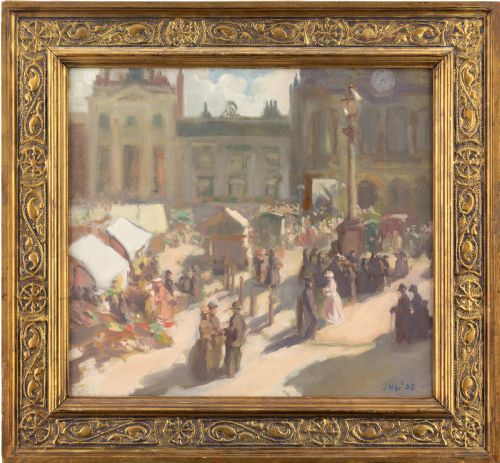
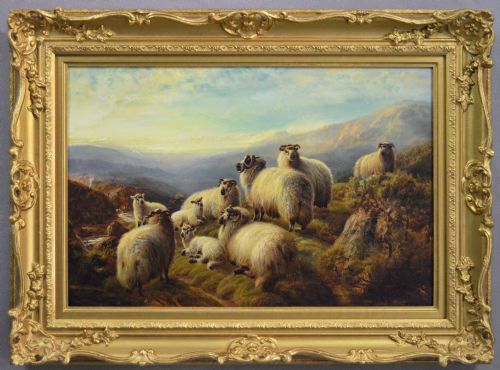
When you search for an earthy landscape canvas, you encounter oil paintings on canvas depicting farms, rivers, woodlands, and rural workers from the nineteenth century through the mid-twentieth century. The selection leans heavily toward British and French provincial works executed in impressionist, pastoral, and realist idioms.
Most examples originate from the Victorian era up to the 1930s, featuring familiar countryside views such as Yorkshire valleys, Scottish highlands, and French farmyards. These works capture everyday agricultural subjects, including working horses, cattle, haymaking, and riverbanks, rendered in natural tones.
Buyers seeking these pieces typically encounter framed oils on canvas or board created by regional artists who recorded the topography and rural occupations of their time. The subjects range from quiet woodland streams to busy farmyards and coastal harbours.
Materials and technique
The works rely upon oil paint applied to stretched canvas or wooden board, utilising the rich medium to build depth and texture across natural landscapes. Artists layered pigments to capture the varied light of morning views, woodland shade, and moorland streams.
Many paintings are housed in period wooden frames, occasionally accented with gilt details, which complement the traditional canvas supports and protect the edges of the artwork over decades of display.
Several canvases faithfully record the patient expressions of working horses taking a well-deserved drink at the trough.
Judging quality and execution
Quality rests upon the artist's ability to handle light, atmosphere, and proportion within the natural setting, separating routine regional studies from masterly compositions. Brushwork that successfully conveys the weight of working horses, the texture of foliage, or the movement of water defines the upper tier of the range.
The integrity of the canvas surface, stability of the oil paint layers, and harmony of the original framing contribute significantly to the overall presence of the piece. Works that retain their stretcher keys, clear signatures, and authentic period framing demonstrate superior preservation.
John Hodgson Lobley RBA·Robert Watson·Raimond Louis Lecourt·Herbert Royle·Reginald Grange Brundrit RA·John Frederick Herring·Robert Finley McIntyre·Thomas Creswick RA·William Traies·Ernest Higgins Rigg·J L Van Leemputten·Frederick William Jackson·Kershaw Schofield·Alois Arnegger·George F Wetherbee·William Greaves·Maurice Wagermans·Benjamin Williams Leader·Edward J Cobbett·Edward John Niemann
The Earthy Landscape Canvas Glossary
- Canvas
- A heavy woven fabric stretched across a wooden frame to serve as a support for oil paintings.
- Barbizon School
- A nineteenth-century French art movement championing landscape painting focused on realism and direct observation of nature.
- Stretcher
- The internal wooden framework that holds the canvas taut behind the painted surface.
- Impressionism
- A style of painting emphasising small, thin brush strokes and accurate depiction of changing light.
- Pastoral
- A genre of art idealising rural life, agricultural scenes, and shepherds or farm animals in open landscapes.
Earthy Landscape Canvas: Frequently Asked Questions
What periods do these landscape paintings cover?
The listings span from the nineteenth century through the 1960s, with a strong concentration of works originating between the Victorian era and the 1930s.
Artists from these decades produced rural scenes reflecting both British countryside traditions and French provincial landscapes.
How should I care for an oil painting on canvas?
Keep the artwork away from direct sunlight, excessive moisture, and rapid temperature fluctuations to protect the oil paint and canvas fibres.
Dust the surface gently with a soft, dry brush and avoid using liquid cleaners or touching the painted areas directly.
What subjects are most common in these works?
Common subjects include agricultural farmyards, riverbanks, moorland streams, woodland cattle, and horses at work in fields.
These pastoral motifs document rural trades and topography across regions like Yorkshire, Scotland, and rural France.
Are these paintings supplied with frames?
Many pieces retain their original wood or gilt frames, which often date from the same period as the canvas itself.
These frames provide structural protection and historical context for the artwork.