





Barbizon Style Landscape
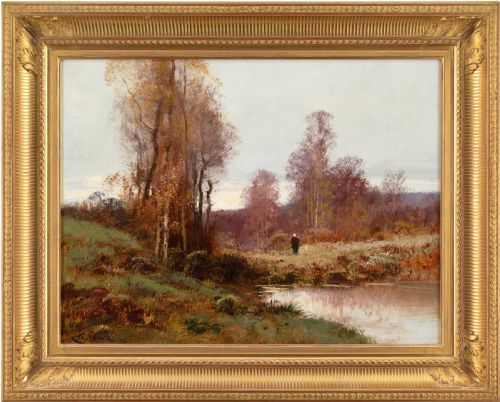
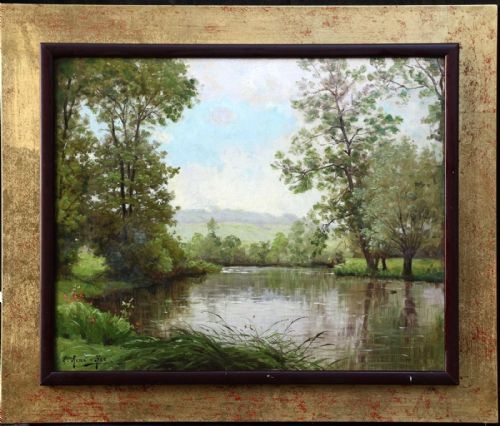
A barbizon style landscape captures the quiet intimacy of nineteenth-century rural France through textured oil on canvas.
Barbizon Style Landscape
When you search for a barbizon style landscape, you encounter nineteenth century oil paintings focused on rural French scenery, river views, and wooded paths. These works stem from periods including the Victorian era and extend through the nineteenth century into nineteen fifty.
You frequently meet framed oil paintings on canvas alongside works executed on wood panels. Common subjects range from autumn rivers and village scenes to meditative depictions of white birches in Provence.
The aesthetic bridges the gap between traditional academic landscape painting and early naturalism. Many pieces reflect direct engagement with the French school, often framed in gilded wood or giltwood.
How they were made
Makers utilised oil paint spread across canvas or wood surfaces to build up rich, atmospheric textures. Canvases are frequently housed within heavy gilded wood and plaster frames that complement the natural tones of the scenes.
The physical construction relies on traditional stretched canvas supports paired with layered oil pigments. Artisans applied these materials to capture the subdued light and earthy palettes characteristic of the Barbizon school.
The listings span the nineteenth century up to nineteen fifty, recording materials like canvas, wood, plaster, and oil paint.
What varies in quality
The handling of light and shadow distinguishes finer examples from simpler student or follower works. Superior execution reveals a confident command of brushwork that brings depth to woodland foliage and riverbanks.
The integrity of the original canvas and the preservation of the surrounding giltwood frame influence the overall appeal. Patination on the wood and plaster elements should look consistent with nineteenth century origins.
Charles Clair·Alphonse Robert·Charles Edmond Rene His·Henri Harpignies
The Barbizon Style Landscape Glossary
- Barbizon School
- A nineteenth century movement of French painters who turned away from academic convention to paint rural landscapes directly from nature. This approach laid the groundwork for French naturalism and impressionism.
- Oil on Canvas
- A traditional painting technique where pigment suspended in drying oil is applied to a woven fabric support. This combination offers durability and a receptive surface for varied brushwork.
- Giltwood
- Wood that has been coated with a thin layer of gold leaf or gold paint. It frequently appears on period frames designed to enhance the warmth of nineteenth century paintings.
- French School
- A broad designation for artists trained or working within the artistic traditions of France. It encompasses multiple generations of painters from the nineteenth century onward.
Barbizon Style Landscape: Frequently Asked Questions
What is a barbizon style landscape?
These works are nineteenth century oil paintings that depict rural French scenery, forests, and riverbanks with a focus on natural light. They reflect the rural traditions established by painters working near the forest of Fontainebleau.
On this page, you will find these paintings rendered primarily in oil on canvas, often presented in period gilded wood frames.
How do I date these paintings?
Dating relies on recorded signatures, biographical dates of painters, and stylistic markers typical of the nineteenth century. Canvas preparation and frame construction also offer clues to the age of the piece.
Many listings provide specific decades or periods such as Victorian or nineteen hundred to help place the artwork in context.
How were these frames made?
Period frames are typically constructed from wood and embellished with moulded plaster details. These elements are then finished with giltwood or gold leaf.
The materials used in framing provide a complementary border that mirrors the earthy palettes of the nineteenth century oil paintings inside.
Where were these scenes painted?
The subjects are rooted in the French countryside, including Provence, the South of France, and river valleys reminiscent of Fontainebleau. Artists sought out unpretentious rural views away from urban centres.
These locations informed the naturalist aesthetic that defines the Barbizon school and its followers.