


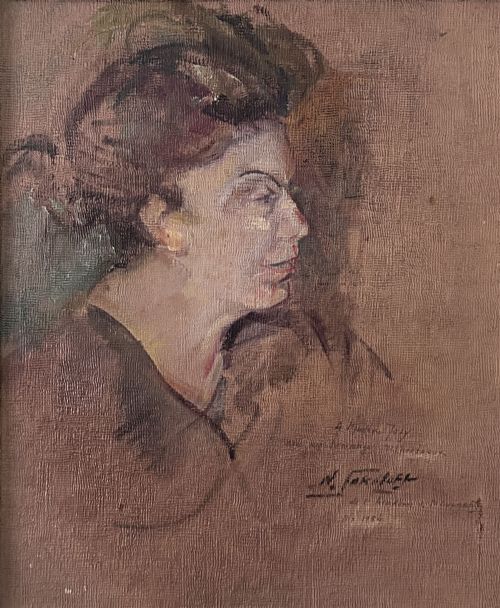


Earthy Brown Oil Painting
An earthy brown oil painting brings muted tones and historical depth to a room through traditional brushwork and warm pigments.
Earthy Brown Oil Painting
An earthy brown oil painting captures rural scenes, pastoral landscapes, portraits and farm animals using deep ochres, umbers and natural pigments. These works originate from periods spanning the Victorian era through the mid-twentieth century, encompassing British Impressionism, the Barbizon School and regional European traditions.
The pieces you encounter here include framed French provincial scenes, Scottish highland views, and detailed depictions of working horses, rivers and cottages. Artists utilised traditional supports such as canvas, wood panels and boards to render these subdued, organic compositions.
Buyers select an earthy brown oil painting to ground a room with historic character, natural palettes and traditional subjects. The selection draws on nineteenth-century and early twentieth-century artistry, showcasing everyday rural life and quiet natural vistas.
Materials and construction
Painters applied oil paint formulated from ground pigments and natural oils onto stretched canvas or wooden boards. Wood panels provided a rigid ground for detailed regional landscapes, while textured canvas accommodated broader impressionistic brushwork.
Makers often built up surfaces with successive layers of rich earth tones, creating depth in shadowed woodlands and riverbanks. Finished works were then set into period wood frames that complemented the subdued palette of the composition.
Earthy Brown Oil Painting Retail Price Guide 2026
Typical asking prices for earthy brown oil painting among the pieces listed under this phrase on Sellingantiques today, from the lower quarter to the upper quarter. They describe what is for sale here now, not the wider market.
Several canvases quietly record farmyard ducks, working horses, and curious hens lingering in the background of pastoral landscapes.
Assessing quality and execution
Quality rests in the handling of light and shadow, where skilled artists managed tonal transitions within a restricted brown and ochre palette. Superior works demonstrate confident brushwork that defines form and atmosphere without relying on excessive detail.
The harmony of the composition and the integrity of the original support distinguish finer examples. Works that retain their untouched surface texture and period framing offer a more authentic representation of the artist's original intent.
Tom Campbell·Raimond Louis Lecourt·Vincenzo Irolli·Herbert Royle·John Frederick Herring·Robert Finley McIntyre·Owen Bowen·William Traies·Ernest Higgins Rigg·J L VAN Leemputten·Frederick William Jackson·Kershaw Schofield·William Greaves·Maurice Wagermans·Benjamin Williams Leader·Edward J Cobbett·Edward John Niemann·Frederick Underhill·Thomas Creswick·Maurice Sijs·James William Booth
The Earthy Brown Oil Painting Glossary
- Oil paint
- A slow-drying medium made by combining pigments with a drying oil, typically linseed oil. This medium allows for rich blending and depth of colour.
- Canvas
- A heavy woven fabric used as a surface for painting, typically stretched across a wooden frame before application.
- Wood panel
- A flat wooden support utilised by artists as an alternative to canvas, providing a rigid base for detailed application.
- Barbizon School
- A nineteenth-century French art movement dedicated to naturalistic landscape painting, focusing on rural scenes and earthy palettes.
- Impressionism
- A style characterised by relatively small, thin yet visible brush strokes and an emphasis on accurate depiction of light.
Earthy Brown Oil Painting: Frequently Asked Questions
What periods do these paintings date from?
The works span from the nineteenth century through the mid-twentieth century, capturing Victorian and Edwardian artistic movements.
Dates recorded on the pieces reflect eras such as British Impressionism and regional European schools.
How should I hang an oil painting?
Secure the piece using appropriate wall fixings that match the weight of the frame and canvas.
Keep paintings away from direct sunlight and fluctuating heat sources to protect the oil pigments and wooden supports.
What subjects appear in these works?
Common subjects include pastoral landscapes, farm animals, working horses, rivers, and quiet rural cottages.
Artists frequently depicted everyday agricultural life and natural scenery using muted earth tones.
Are these paintings supplied with frames?
Many examples are offered within their original or period-appropriate wood frames that suit the artwork.
Framing styles vary from simple moulded timber to decorative antique surrounds.