
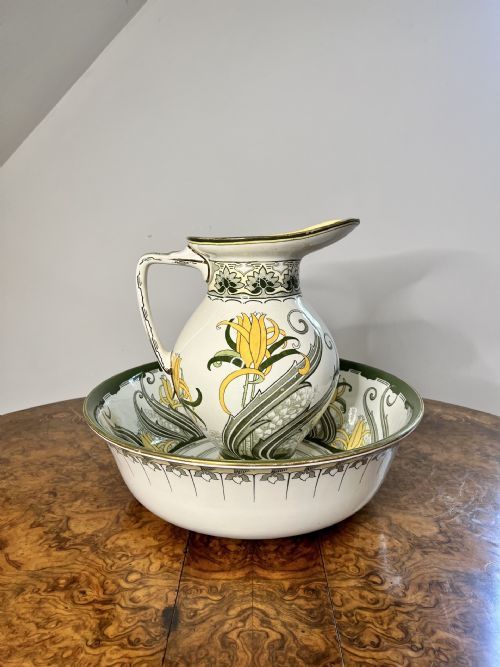
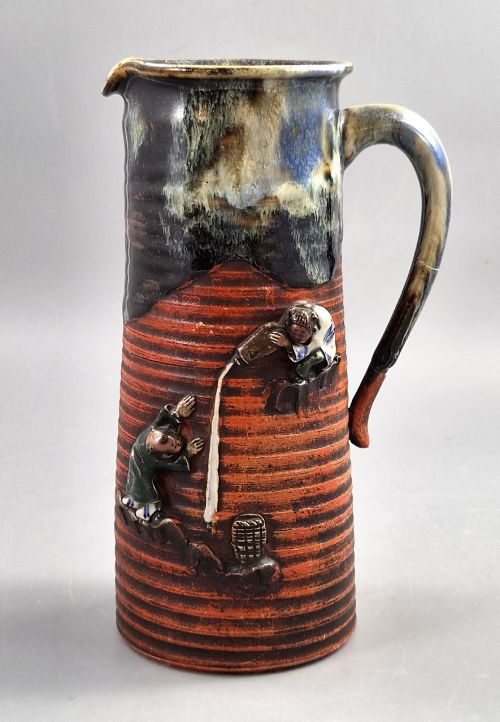
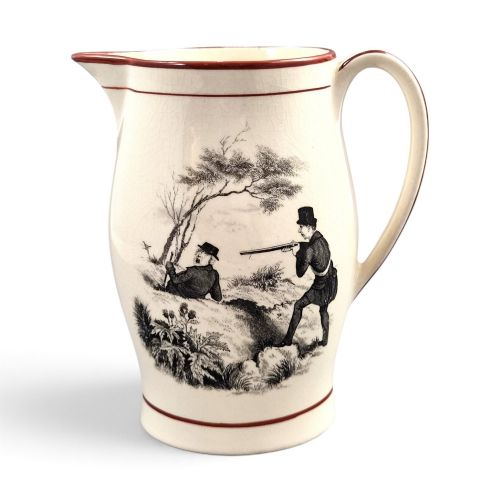
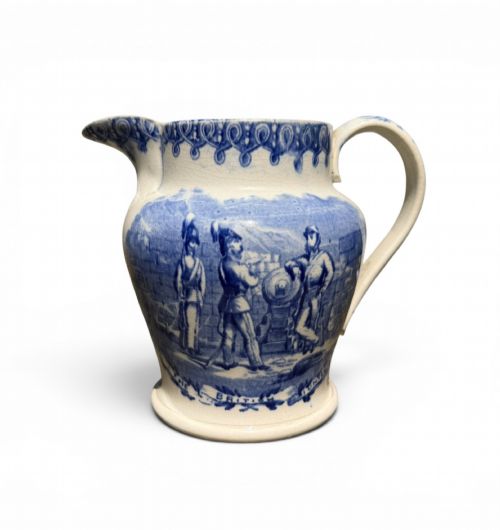
Earthenware Water Pitcher
An earthenware water pitcher brings tactile weight and layered transfer prints or bright glazes straight to a room.
Earthenware Water Pitcher
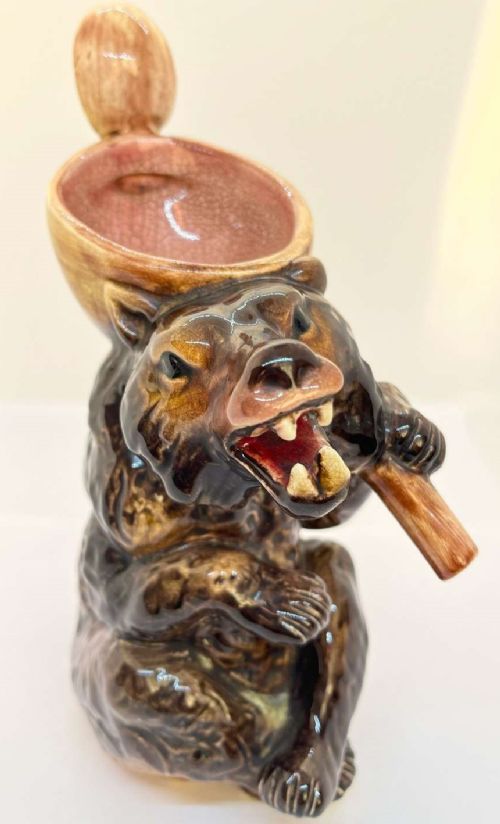
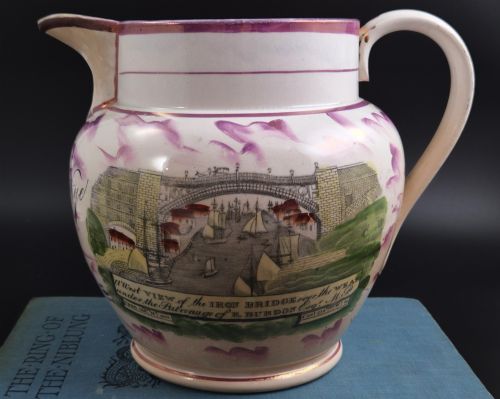
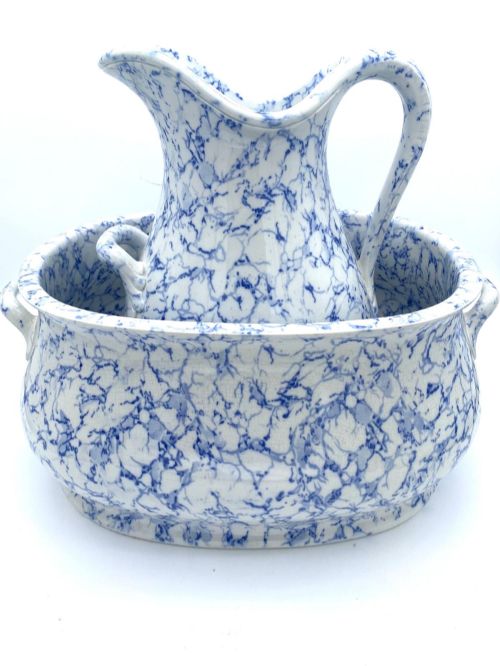
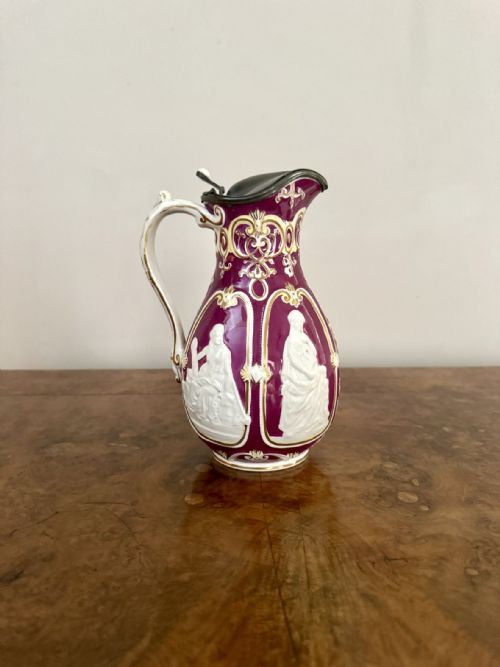
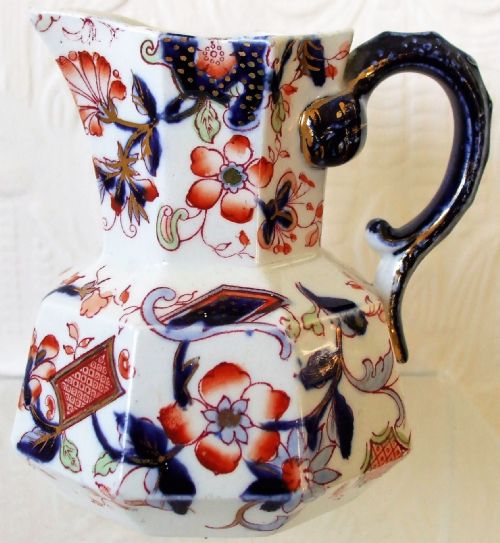
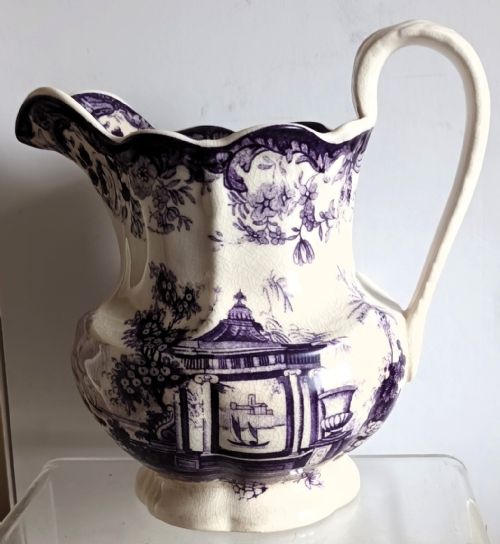
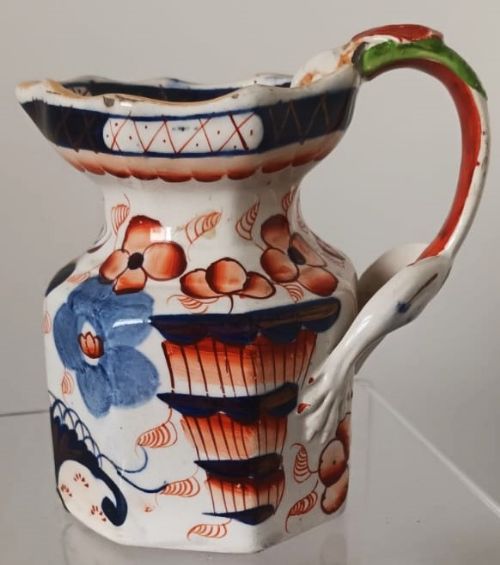
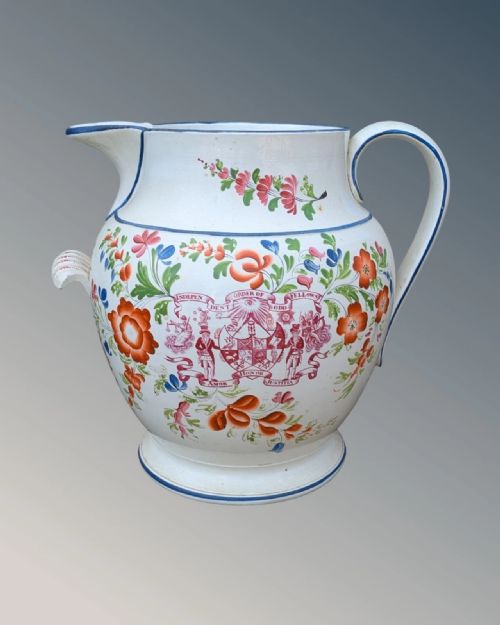
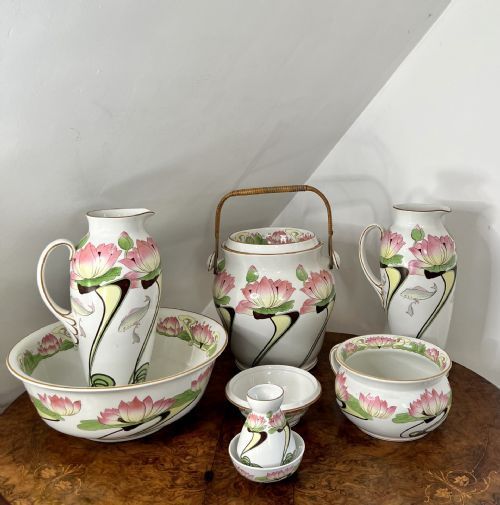
When you search for an earthenware water pitcher, you encounter vessels shaped for utility and display across the eighteenth, nineteenth and early twentieth centuries. These pieces encompass everything from Georgian transfer-printed creamware and pearlware to robust Victorian majolica bear jugs and large wash set ewers.
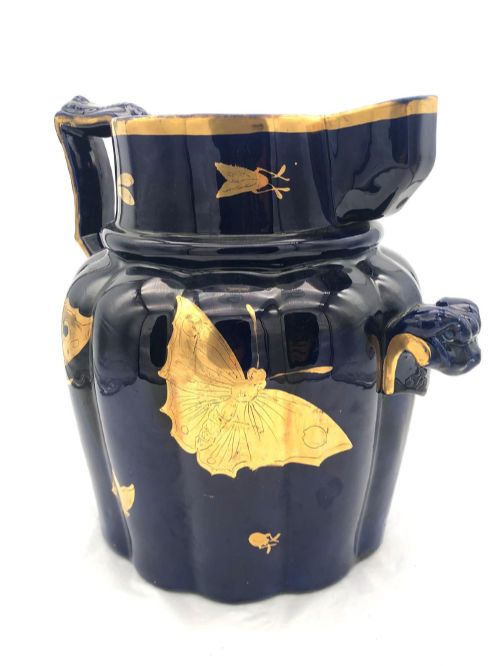
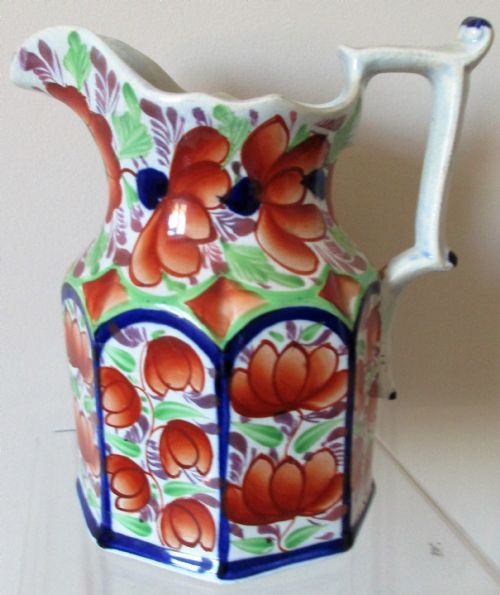
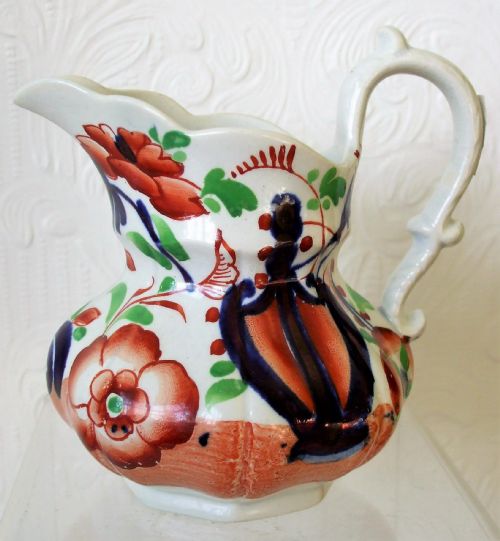
You are most likely to meet nineteenth-century English pottery on this page, particularly Staffordshire transfer-printed vessels, Gaudy Welsh patterns, and sizeable footbath jugs. French faience, Dutch Delft, and Japanese Sumida Gawa pieces also appear among the forms.
Makers ranged from large factories like Minton and Doulton to regional potteries producing commemorative items, military figures, and botanical motifs. The scale shifts from modest bedside vessels to substantial one-gallon storage pieces.
Materials and construction
Potters built these vessels using earthenware, creamware, pearlware, and stoneware bodies, often shaping them in moulds with applied handles, sprigged reliefs, or cabbage leaf mouldings. Pigments and transfer prints supplied the blue and white, pink lustre, or polychrome decoration before the application of transparent or opaque glazes.
Firing took place in kilns where lead or salt glazes vitrified over the ceramic body, sealing the porous earthenware for holding liquids. Enamel colours and metallic lustres were frequently added in subsequent low-temperature enamel firings to achieve rich palettes.
Victorians eagerly poured water from ewers shaped like snarling bears, leaping stags, and three-dimensional mythological figures.
Evaluating standard and execution
The distinction between ordinary utility wares and finer pieces lies in the crispness of the moulding, the clarity of the transfer print, and the control of the enamel painting. Sharp relief details on moulded leaves or animal handles indicate superior mould condition and careful finishing before the glaze firing.
Surface depth and colour richness separate basic production from exceptional examples, seen in the iridescence of pink lustre or the layered brushwork on hand-painted pottery. A well-balanced handle, stable base, and uniform glaze coverage distinguish pieces made for display from everyday kitchen vessels.
Minton·Doulton Burslem·Keeling And Co·Doulton Lambeth·Davenport·Phillips And Bagster
The Earthenware Water Pitcher Glossary
- Creamware
- A fine earthenware developed in eighteenth-century Staffordshire with a pale yellowish straw-coloured lead glaze. It became the dominant domestic ceramic body before pearlware replaced it.
- Pearlware
- A refined earthenware introduced around 1770 containing a small amount of cobalt in the glaze to neutralise the natural yellow tone of the clay, resulting in a bluish-white surface.
- Majolica
- A colourful lead-glazed earthenware pioneered in the mid-nineteenth century, known for its vibrant botanical and animal forms. The thick coloured glazes pool naturally in relief details.
- Transfer printing
- A decoration technique where an engraved copper plate transfers a design onto tissue paper, which is then pressed onto the unfired ceramic body. This process allowed intricate scenes to be reproduced consistently.
- Pink lustre
- A metallic glaze containing gold that produces a characteristic pink, iridescent sheen when fired. It was widely used on nineteenth-century earthenware jugs for borders and pictorial highlights.
Earthenware Water Pitcher: Frequently Asked Questions
How do I date an antique earthenware water pitcher?
Dating relies on body composition, such as the progression from creamware and pearlware to heavier Victorian ironstone and majolica. Transfer print styles, colour palettes like pink lustre or Gaudy Welsh, and impressed factory marks also narrow the period of manufacture.
Examining the base and handle construction provides further clues, as earlier pieces often feature unglazed foot rims and hand-pulled handles while later Victorian examples utilise precise press-moulding.
Were these pitchers used for water or display?
Many large pitchers formed part of wash set pairings with matching bowls for bedroom hygiene, while others served dining tables for water, beer, or cider. Commemorative pieces recorded historical events or political figures and were displayed on mantlepieces.
Over time, utilitarian vessels shifted into decorative roles as indoor plumbing rendered bedroom wash sets obsolete, preserving them in domestic interiors as flower jugs or display items.
What is the difference between earthenware and stoneware?
Earthenware is a porous ceramic body fired at lower temperatures, requiring a glaze to hold liquids reliably. Stoneware uses dense clay fired at much higher temperatures until the body vitrifies naturally into a non-porous material.
Stoneware items like salt-glazed jugs resist chipping and moisture better than standard earthenware, though both materials accommodated elaborate moulding and decorative slip work.