

Cream Pottery Jug
When you search for a cream pottery jug, you enter a field defined by creamware, pearlware, and earthenware across Georgian and Victorian centuries.
Cream Pottery Jug
A cream pottery jug encompasses utilitarian vessels, milk jugs, and creamers produced in earthenware, creamware, and pearlware. These pieces span the eighteenth, nineteenth, and early twentieth centuries, reflecting changing domestic habits.
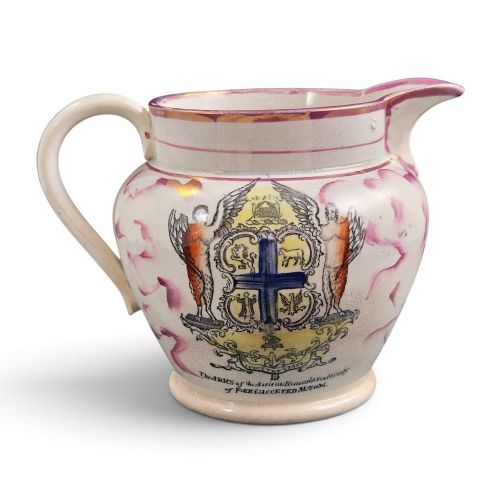
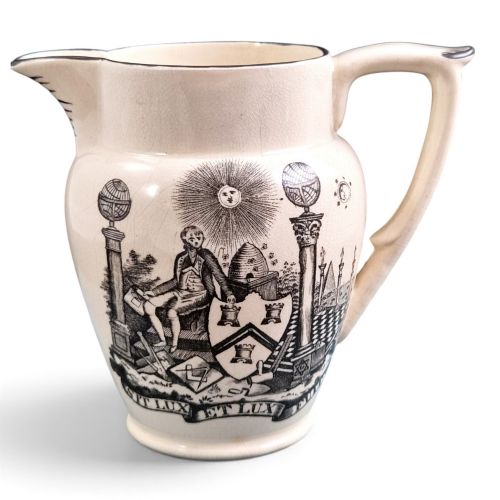
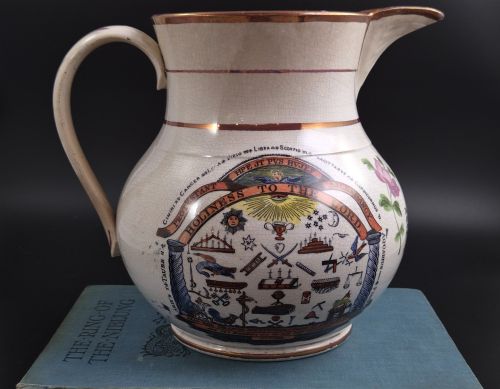
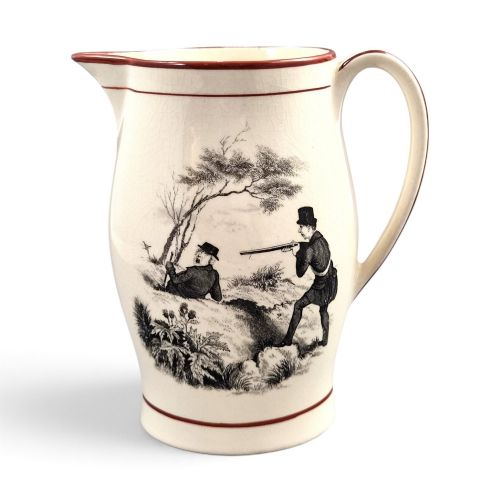
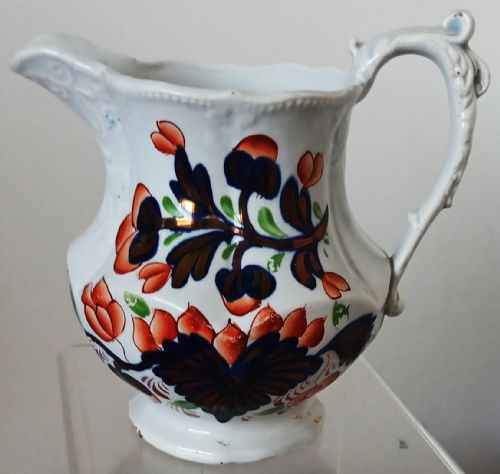
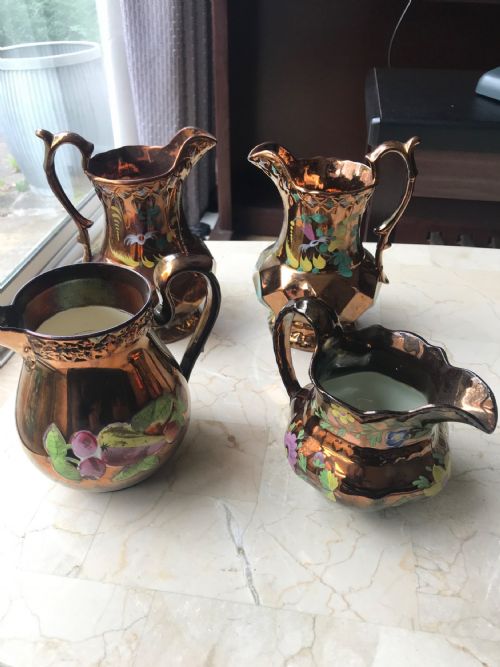
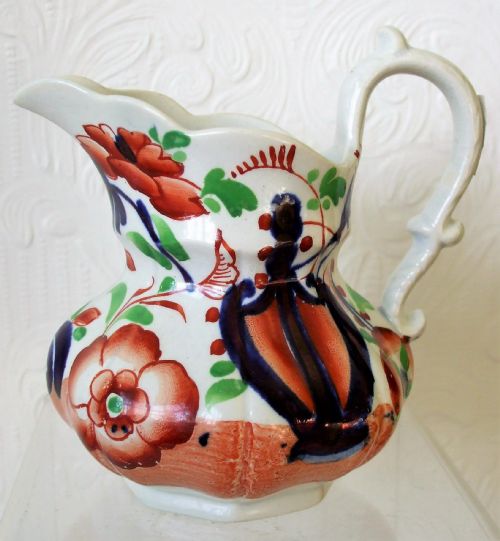
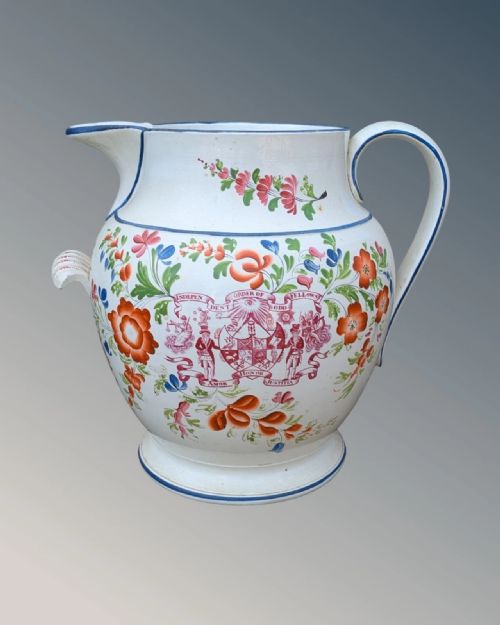
Buyers encounter everything from small cream jugs for the table to large commemorative pitchers adorned with transfer prints, lustre, or hand decoration. Each vessel serves as an example of historic ceramic manufacturing.
How they were made
Potters shaped these vessels using earthenware, stoneware, creamware, and pearlware bodies, often employing moulds for cabbage leaf or relief decoration. Glazes were applied to seal the porous clay, sometimes enriched with enamel colours or metallic lustre.
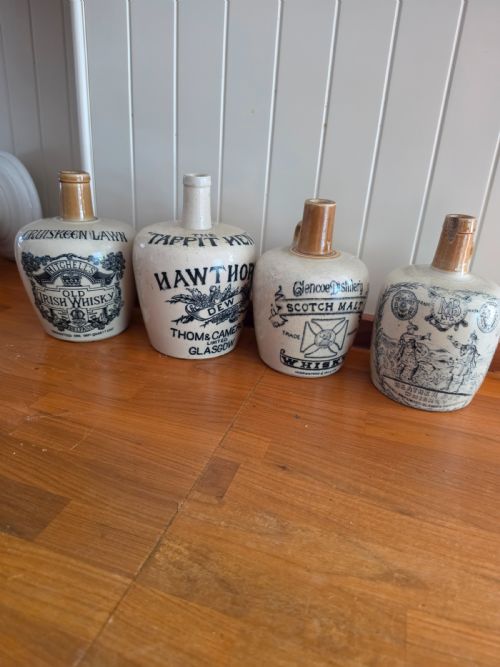
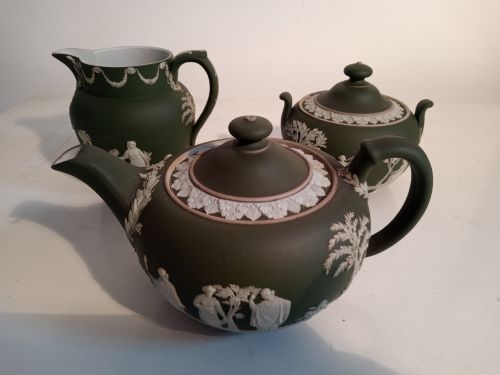
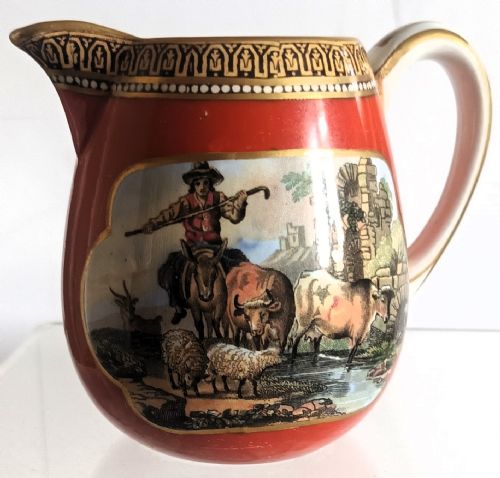
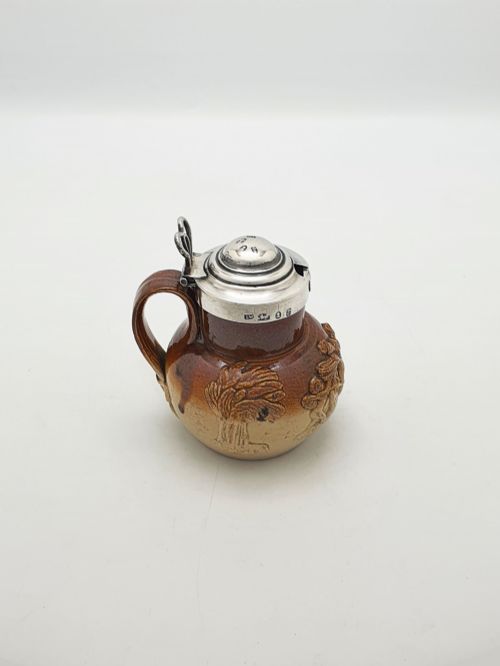
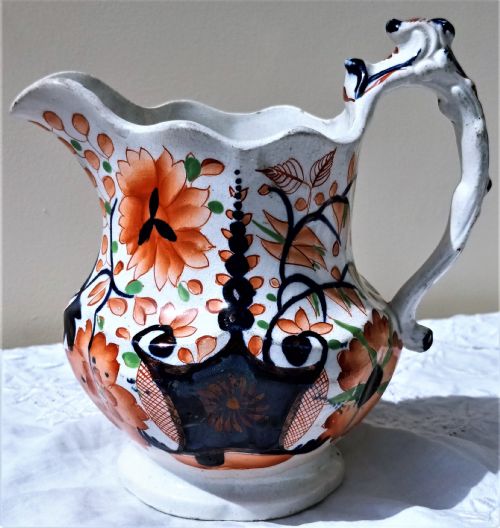
Decoration relied on techniques such as black or purple transfer printing, hand painting in polychrome palettes, and salt glazing. Certain pieces incorporated applied sprigged reliefs or sterling silver collars fitted to the fired ceramic body.
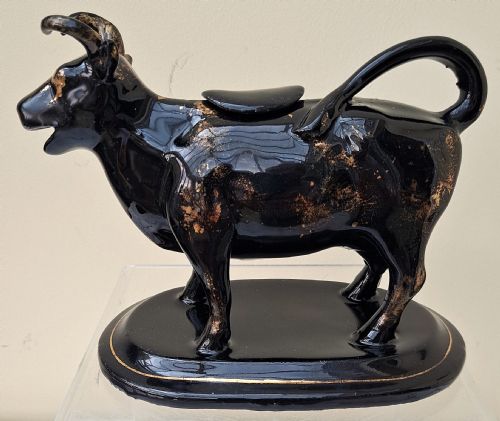
Cattle-shaped creamers pour milk directly from the cow's mouth.
What varies in quality
Quality rests in the crispness of the moulding, the evenness of the glaze, and the precision of transfer-printed or hand-painted details. Early creamware and pearlware bodies show refinement through thin walls and balanced proportions.
The distinction between standard domestic items and exhibition pieces lies in the complexity of the form, such as specialised hound handles or detailed modelling found on cow creamers and character jugs.
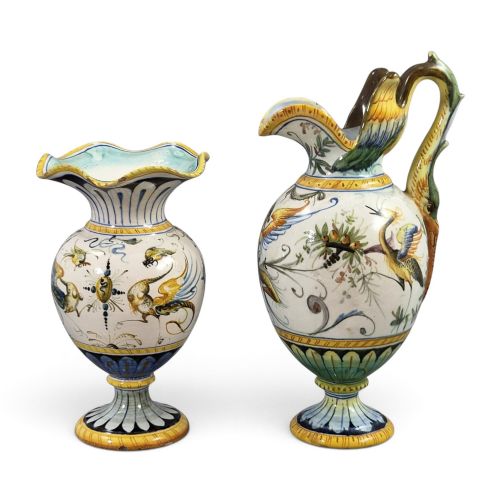
Cantagalli Florence·Wedgwood·Doulton Lambeth·Doulton Burslem·JONES AND WALLEY·Phillips and Bagster
The Cream Pottery Jug Glossary
- Creamware
- A fine earthenware developed in Yorkshire and Staffordshire during the eighteenth century, characterised by a pale yellow or cream-coloured lead glaze. It became the dominant tableware ceramic of the Georgian period.
- Pearlware
- An improved earthenware introduced around the late eighteenth century with a slightly bluish glaze that pooled in recesses, designed to mimic the whiteness of Chinese porcelain.
- Transfer printing
- A method of decorating ceramics by engraving a design onto a copper plate, pulling it on tissue paper, and transferring the ink onto the biscuit or glazed pot before firing.
- Cow creamer
- A hollow ceramic vessel in the form of a cow, often with a lid on the back and milk poured through the mouth, popular in English pottery throughout the nineteenth century.
- Pratt-ware
- Early nineteenth-century English earthenware decorated under the glaze with a restricted palette of cobalt blue, ochre, brown, and green oxide colours.
Cream Pottery Jug: Frequently Asked Questions
What is a cream pottery jug used for?
These vessels were primarily designed for serving cream, milk, or hot water at the tea or dining table. Larger examples served as pitchers for water, beer, or cider during communal meals.
Over time, many of these utilitarian items transitioned into decorative display pieces or commemorative objects celebrating societies, historical figures, and naval events.
How do I date an antique cream jug?
Dating relies on body composition, glaze characteristics, and decorative methods. Creamware and pearlware bodies strongly indicate late eighteenth or early nineteenth-century Georgian origins, while heavy lustre and distinct transfer prints point to the Victorian era.
Marked pieces provide clear chronological markers, though many domestic earthenwares remain unsigned and require stylistic comparison with known regional potteries.
How should I care for historic earthenware?
Historic pottery requires gentle hand washing with mild soap and warm water when necessary. Avoid harsh scouring pads or dishwashers, which can damage aged glazes and delicate overglaze enamels.
Keep these vessels away from extreme temperature fluctuations and direct sunlight to protect the ceramic body and prevent the crazing of early glazes.