




Earthenware Victorian Portrait Figure
These earthenware victorian portrait figure pieces capture public heroes, royals and theatrical stars in ceramic form.
Earthenware Victorian Portrait Figure
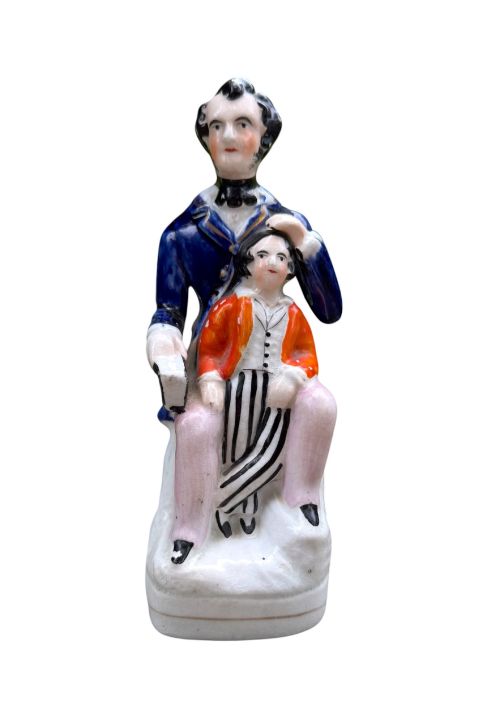
Every earthenware victorian portrait figure represents a recognisable public figure, ranging from monarchs and political leaders to evangelists and literary characters. These pieces emerge primarily from the nineteenth century, taking the form of standalone pottery figures or symmetrical pairs designed for display on mantelpieces.
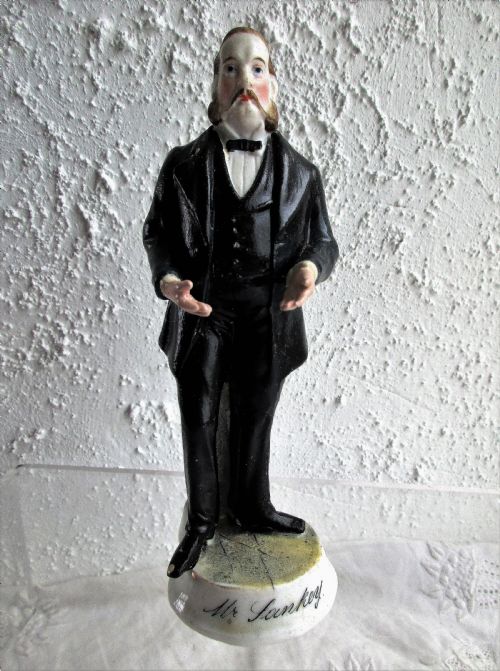
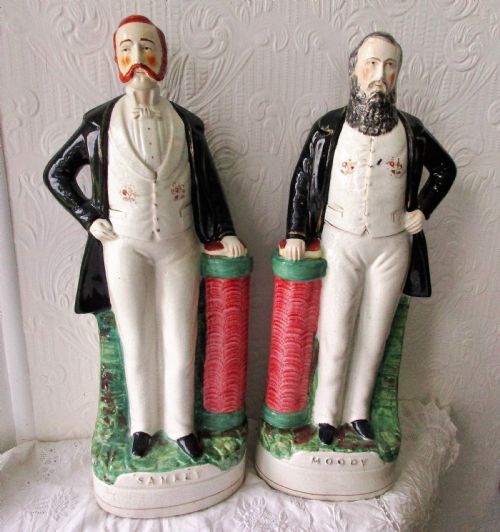
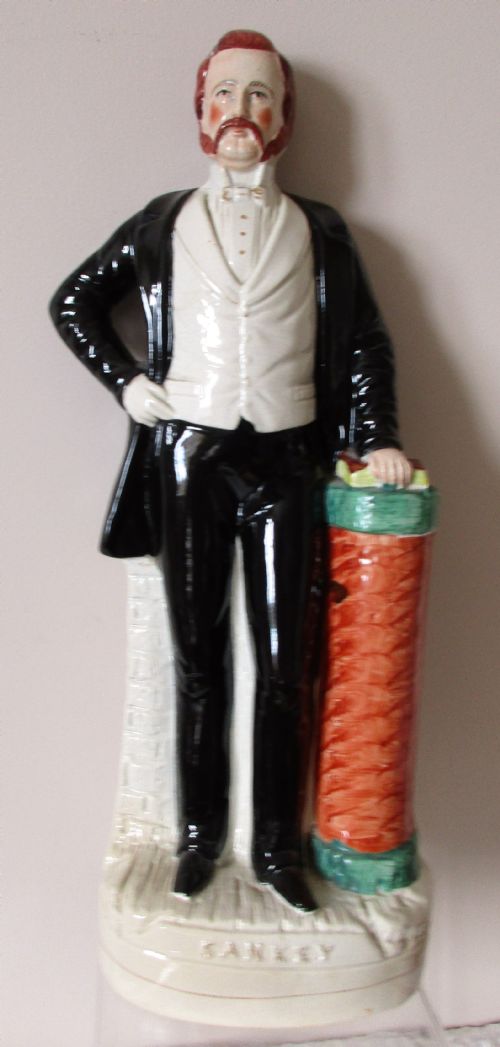
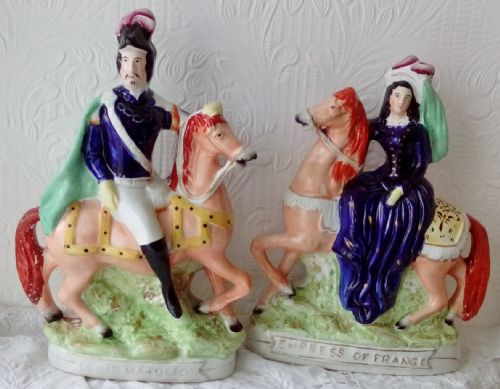
Makers immortalised contemporary news subjects such as Queen Victoria, Napoleon III and revivalists Moody and Sankey. The subjects span British royalty, military commanders, statesmen and cultural personalities of the Victorian era.
Most items belong broadly to the nineteenth century, with specific examples dated across the eighteen-forties, fifties, sixties, seventies and eighties. They function as commemorative objects produced for domestic interiors.
Materials and production methods
Details such as gilt highlights appear on select items to accentuate uniforms and royal regalia. While earthenware forms the primary medium, porcelain occasionally appears among the recorded pieces.
Earthenware Victorian Portrait Figure Retail Price Guide 2026
Typical asking prices for earthenware victorian portrait figure among the pieces listed under this phrase on Sellingantiques today, from the lower quarter to the upper quarter. They describe what is for sale here now, not the wider market.
Recorded listings span the 19th Century, incorporating specific years from 1845 to 1880 alongside styles defined as Victorian Folk Art.
Judging quality and execution
Quality rests upon the crispness of the moulded details and the precision of the hand-painted enamel colours. Superior examples display carefully delineated facial expressions and legible titling along the base.
The vibrancy of the glaze and the neatness of the applied gilt ornamentation distinguish finer workshop output from simpler folk art productions. Proportion and stance also separate well-modelled representations from stiffer, generic figures.
The Earthenware Victorian Portrait Figure Glossary
- Earthenware
- Porous ceramic fired at lower temperatures than porcelain. It forms the standard clay body for these nineteenth-century figures.
- Lead glaze
- Glassy coating applied to ceramics before a second firing to provide a shiny protective surface. It gives these pieces their characteristic reflective sheen.
- Flatback
- Ceramic figure moulded with a finished front and a plain, unglazed or flat rear. This construction allowed the piece to sit flush against a wall or mantelpiece.
- Gilt
- Gold application used to embellish ceramic surfaces. It highlights buttons, regalia and title lettering.
Earthenware Victorian Portrait Figure: Frequently Asked Questions
What do these figures represent?
These pieces depict notable historical figures, including British monarchs, military commanders, politicians, and visiting evangelists. Potters captured contemporary public interest by turning newspaper subjects into mantle ornaments.
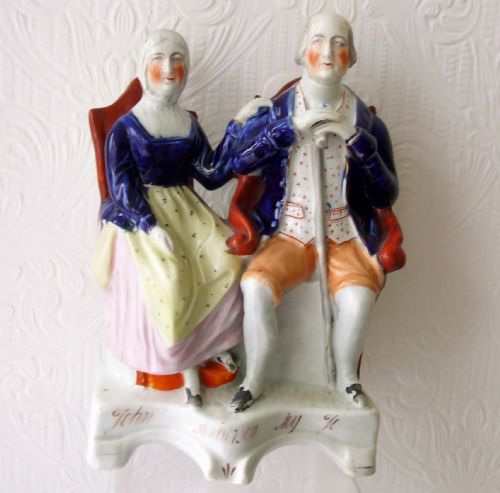
Subjects range from Queen Victoria and Prince Albert to theatrical performers and literary characters like John Anderson, My Jo.
Where were they displayed?
Owners typically placed them on mantelpieces in domestic parlours during the Victorian period. Their flatback construction allowed them to sit securely against interior walls.
Pairs of figures often flanked mantel clocks or other decorative ornaments to create symmetrical arrangements in the home.
How can I tell who is depicted?
Most pieces feature moulded name titles or inscriptions painted directly onto the front of the base. These captions identify the specific royal, statesman or cultural icon represented.
Uniforms, crowns, or specific props held by the figures also offer clear visual clues to their historical identity.
Are these figures made of porcelain?
The majority consist of earthenware rather than porcelain. Potters shaped the clay bodies and coated them in lead glazes before adding enamel paint.
While earthenware dominates the recorded pieces, porcelain appears occasionally among the nineteenth-century listings.