
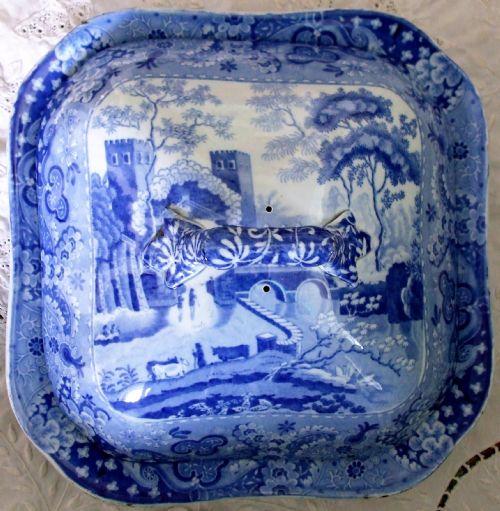
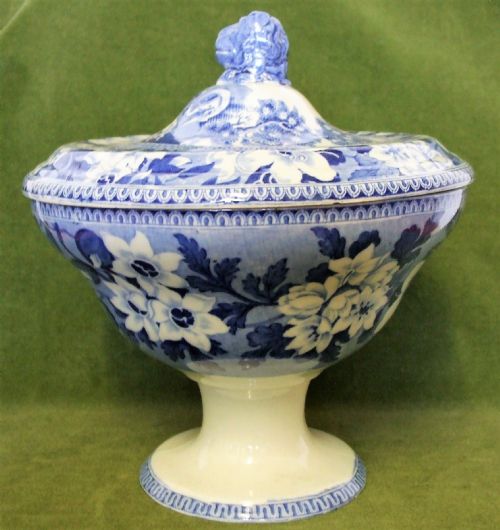
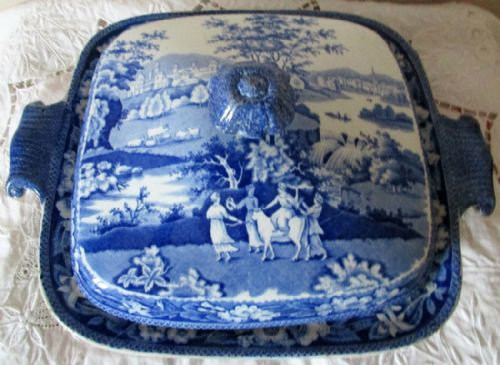


Earthenware Transferware Tureen
An earthenware transferware tureen brings historic printed pastoral scenes and neoclassical motifs to the table, formed in sturdy ceramic with blue and white designs.
Earthenware Transferware Tureen
An earthenware transferware tureen is a covered vessel designed for serving soup, vegetables or sauces at the dining table. These pieces emerge predominantly from the nineteenth century, encompassing Georgian, Regency and Victorian periods.
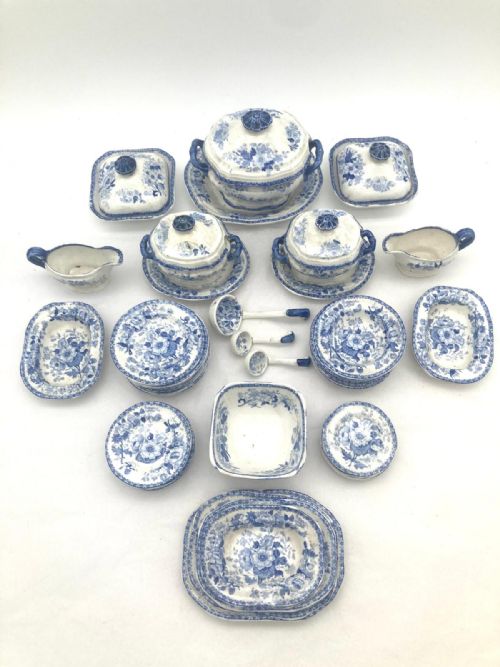
The form appears as large lidded soup or vegetable tureens, smaller sauce tureens with matching stands, and occasional miniature child's service tureens. Buyers on this page encounter robust ceramic bodies decorated with printed transfer patterns in blue and white.
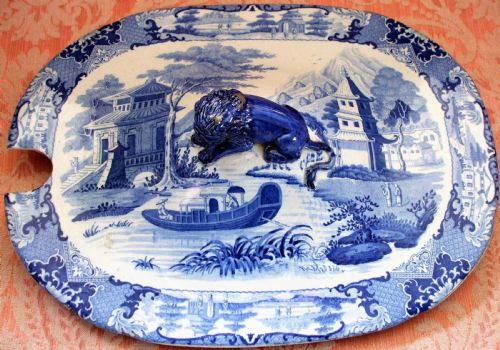
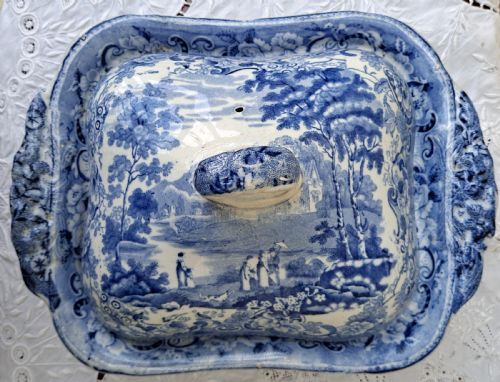
Originating largely from English potteries, these vessels display pictorial scenes such as the Canton River, rural landscapes, castle views and classical ruins. They combine functional capacity with detailed narrative design transferred directly onto the ceramic glaze.
How they were made
Potters shaped these vessels from earthenware, pearlware, ironstone or creamware bodies, firing the clay to create a durable ceramic base. The surface received a transparent or enamel glaze to seal the porous material and provide a smooth ground for decoration.
Designers applied patterns using transfer printing, a technique where an engraved copper plate transferred an inked design onto tissue paper, which was then pressed onto the unfired or biscuit ceramic. This allowed intricate pictorial scenes to be replicated consistently across dinnerware services and lidded tureens.
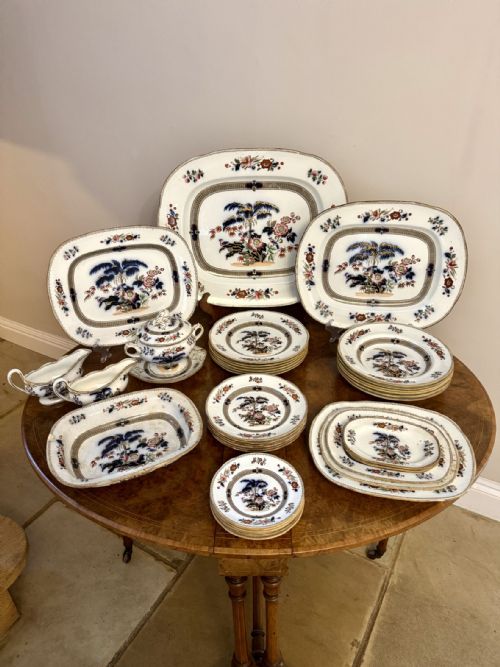
The listings show earthenware transferware tureen examples spanning the Georgian, Regency and Victorian periods, utilising ceramic, creamware, pearlware and ironstone bodies.
What varies in quality
The clarity and crispness of the transfer print define the visual success of the piece, separating finely registered copperplate impressions from blurred or smudged applications. Depth of cobalt blue pigment and uniformity of the glaze surface also distinguish superior examples.
Model complexity, such as moulded handles, lion-head covers, footed bowls, and matching ladles or stands, indicates higher ambition from the pottery. Preservation of the earthenware body free from heavy staining or extensive restoration maintains the integrity of the piece.
Robert Hamilton·Minton·Wedgwood·James Wallace and Co·J and R Clews·John Rogers and Son·John and Richard Riley·Ridgway·Doulton Burslem·Spode·Copeland and Garrett
The Earthenware Transferware Tureen Glossary
- Transferware
- Pottery decorated by printing a design from an engraved copper plate onto tissue paper and transferring it to the ceramic body before glazing. This technique allowed complex pictorial scenes to be produced efficiently.
- Pearlware
- A refined earthenware developed in the late eighteenth century featuring a subtle bluish glaze that pooled in recesses to mimic Chinese porcelain. It forms the base for many early nineteenth-century blue and white pieces.
- Creamware
- A fine light-coloured earthenware perfected by Josiah Wedgwood with a warm yellowish-cream glaze. It served as a popular canvas for botanical and narrative dinner services.
- Ironstone
- A dense, durable type of earthenware patented in the early nineteenth century to resist chipping and staining. It provided a strong body for heavy-use domestic service vessels.
- Flow blue
- A nineteenth-century transfer printing technique where lime or ammonia chloride vapours were introduced into the kiln to deliberately blur the cobalt blue design into the surrounding glaze. This created a hazy, atmospheric effect on the finished ceramic.
Earthenware Transferware Tureen: Frequently Asked Questions
What were earthenware transferware tureens used for?
These tureens served hot food at the dining table, holding soups, vegetables or sauces during large meals. Their fitted covers kept the contents warm between servings.
Matching stands and ladles often accompanied the vessels to protect table linens and serve portions neatly. They formed part of broader dinner services used for formal dining.
How do I date an earthenware transferware tureen?
Dating relies on stylistic clues, ceramic bodies, and recorded maker marks stamped or printed underneath. Pearlware bodies and certain neoclassical motifs generally point toward the earlier Georgian period.
Victorian pieces often utilise heavier ironstone or denser earthenware bodies with different border patterns. Comparing the style of the printed landscape helps narrow the production decade.
How do I care for an antique tureen?
Wash the ceramic gently by hand using mild soap and warm water, avoiding abrasive scouring pads that might scratch the glaze. Earthenware is porous if the glaze is compromised, so avoid soaking.
Display the tureen on a stable surface away from direct heat sources and sudden temperature changes. Handle the lid and handles carefully to prevent chipping the earthenware body.
Are transferware tureens safe for food use?
Historic earthenwares can absorb liquids or release trace elements through crazed or worn glazes over time. Most collectors prefer to treat antique tureens as decorative display pieces rather than active tableware.
Using them for dry presentation or dry storage avoids prolonged contact with moisture and acidic foods. Visual inspection of the glaze condition helps determine if casual modern use is appropriate.