
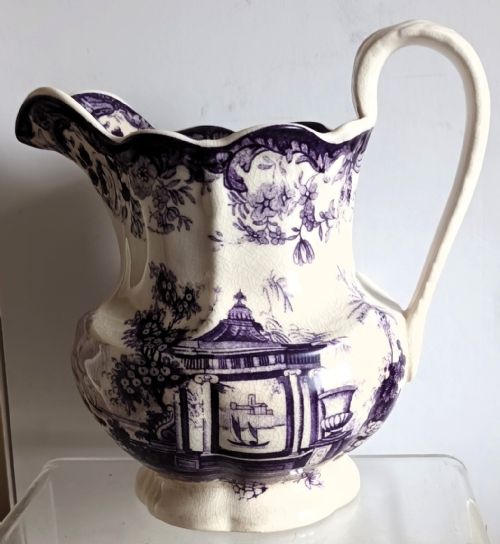


Earthenware Transferware Pitcher
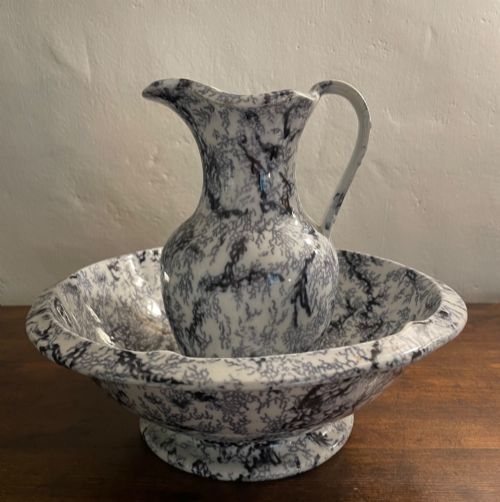
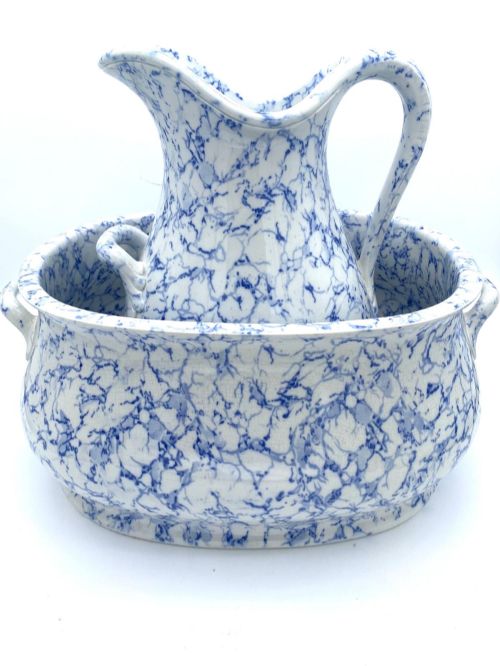
These earthenware transferware pitcher pieces offer robust ceramic utility and printed decoration from the nineteenth century that suit daily service or display.
Earthenware Transferware Pitcher
An earthenware transferware pitcher brings together durable ceramic bodies and mechanically applied prints spanning the Georgian, Victorian, and Edwardian periods.
Buyers meet forms ranging from small cream jugs to large one-gallon vessels, wash sets, and footbath jugs originating largely from Staffordshire potteries.
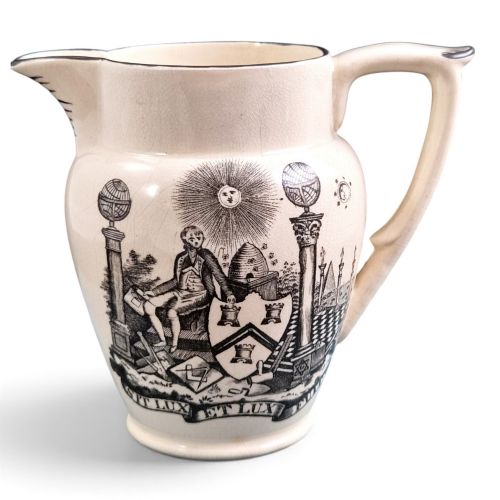
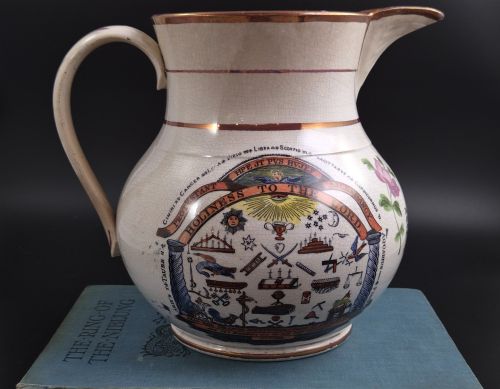
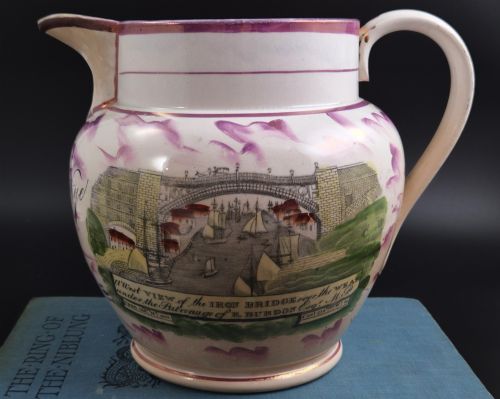
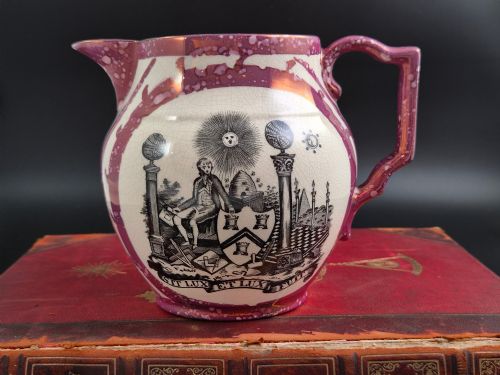
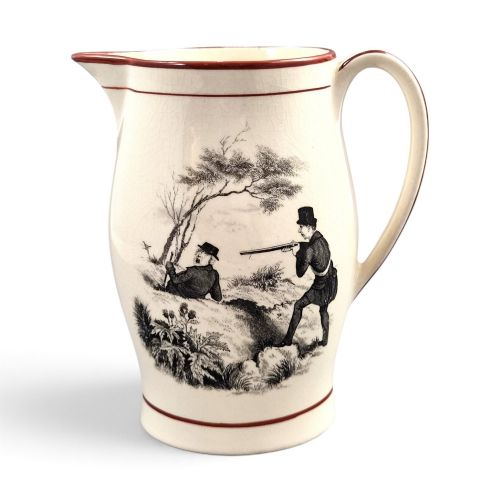
Decoration covers masonic themes, commemorative subjects, topographical views like the Iron Bridge over the Wear, and figural patterns such as the Fisher Boys or bull baiting scenes.
Materials and methods
Potters shaped these vessels from earthenware and creamware bodies, applying black, blue, or magenta transfer prints before glazing.
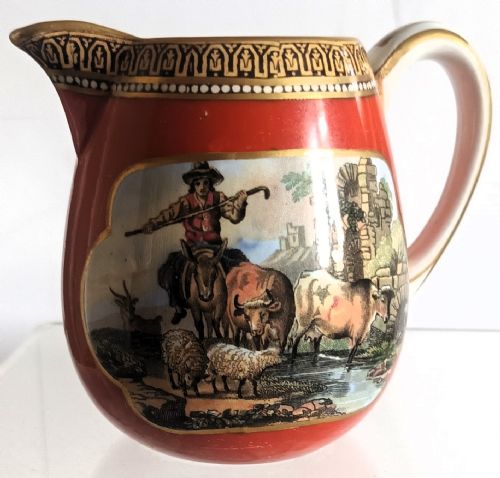
Many examples incorporate metallic lustre glaze, pink splash effects, enamel highlights, or gold leaf to enhance the printed surface.
The listings span earthenware, creamware, and ceramic bodies decorated with metallic lustre glaze, enamel, and gold leaf.
Quality variations
Distinctions in quality arise from the crispness of the transfer print, the evenness of the glaze, and the complexity of additional hand-painted enamel or lustre work.
Vessels carrying named subjects, specific dates, or identifiable maker attributions stand apart from standard commercial wares through their historical documentation.
Minton·Mountford
The Earthenware Transferware Pitcher Glossary
- Transferware
- Ceramic decoration created by engraving a design upon a copper plate, pulling it on tissue paper, and transferring the ink onto the unglazed or bisque ceramic body before firing.
- Creamware
- A refined earthenware developed in Yorkshire and Staffordshire featuring a pale yellow or creamy tone beneath a transparent lead glaze.
- Lustre Glaze
- A metallic film applied to pottery to create an iridescent, reflective surface, often seen in pink splash variations on Sunderland pieces.
- Flow Blue
- A style of cobalt printing where the colour intentionally bled slightly into the surrounding glaze during firing to create a hazy, soft-edged effect.
Earthenware Transferware Pitcher: Frequently Asked Questions
What is an earthenware transferware pitcher?
These items are ceramic jugs produced primarily in nineteenth-century England using transferred engravings for decoration.
They function as utilitarian water vessels, wash set components, or commemorative display pieces.
How do I date these jugs?
Dating relies on stylistic clues, ceramic bodies such as creamware or pearlware, and printed subject matter.
Many pieces bear direct commemorative dates, registry marks, or historical references from the Georgian and Victorian eras.
Were they used daily?
Many larger one-gallon vessels and wash set jugs served practical household functions for water and washing.
Smaller commemorative or masonic jugs often served ceremonial purposes or sat on display in homes.
What causes pink lustre effects?
Pink lustre involves applying a metallic solution containing gold to the ceramic surface during a specialised low-temperature kiln firing.
This technique produced the characteristic shimmering pink or purple splashes found on Sunderland pottery.