


Earthenware Pottery Figurines
These earthenware pottery figurines span centuries of domestic modelling, bringing characterful dogs, portrait figures and animals straight to the mantelpiece.
Earthenware Pottery Figurines
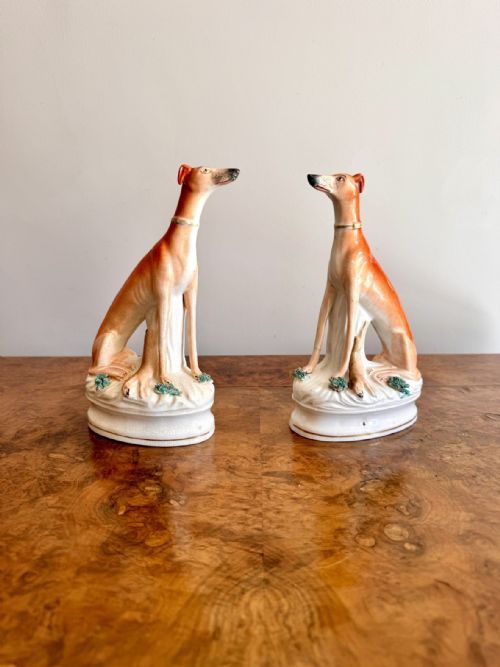
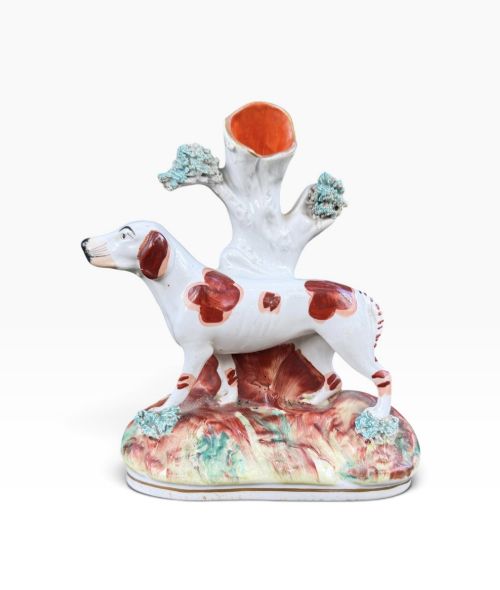
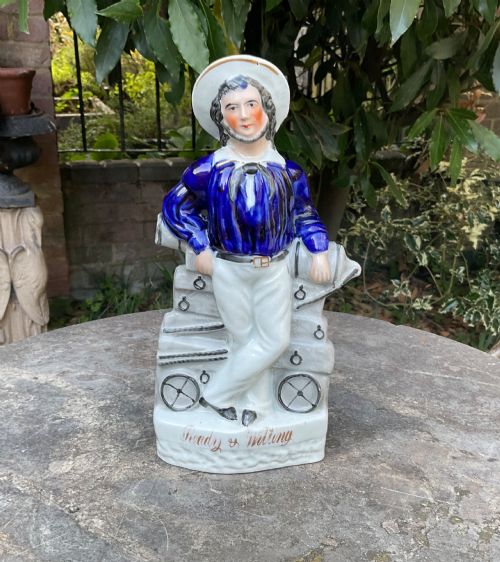
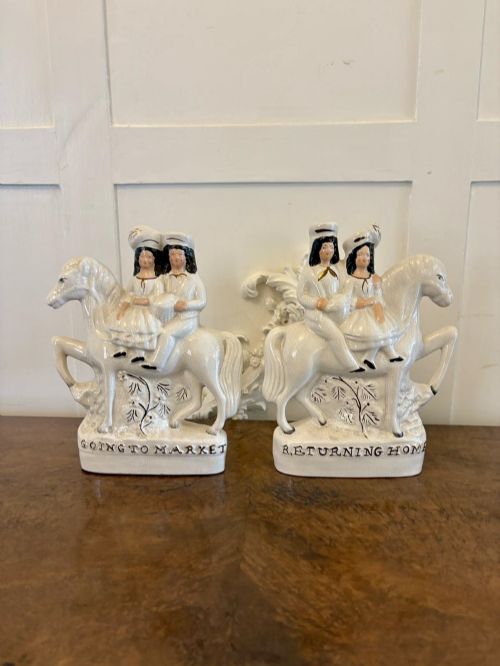
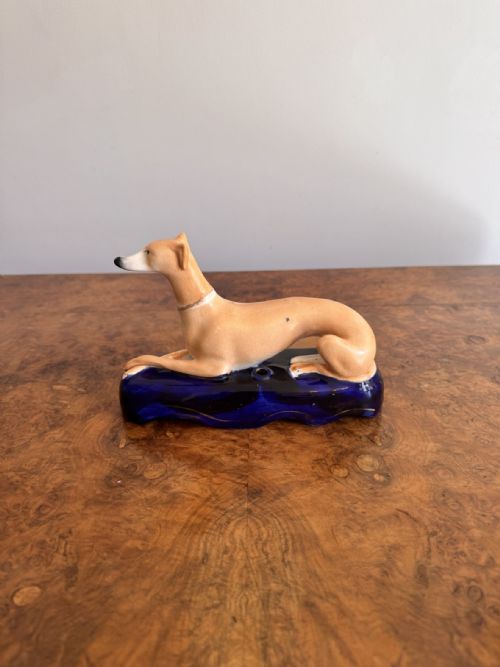
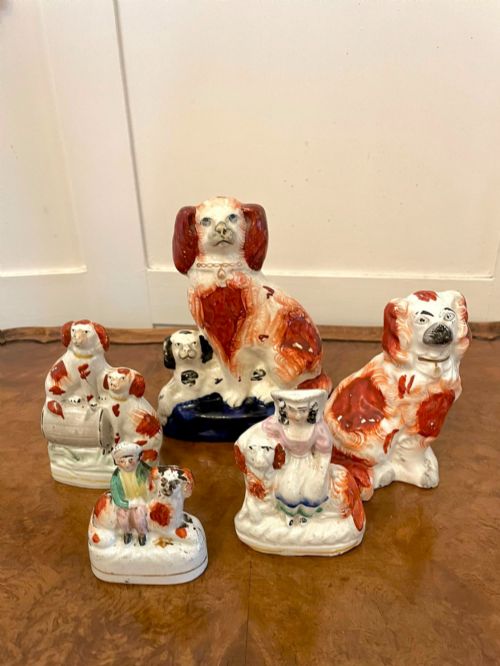
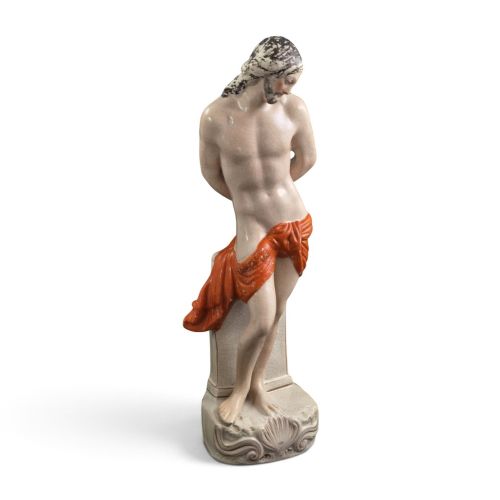
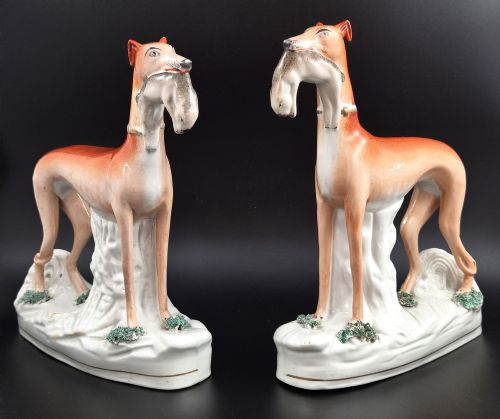
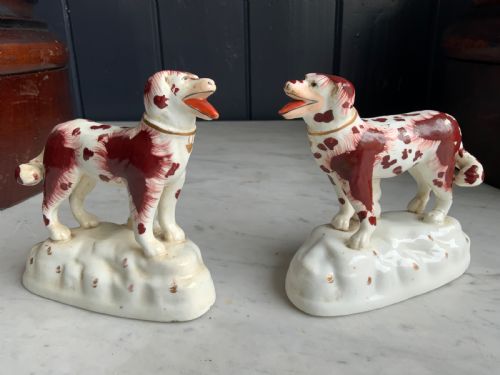
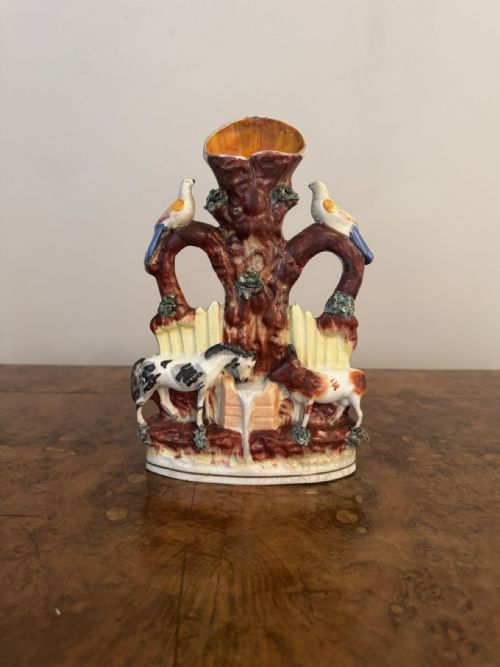
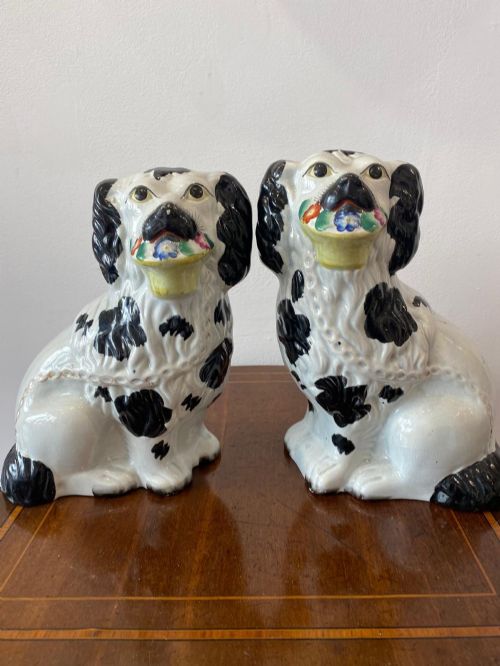
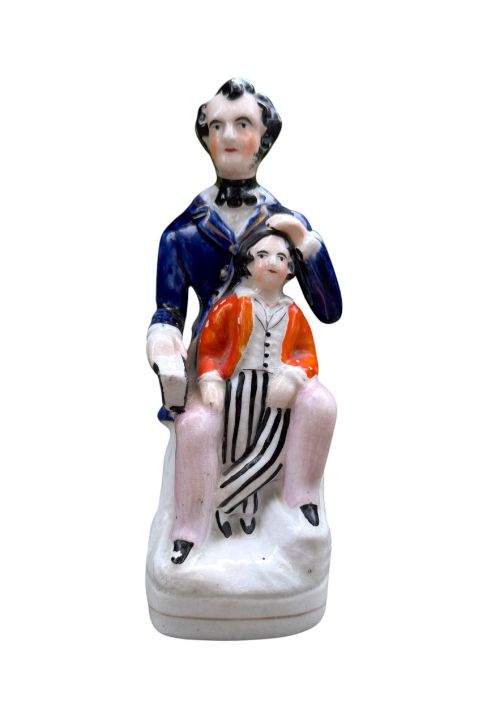
Earthenware pottery figurines encompass a broad mix of decorative ceramics, with nineteenth-century Victorian Staffordshire flatbacks and animals forming the core of what collectors meet here. These range from seated greyhounds and spaniels to theatrical pairs, spill vases, and historical portrait figures like Lord Nelson or the Duke and Duchess of Cambridge.
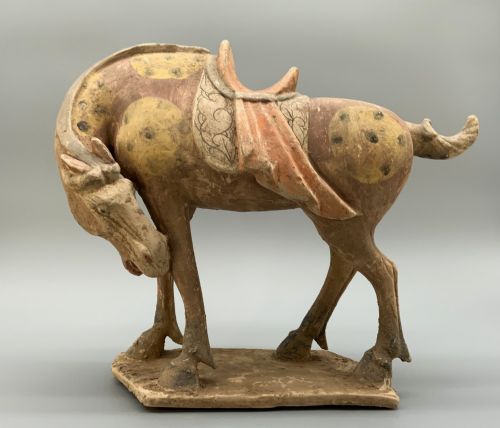
Beyond the domestic British tradition, the selection extends to Dutch Delft blue and white cows, French faience couples, studio pottery pieces by Charles Vyse, and early Tang Dynasty horses. Animal groups, poodles with pups, and architectural tobacco jars sit alongside individual figures, demonstrating the variety of forms produced across different periods.
Buyers seeking these works encounter pieces spanning from the pre-sixteenth century up through the Victorian era and into Art Deco designs. The overarching category prioritises figural representation, whether modelled as utilitarian spill vases, creamers, or purely decorative mantel ornaments.
Materials and Making
Potters shaped these earthenware bodies using local clay, often finishing the forms with lead glaze, enamel paint, or gilt detailing. Many nineteenth-century Staffordshire works rely on slip-casting or press-moulding techniques before receiving hand-painted enamel colours.
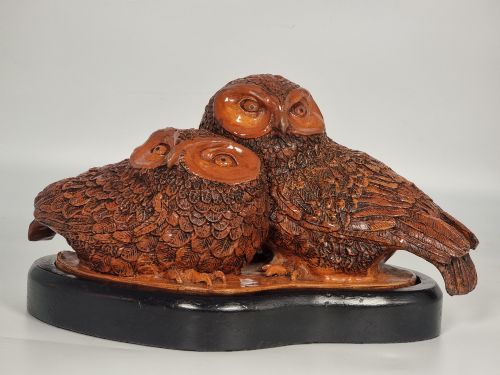
Surface treatments vary from the deep blue and white tin-glazed tinctorial style of Delftware to the rich black glaze seen on Jackfield pottery cow creamers. Studio pieces incorporate hand-sculpting methods, mounting figures on ebonised bases or applying detailed polychrome finishes.
Poodles modelled with clay curls made from small applied bits of pottery bring unmatched texture to the mantelpiece.
Judging Quality
Quality rests upon the crispness of the original moulding and the precision of the hand-painted enamel work. Superior examples exhibit finely rendered facial expressions, clean glaze coverage, and well-defined details on garments or animal coats.
The sophistication of the modelling distinguishes standard production pieces from finer studio output, such as Charles Vyse figurines or early moulded portrait groups. Depth of colour and the preservation of original gilt accents further elevate the standing of individual figures.
Goldscheider·Charles Vyse
The Earthenware Pottery Figurines Glossary
- Earthenware
- Porous pottery fired at lower temperatures than stoneware or porcelain. It requires a glaze to become impermeable to liquids.
- Flatback
- A figurine moulded with a finished front and sides but a flat, unpainted reverse. This style was designed to sit flush against a wall or mantelpiece.
- Spill Vase
- A hollow cylindrical holder attached to a figure, intended to hold wooden spills for lighting pipes or candles.
- Lead Glaze
- A glossy vitreous coating containing lead oxide, applied to earthenware bodies before firing to create a shiny protective surface.
- Faience
- Tin-glazed earthenware originating from France or other continental European traditions, known for its opaque white background and painted decoration.
Earthenware Pottery Figurines: Frequently Asked Questions
What are Staffordshire flatback figures?
Staffordshire flatback figures are earthenware ornaments produced in the nineteenth century with a detailed front and a flat, unpainted back. They were designed specifically for display on mantelpieces where only the front would be seen.
Potters created these to depict contemporary events, royal figures, theatrical performers, and popular animals, providing affordable household decoration for the Victorian home.
How were earthenware pottery figures used?
These figures served primarily as decorative ornaments on mantelpieces, sideboards, and brackets in nineteenth-century parlours. Some variations, such as spill vases and cow creamers, combined decoration with practical household utility.
Animal figures, including comforter spaniels and greyhounds, were often arranged in pairs to balance the symmetry of a fireplace mantel.
What is a pottery spill vase?
A pottery spill vase is a figural group incorporating a vertical tubular socket next to the main subject. These sockets held wooden tapers used for transferring fire from the hearth to lamps or pipes.
Commonly found featuring animals like sheep or lions, they combined sculptural charm with everyday domestic usefulness.