



Earthenware Polychrome Urn
When you search for an earthenware polychrome urn, you enter a world of tin-glazed and enamelled vessels spanning centuries of international kiln traditions.

Earthenware Polychrome Urn
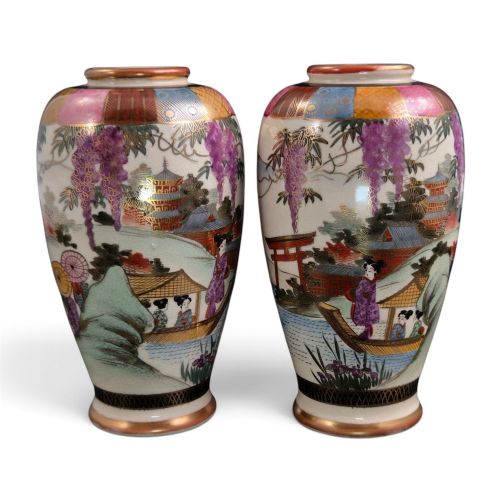
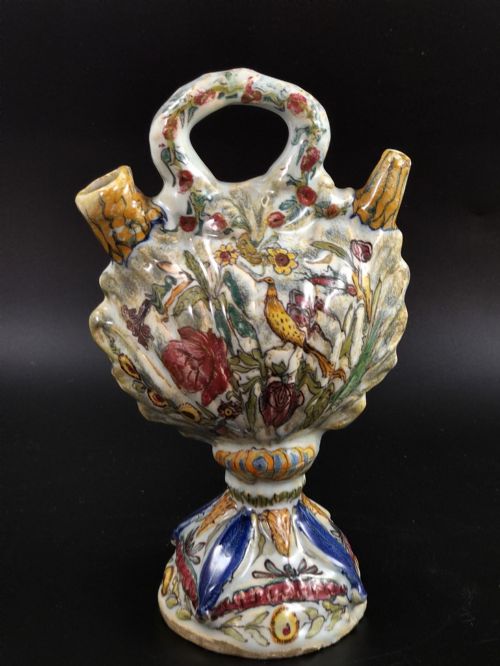
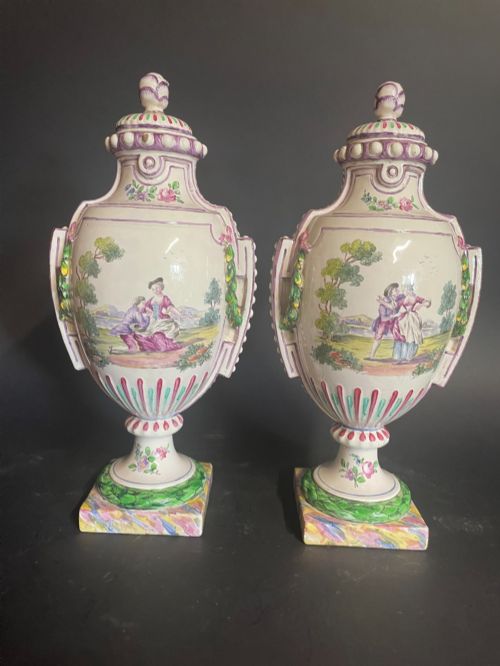
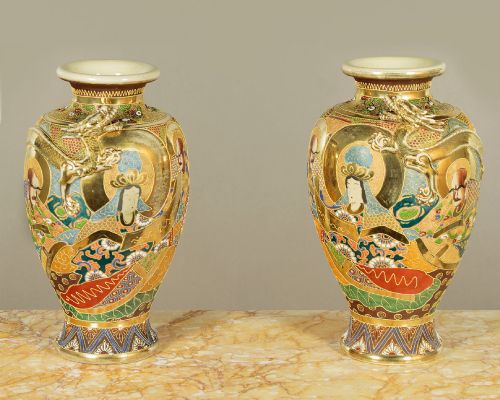
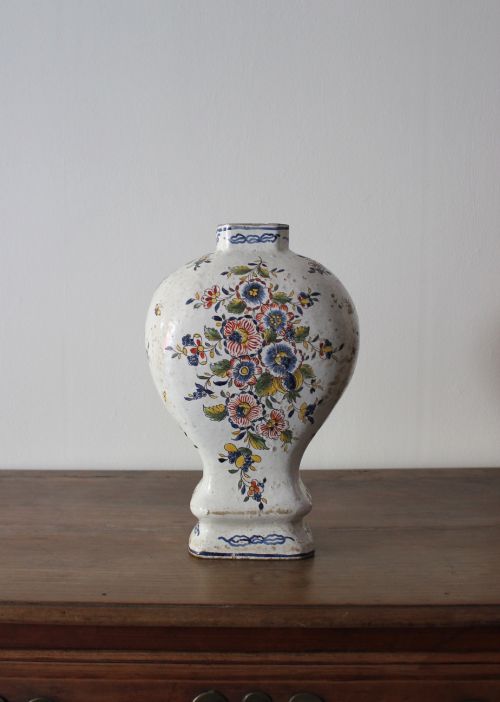
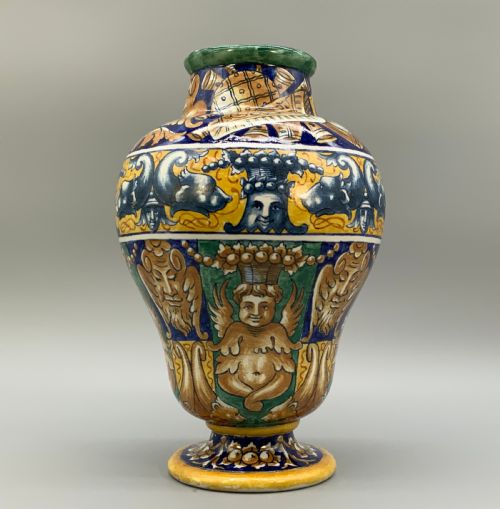
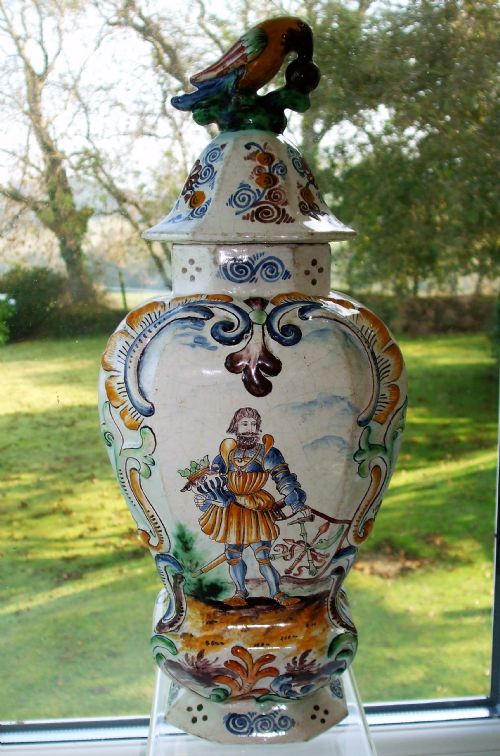
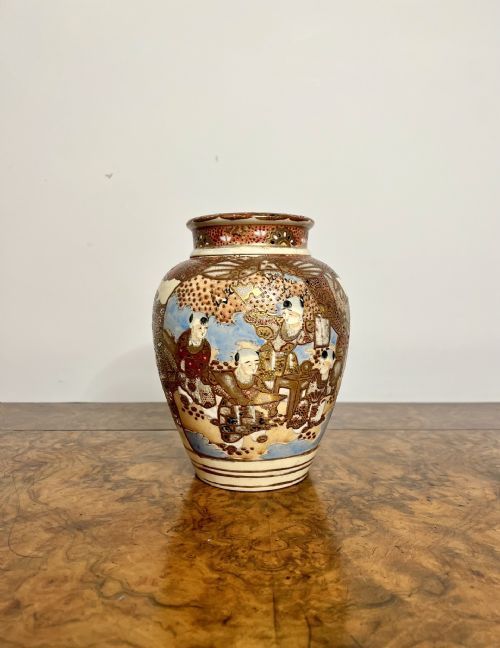
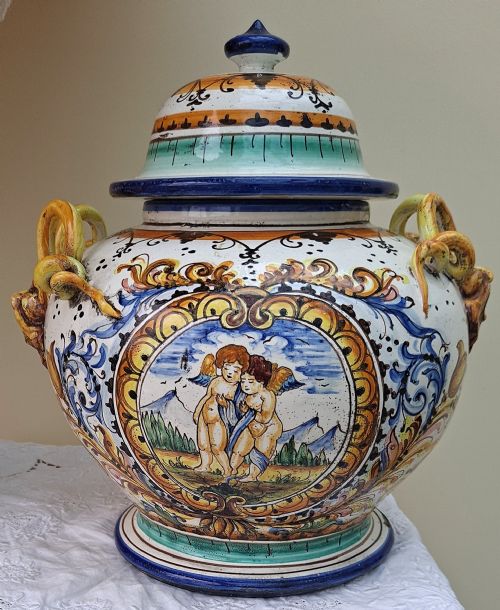
An earthenware polychrome urn brings together varied forms such as lidded jars, pilgrim flasks, and large decorative vases. The examples on this page stretch from the eighteenth century through the Victorian era and into the early twentieth century.
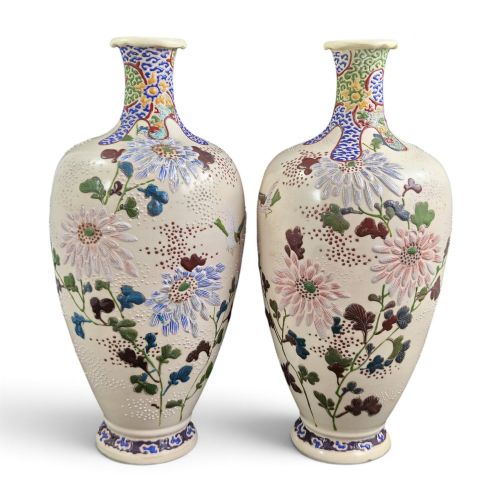
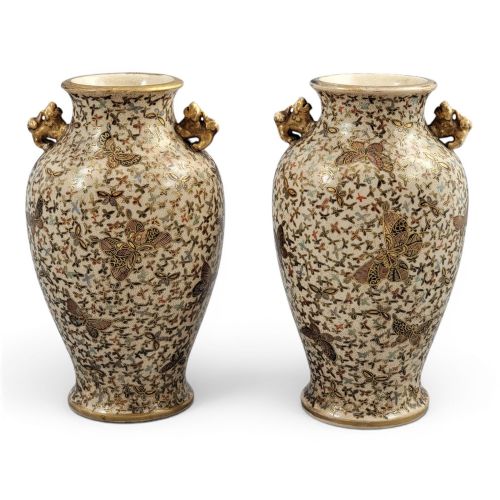
Makers across distinct regions shaped these objects, producing Dutch Delftware, Italian majolica, and Japanese Satsuma wares. Buyers will encounter both single display vessels and matched pairs intended for mantelpieces and large rooms.
The decorative schemes span floral patterns, landscapes, and figurative scenes rendered in multiple colours. Many pieces incorporate lids or covers, while others take open vase and urn formats.
How they were made
Potters shaped absorbent earthenware bodies before coating them with glazes such as tin glaze or standard ceramic finishes. Artisans then applied polychrome enamel pigments directly to the surface.
Many workshops integrated gold leaf and heavy gilt decoration alongside the enamel work to highlight specific motifs. Firing fixed the colours into the glaze layer, securing the vibrant pigments across centuries of use.
Earthenware Polychrome Urn Retail Price Guide 2026
Typical asking prices for earthenware polychrome urn among the pieces listed under this phrase on Sellingantiques today, from the lower quarter to the upper quarter. They describe what is for sale here now, not the wider market.
Materials recorded across the inventory include tin glaze, gold leaf, and traditional ceramic earthenware bodies.
What varies in quality
The precision of the hand-painted brushwork distinguishes standard production from exhibition-grade pieces. Artisans who detailed complex scenes, such as thousands of butterflies or intricate landscapes, achieved a higher level of execution.
The richness and application of the gilding further divide the range. Well-preserved enamel work and intact covers on lidded jars indicate superior survival through the periods.
Miles Mason·Kinkozan·Kinzan·Hayakawa·Yamashu·Hododa·Maruni Kobe
The Earthenware Polychrome Urn Glossary
- Earthenware
- Porous pottery fired at lower temperatures than stoneware or porcelain. It forms the core body of these vessels.
- Polychrome
- Decoration employing multiple distinct colours. It defines the painted surfaces of these urns and vases.
- Majolica
- Italian tin-glazed earthenware decorated with colourful pigments. Pieces often date from the eighteenth and nineteenth centuries.
- Satsuma
- Japanese earthenware pottery featuring a crackle glaze and dense polychrome and gilt decoration. Production flourished during the Meiji period.
- Delftware
- Tin-glazed earthenware originating in the Netherlands. It frequently displays Dutch Baroque influences and floral motifs.
Earthenware Polychrome Urn: Frequently Asked Questions
What is an earthenware polychrome urn?
An earthenware polychrome urn is a decorative ceramic vessel finished with multi-coloured painted glazes or enamels. These objects include lidded jars, pilgrim flasks, and large display vases.
They reflect diverse historical traditions, ranging from Dutch Delftware to Italian majolica and Japanese Satsuma production.
How were these urns used historically?
These vessels served primarily as decorative display items within domestic interiors. Large pairs often occupied prominent positions on mantelpieces or cabinets.
Lidded variations also held dry goods or served as decorative centrepieces in grand rooms.
How do I care for antique earthenware?
Keep these pieces out of direct sunlight to protect the enamel and gilt decoration from fading. Dust them gently with a dry, soft cloth.
Avoid using water or cleaning agents on the porous surfaces, particularly where glazes show historic craquelure.
How do I identify Satsuma ware?
Satsuma ceramics feature a distinctive cream-coloured, finely cracked earthenware body. They are heavily decorated with polychrome enamels and raised gold leaf.
Many bear signatures from workshops or artists active during the Meiji period.
What distinguishes majolica from Delftware?
Majolica is an Italian tradition known for rich, opaque tin glazes and Renaissance Revival or Baroque styling. Delftware is the Dutch equivalent, often executed in distinct colour palettes.
Both utilise earthenware bodies coated in tin glaze before painting.