




Earthenware Equestrian Figurine
An earthenware equestrian figurine brings historical figures and spirited riders into a room, offering a tangible piece of centuries-old ceramic artistry.
Earthenware Equestrian Figurine
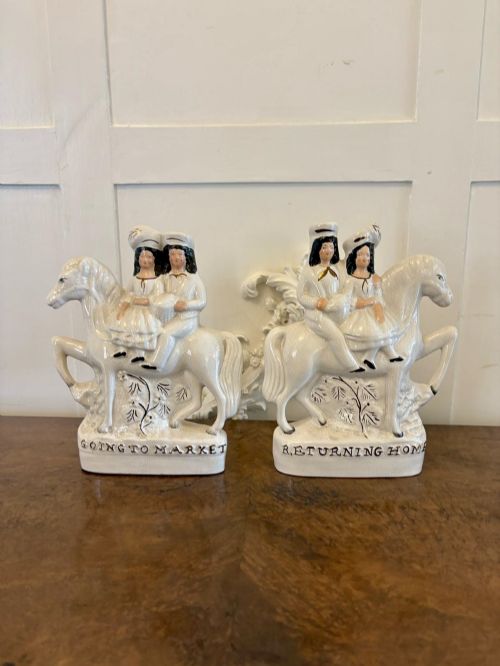
An earthenware equestrian figurine is a ceramic sculpture depicting a human figure mounted on a horse, spanning from early Chinese pottery to Victorian English manufactories. These works include figures of royalty, military leaders, Scottish highlanders, and mounted jockeys rendered in clay.
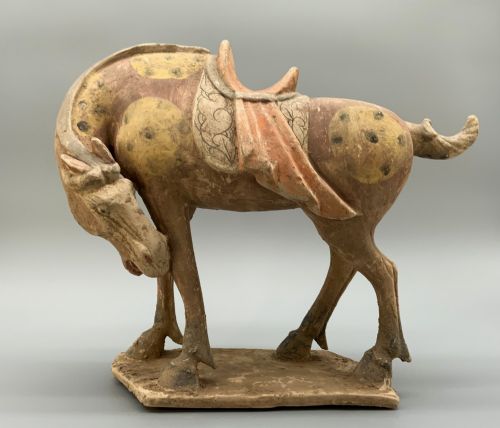
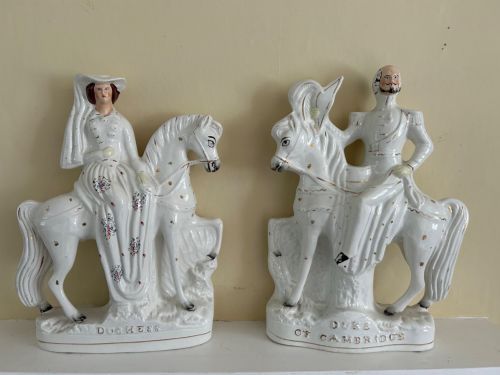
The most common examples encountered on this page originate from nineteenth-century Victorian Staffordshire potteries, often modelled as flatback figures designed for display on mantelpieces. Alongside these British pieces, listings occasionally feature earlier Chinese Tang Dynasty sculptures and later Tang Dynasty style interpretations.
Makers produced these pottery figures to capture contemporary public interest in famous personalities, historic events, and everyday riders. Buyers will find both single figures and balanced pairs depicting subjects such as Joan of Arc, Garibaldi, and royal children on horseback.
Materials and construction methods
The primary material across these pieces is earthenware or terracotta, formed from clay that is fired at moderate temperatures to create a porous ceramic body. Artisans then applied glazes, enamels, and mineral pigments to colour the surfaces before secondary firing.
Staffordshire potters utilised press-moulding techniques to shape the hollow flatback figures, smoothing the backs while adding hand-painted details to the fronts. Earlier Chinese examples employed moulded clay bodies finished with characteristic lead-silicate glazes that pooled and ran during the kiln process.
Earthenware Equestrian Figurine Retail Price Guide 2026
Typical asking prices for earthenware equestrian figurine among the pieces listed under this phrase on Sellingantiques today, from the lower quarter to the upper quarter. They describe what is for sale here now, not the wider market.
Nineteenth-century potters immortalised notorious highwaymen alongside British royals, ensuring highwayman Tom King shares shelf space with the Duke of Cambridge.
Assessing quality in ceramic figures
The vibrancy and application of the enamel colours or lead glazes distinguish finer items from simpler utilitarian productions. Consistency in the ceramic body and stability in the flatback construction further separate standard examples from masterworks.
The Earthenware Equestrian Figurine Glossary
- Flatback
- A ceramic figure designed with an unglazed or partially finished flat reverse side intended to be placed directly against a wall or mantelpiece. This method saved time and materials during production.
- Earthenware
- A porous pottery body fired at lower temperatures than stoneware or porcelain. It requires a glaze to become entirely waterproof.
- Sancai
- A traditional type of Chinese three-colour glaze used extensively on pottery during the Tang Dynasty. The palette typically combines amber, green, and creamy white tones.
- Enamel
- Vitreous colour applied over the fired glaze surface and fixed with a low-temperature second firing. It allows for bright, detailed decoration on ceramic figures.
- Terracotta
- Unglazed brownish-red earthenware fired to a hard state. The term describes both the unglazed material and sculptures made from it.
Earthenware Equestrian Figurine: Frequently Asked Questions
What is an earthenware equestrian figurine?
An earthenware equestrian figurine is a ceramic sculpture portraying a person on horseback, created by various cultures and eras.
These pieces range from ancient burial pottery to nineteenth-century British decorative mantel ornaments.
Where were Staffordshire equestrian figures made?
Staffordshire figures were produced in the potteries of the Stoke-on-Trent region in England during the nineteenth century.
Local workshops used regional clay deposits to supply domestic and international markets with affordable decorative sculptures.
How do I date a pottery horse figure?
Dating relies on stylistic markers, glaze types, and the historical subject matter depicted by the sculpture.
Victorian pieces often feature flat backs and bright enamels, whereas Chinese examples display ancient burial patination and characteristic lead glazes.
How should I display antique ceramic figures?
These figures require stable placement away from high-traffic areas and direct sunlight to protect their painted surfaces.
Flatback designs suit placement on mantels or shelves where the unglazed reverse remains against a wall.