


Earthenware Baluster Vase
These earthenware baluster vase pieces bring curvaceous profile and hand-painted detail to any room, offering traditional form for the discerning collector.
Earthenware Baluster Vase
An earthenware baluster vase combines a swelling lower body with a slender neck, creating a classic silhouette found across multiple centuries. Collectors seeking an earthenware baluster vase will encounter forms ranging from covered vessels to converted lamp bases.
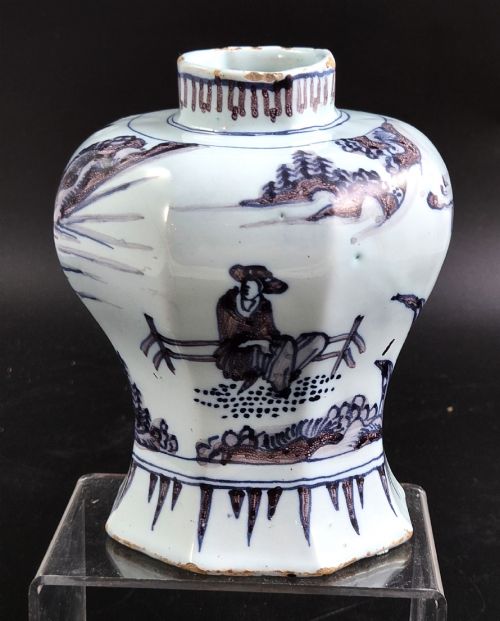
The selections span from seventeenth-century Dutch tin-glazed examples to nineteenth-century Japanese Satsuma wares and twentieth-century Moorcroft pieces. These items serve primarily as decorative ornaments, often displayed in pairs upon mantelpieces or side tables.
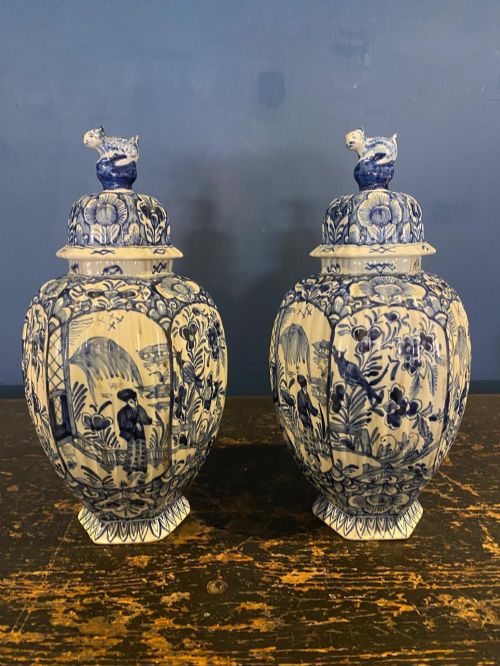
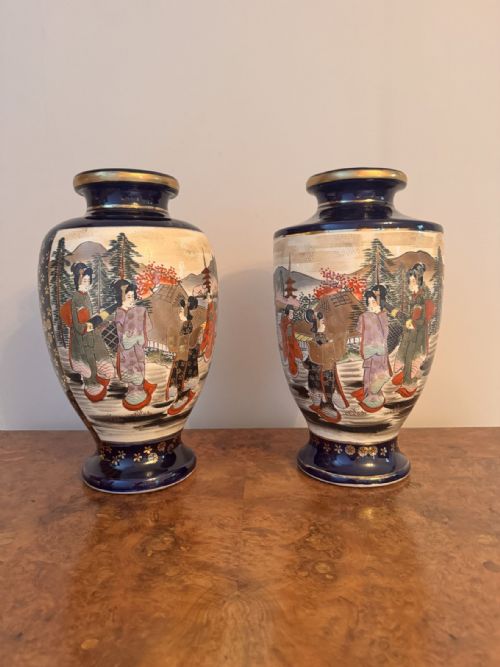
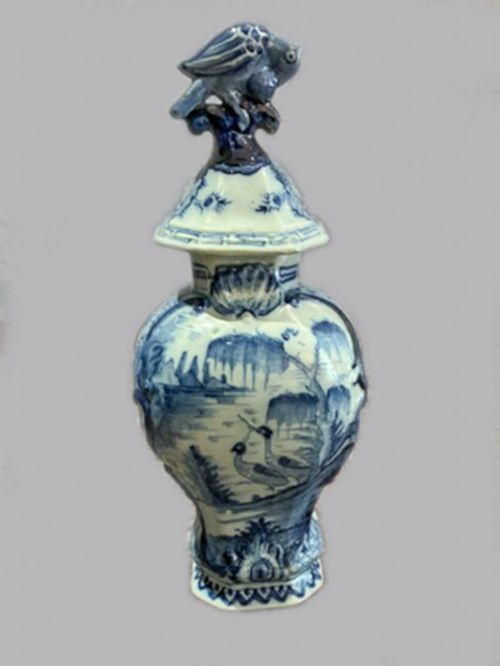
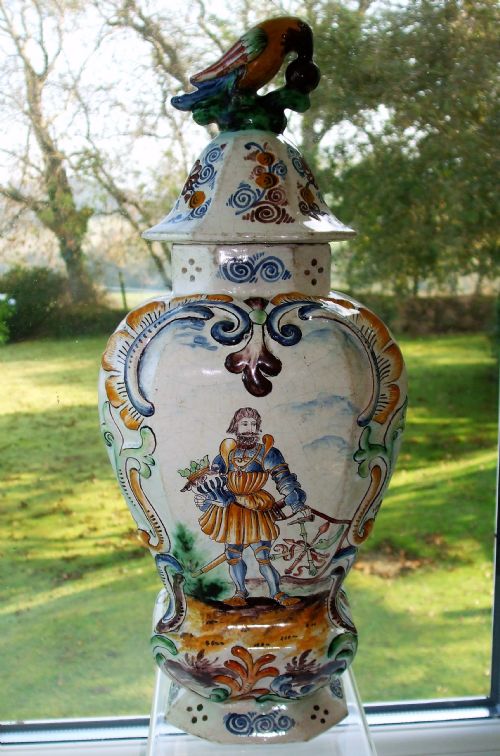
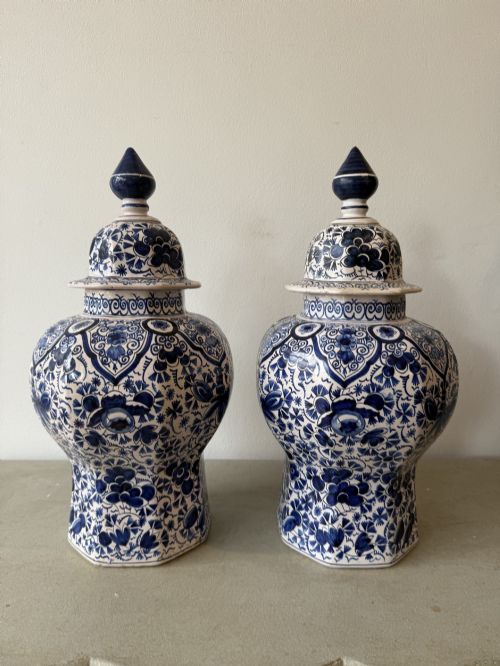
Dutch Delftware and Japanese ceramic traditions dominate the offerings, showing both blue-and-white palettes and rich polychrome enamels. Buyers will find variations from simple jars with lids to elaborate hand-painted pieces featuring figures, birds, and floral motifs.
How they were made
Potters shaped the porous earthenware body on a wheel or in a mould before applying an opaque tin glaze or enamel coating. Artisans then painted intricate designs by hand directly onto the surface using cobalt blue, manganese, or multi-coloured enamel pigments.
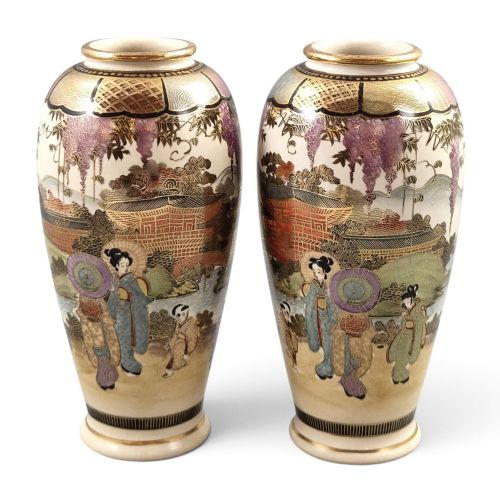
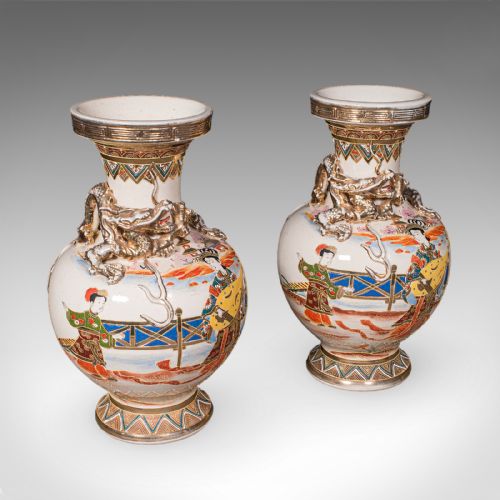
Gold leaf and gilt highlights were frequently added to Japanese Satsuma and later British wares to accentuate specific design elements. Firing took place in traditional kilns, sealing the pigments into the glaze or leaving them with a matte finish depending on the period.
Several vases manage to depict both delicate garden birds and bustling children sharing a single ceramic surface across different centuries.
What varies in quality
The crispness and dexterity of the hand-painted brushwork separate ordinary vessels from superior examples. Skilled painters achieved fine lines and balanced compositions on the challenging curved surface of an earthenware baluster vase.
Preservation of the original glaze, enamel colours, and any matching covers heavily influences the standing of a piece. Firing imperfections and hairline glaze cracks alter the desirability for serious collectors.
Shozan·Miles Mason·William Moorcroft·Carlton Ware·Kizan
The Earthenware Baluster Vase Glossary
- Baluster
- A vertical architectural form resembling a pillar, swelling in the lower portion and tapering towards the top. This shape gives the vessel its characteristic profile.
- Tin Glaze
- An opaque white glaze containing tin oxide, used extensively on pottery to provide a smooth surface for painting. It forms the foundation of traditional Delftware.
- Chinoiserie
- European artistic styles reflecting Chinese motifs and decorative techniques, popular during the seventeenth and eighteenth centuries. Artisans applied these scenes to various ceramic forms.
- Polychrome
- Decoration employing several colours rather than a single hue, often seen in multi-coloured enamel painting. It allows for vibrant pictorial scenes.
- Satsuma
- Japanese pottery traditionally featuring a crackled ivory earthenware glaze decorated with enamels and gilding. These pieces were largely produced for export during the Meiji period.
Earthenware Baluster Vase: Frequently Asked Questions
What is an earthenware baluster vase?
An earthenware baluster vase is a ceramic vessel featuring a rounded, bulging lower body that tapers gracefully toward a narrower neck. These pieces were produced in various historical periods across Europe and Asia.
Potters used porous clay bodies finished with tin glazes, enamels, or hand-painted motifs to create both utilitarian and purely decorative objects.
How do I tell Dutch Delft from Japanese Satsuma?
Dutch Delft pieces typically display tin-glazed surfaces in blue and white or manganese, often featuring European interpretations of Chinese motifs. They date primarily from the seventeenth and eighteenth centuries.
Japanese Satsuma wares generally exhibit a fine crackle-glaze ivory body embellished with heavy polychrome enamels and gold leaf, largely associated with the Meiji period.
Were these vases made with lids?
Many early examples were manufactured with matching covers, often referred to in listings as vases and jars or lidded vases. These covers completed the symmetrical silhouette of the vessel.
Over the centuries, many lids were separated from their original bodies, making surviving matched pairs particularly notable for collectors.
How should I display an antique vase?
These vessels suit prominent placement on side tables, mantels, or within cabinets where their three-dimensional profiles can be fully appreciated. Pairs look effective when arranged symmetrically.
Care should be taken to keep them away from direct sunlight and areas prone to accidental knocks, preserving their historic glazes and enamel work.