


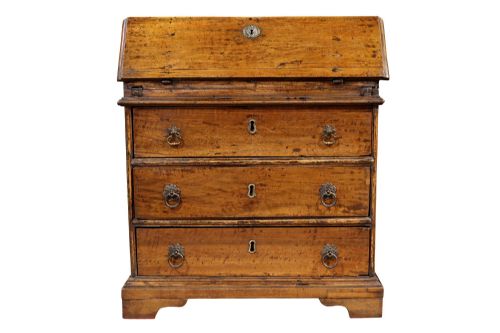


Early Walnut Chest Bureau
An early walnut chest bureau combines deep timber grain with a fitted writing compartment, offering a practical workspace wrapped in period elegance.
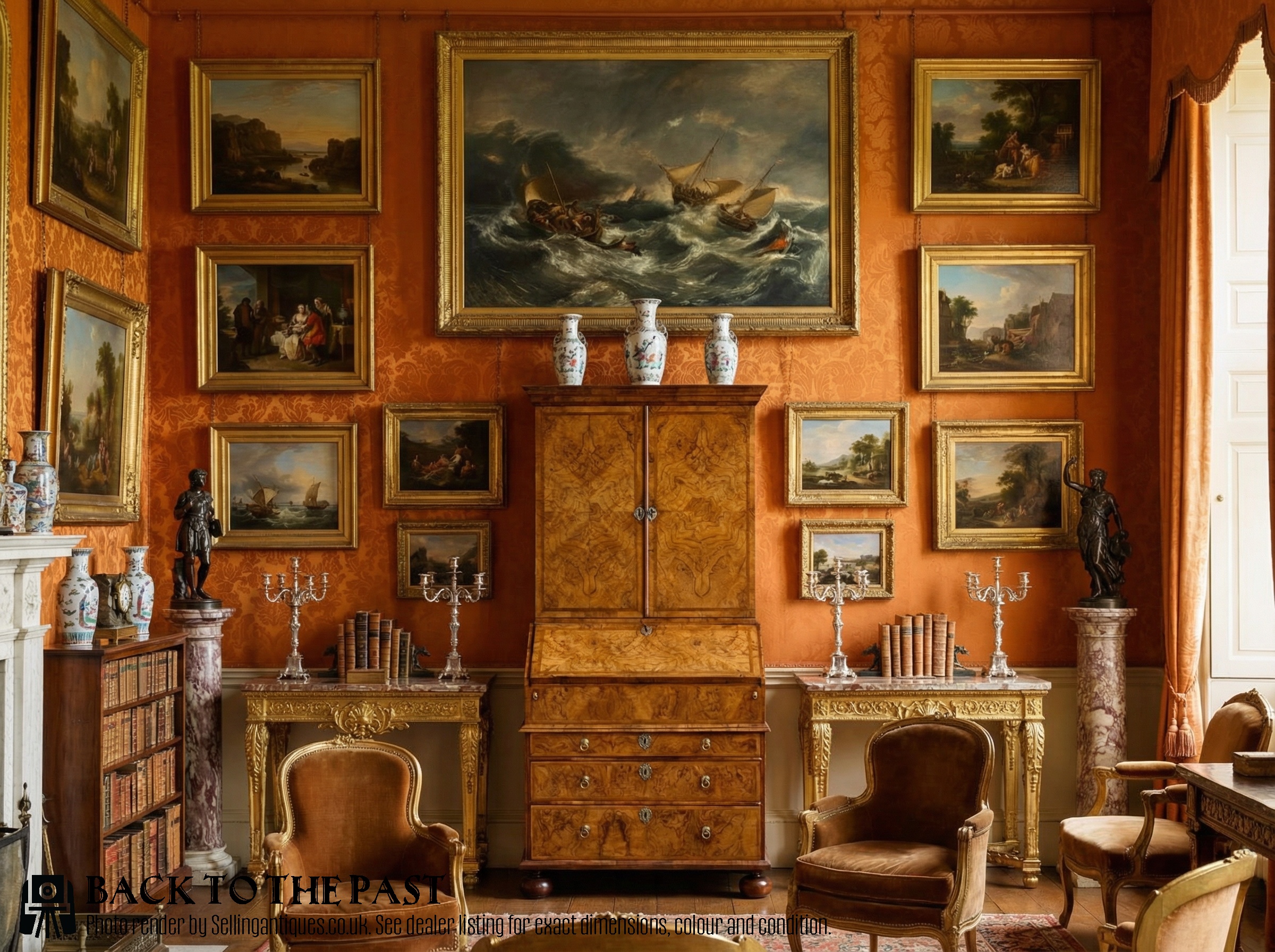
Early Walnut Chest Bureau
An early walnut chest bureau brings together the storage capacity of a set of drawers and the enclosed workspace of a fall-front desk, forming a dual-purpose piece from the seventeenth and eighteenth centuries. These items serve collectors seeking period joinery alongside practical domestic utility.
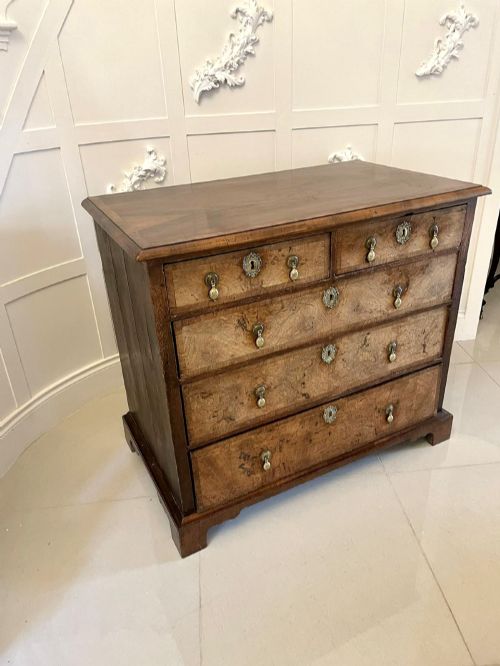
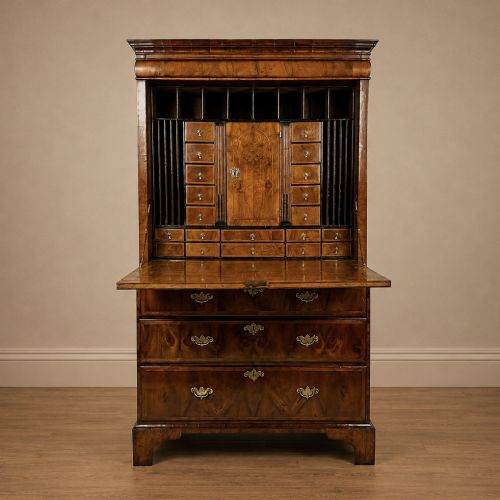
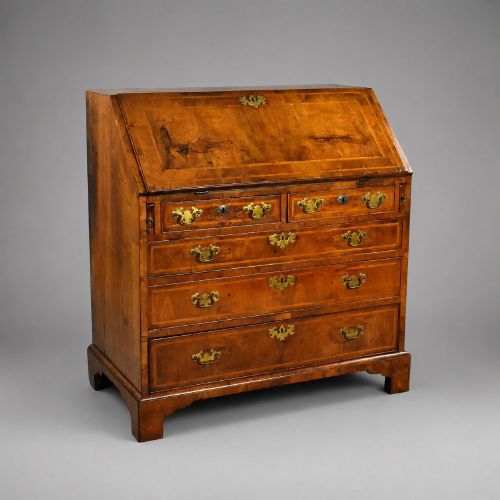
The versions most commonly met on this page date from the Queen Anne, George I, and William and Mary eras. They appear as fall-front bureaux, escritoires, and kneehole desks constructed during the early eighteenth century.
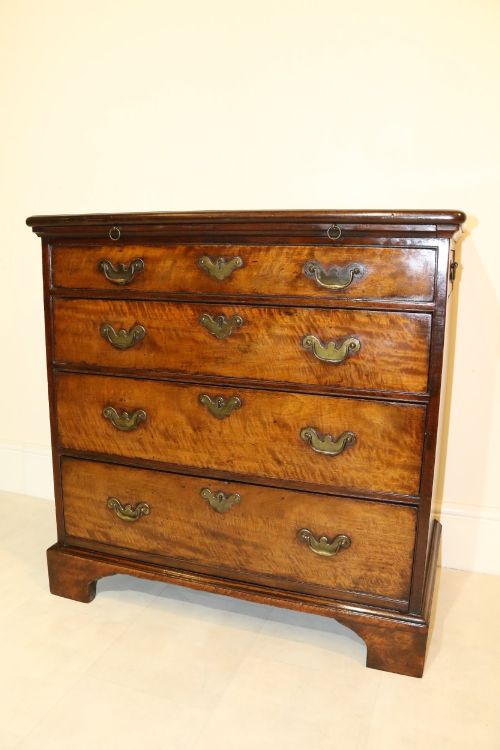
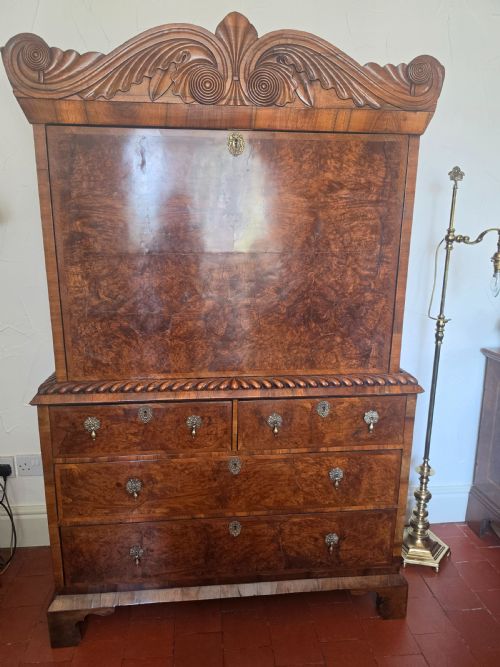
Makers shaped these forms from native and imported timbers, creating compact bachelor chests alongside taller double-door bureau bookcases. Each variation reflects the evolving domestic requirements of Georgian and late Stuart households.
Materials and construction methods
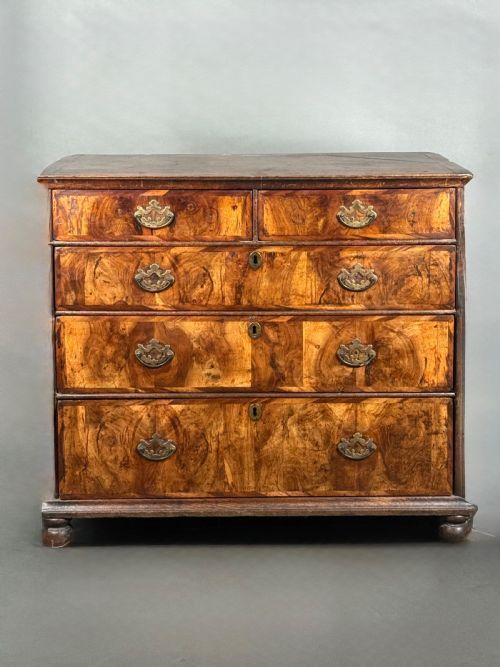
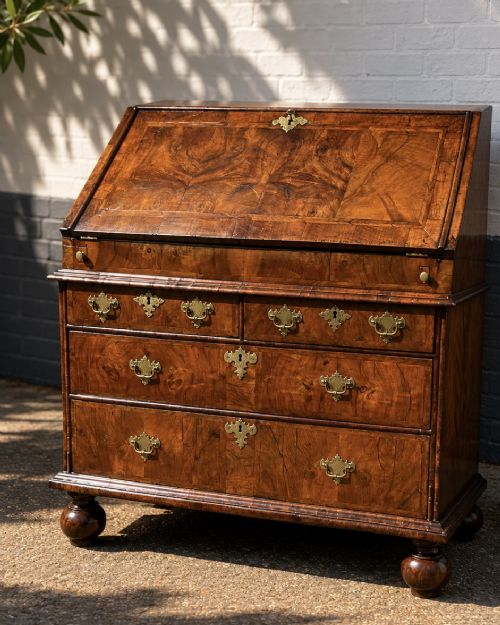
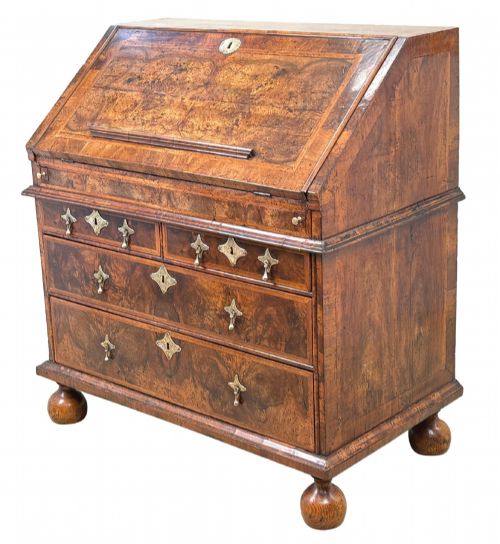
Cabinetmakers utilised walnut, burr walnut, and figured walnut veneers applied over solid oak carcases to achieve rich decorative surfaces. They enhanced these timber grains with herringbone inlaid borders and feather-banded edging.
Constructors integrated brass drop handles, escutcheons, and ironwork to secure the fall fronts and drawers. Secondary woods like oak provide structural stability behind the decorative walnut facades.
Some bureaus hide secret drawers behind pigeonholes, built for letters nobody else should read.
Distinctions in craftsmanship
The selection of timber grain separates standard examples from exceptional pieces, with highly figured burr walnut and matched veneers commanding greater visual depth. The precision of the inlay work and the retention of original brass or iron hardware further distinguish finer workshops.
The integrity of the internal pigeonholes, small drawers, and secret compartments dictates the overall architectural success of the bureau. Uniformity in the walnut colour across the fall front and drawer tiers indicates careful initial material selection.
The Early Walnut Chest Bureau Glossary
- Bureau
- A writing desk featuring a sloping hinged lid that opens to reveal internal compartments and small drawers. This form became prevalent during the late seventeenth and early eighteenth centuries.
- Escritoire
- A tall cabinet or writing chest containing a drop-down writing flap and numerous internal drawers. These pieces often feature double doors or fall-front designs.
- Burr Walnut
- A specialised wood cut from walnut tree growths, displaying intricate swirling grain patterns. Cabinetmakers utilised this timber for decorative veneering on prominent surfaces.
- Feather-Banded
- A decorative inlay technique using two strips of veneer laid diagonally to form a herringbone or feather pattern around drawer perimeters. This detail characterises finer Georgian case furniture.
- Kneehole Desk
- A compact writing table featuring a central recessed space flanked by pedestals of small drawers. These pieces appeared frequently during the Queen Anne and George II periods.
Early Walnut Chest Bureau: Frequently Asked Questions
What is an early walnut chest bureau?
An early walnut chest bureau is a dual-purpose antique combining a set of lower drawers with an upper writing compartment enclosed by a sloping fall front. These pieces date principally from the late seventeenth century through the early Georgian era.
Craftsmen built them to serve as both storage units and private writing spaces within domestic settings. Their survival demonstrates the enduring appeal of figured walnut timber combined with practical interior joinery.
How do I identify a Queen Anne walnut bureau?
Queen Anne walnut bureaux typically exhibit figured or burr walnut veneers, feather-banded borders, and fitted interior compartments behind a fall-front lid. They often rest on bracket feet or cabriole supports depending on the specific form.
The distinct proportions and domestic scale of these pieces separate them from later nineteenth-century interpretations. Examining the secondary timbers, such as oak drawer linings, helps confirm the early eighteenth-century period.
What is the difference between a bureau and an escritoire?
A bureau generally relies on a sloping fall-front lid that drops down to create a writing surface above lower chest drawers. An escritoire often takes the form of a taller cabinet with a vertical fall front or double doors enclosing a structured writing interior.
Both forms utilise figured walnut veneers and elaborate internal layouts. Escritoires tend to present a more architectural facade when closed.
How should I care for antique walnut furniture?
Antique walnut furniture requires placement away from direct sunlight and heat sources to prevent the veneers from drying out or lifting. Maintaining stable indoor humidity preserves the structural integrity of the oak carcases and delicate inlays.
Regular dusting with a dry, soft cloth protects the polished surface without introducing harmful moisture or chemical residues. Natural wax applications help nourish the historical timber finish over time.