


Early Victorian Credenza
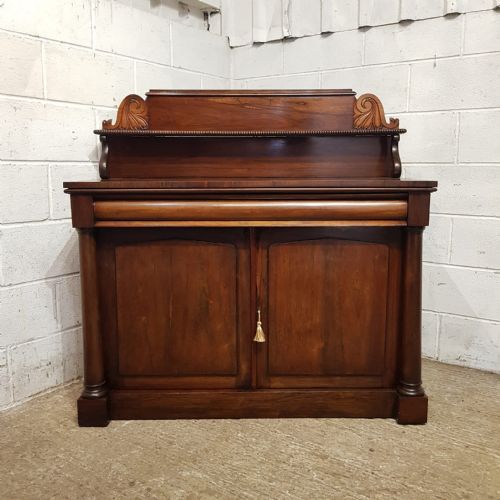
An early victorian credenza brings substantial architectural presence and rich figured timbers to a principal reception room.
Early Victorian Credenza
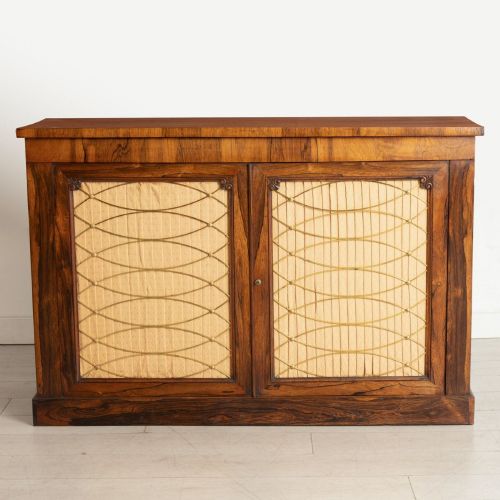
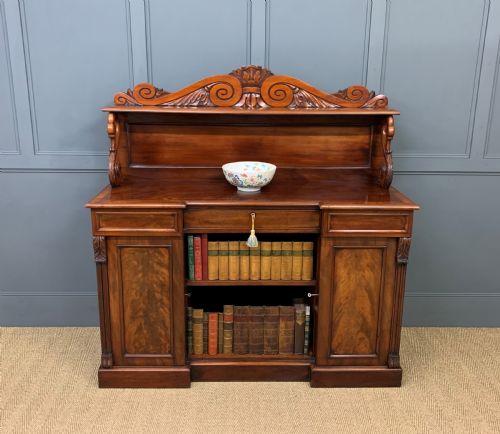
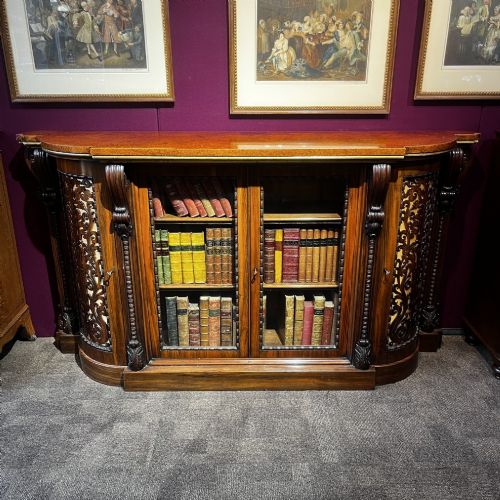
An early victorian credenza appears across the nineteenth century as a low, freestanding display cabinet designed for the polite drawing room. The pieces meeting this description combine architectural proportions with glazed or mirrored doors, frequently framed by architectural pilasters or open side shelves.
Makers of the period adapted transitional Regency and William IV forms into compact low cabinets suited to domestic display. Surviving examples demonstrate how cabinetmakers utilised rosewood, walnut, and flame mahogany to anchor grand nineteenth-century interiors.
Materials and construction
Cabinetmakers constructed carcass frames in pine or oak, applying costly veneers of rosewood, flame mahogany, walnut, and pollard oak to visible surfaces. Delicate stringing in boxwood and ebony, alongside brass inlay, defines the decorative vocabulary recorded in the archive.
Glazing bars, carved wooden foliate motifs, and marble tops complete the construction of these low cabinets. Carved details such as acorns and leaves appear alongside fabric-backed glass doors and brass mounts.
Cabinets sometimes conceal secret cellarets or hidden stationery drawers behind dummy book spines.
Judging the range
The distinction between standard workshop production and exceptional cabinet work rests on timber selection and decorative ambition. Pieces utilising highly figured amboyna, gonçalo Alves, or intricate marquetry sit at the upper end of the scale.
Proportion and execution of carved ornament separate provincial utility from metropolitan design. Refined cabinetry shows careful grain matching across doors and disciplined execution of architectural mouldings.
Holland & Sons
The Early Victorian Credenza Glossary
- Credenza
- A low dining-room or drawing-room cabinet used for serving or display, distinguished by its low profile and enclosed shelving.
- Chiffonier
- A compact sideboard or cabinet equipped with raised back shelving and enclosed lower cupboards, common in nineteenth-century parlours.
- Flame mahogany
- Timber cut to expose a distinctive flammiform grain pattern, prized for veneering prominent cabinet doors and drawer fronts.
- Marquetry
- Inlaid decorative patterns formed by fitted pieces of various coloured woods and veneers set into a contrasting background.
- Ormolu
- Gilded bronze mounts and decorative details applied to cabinet doors, feet, and architectural pilasters.
Early Victorian Credenza: Frequently Asked Questions
What is an early victorian credenza?
An early victorian credenza is a low, freestanding display cabinet or sideboard produced during the mid-nineteenth century. These pieces combine enclosed lower cupboards with open shelving or glazed doors.
They served as architectural centrepieces in drawing rooms for displaying porcelain and decorative objects.
Where were they placed?
These cabinets sat against principal walls in formal reception rooms and drawing rooms. Their low profile allowed mirrors or artwork to hang directly above them.
They provided both surface display space and concealed storage for household silver or linens.
How do I care for rosewood?
Maintain rosewood surfaces by keeping them away from direct sunlight and sudden temperature shifts. Dust regularly with a dry, soft cloth to protect the polished finish.
Apply high-quality beeswax sparingly when the timber appears dry, buffing gently along the grain.
How do I tell periods apart?
Early pieces often retain heavier Regency or William IV proportions with robust carved mahogany. Later nineteenth-century examples introduce lighter walnut veneers, marquetry, and ebonised details.
Examine the secondary woods inside the carcass and the style of decorative carving to determine the approximate decade of manufacture.