
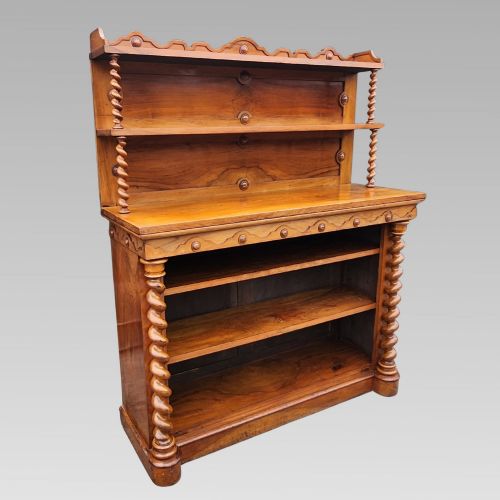
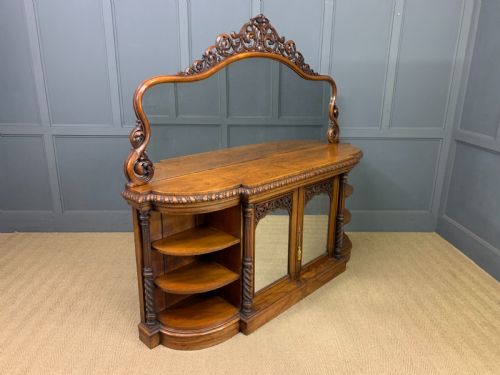


Carved Shelf Chiffonier
A carved shelf chiffonier combines enclosed storage with open display, offering a practical lower cabinet topped by tiered or single shelving.
Carved Shelf Chiffonier
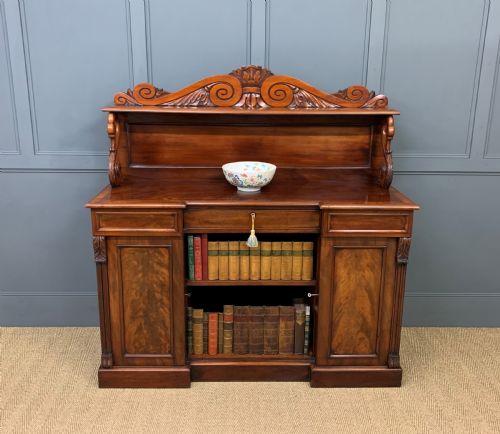
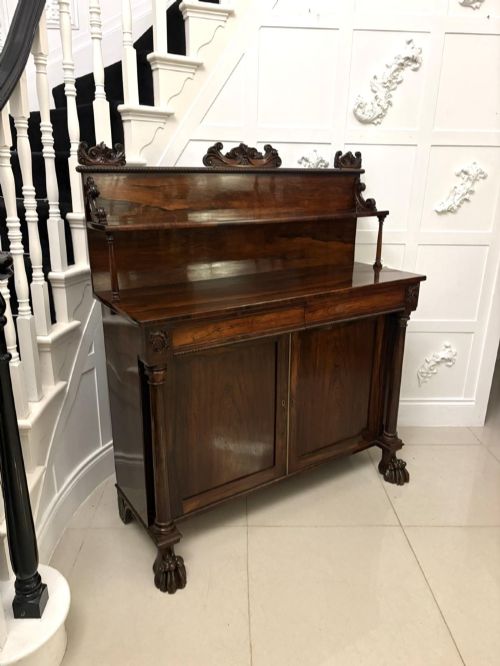
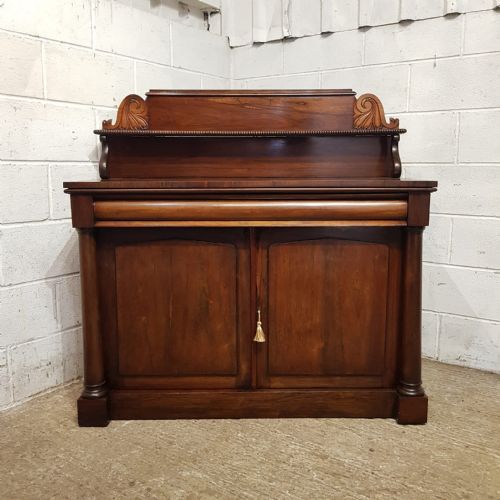
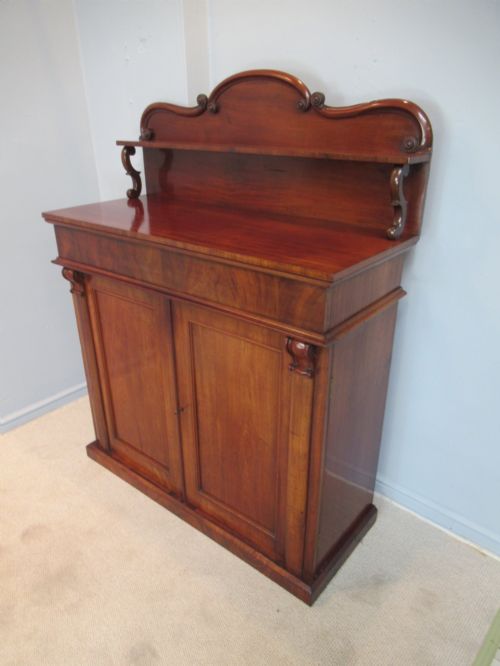
A carved shelf chiffonier represents a distinct form of nineteenth-century lower sideboard furniture, usually combining a two-door enclosed cupboard base with an upper superstructure of shelves supported by turned columns or carved brackets. When searching this phrase, buyers encounter primarily Victorian and Regency examples configured for dining rooms and parlours.
The materials span traditional timbers such as mahogany, rosewood, walnut and pollard oak, often accented with flame mahogany veneer or burr walnut figure. The upper shelves serve to display small decorative objects, while the lower cabinet conceals tableware or linens.
Surviving pieces range from compact mid-century variants to substantial mirror-backed models produced during the Victorian era. Regional and stylistic variations include Anglo-Indian solid satinwood and Arts and Crafts oak interpretations alongside standard British cabinetwork.
How they were made
Cabinetmakers constructed these pieces using solid timbers and decorative veneers applied to secondary woods, utilising flame mahogany, rosewood and burr walnut for surface impact. Grain matching governed the placement of veneers on cupboard doors and drawer fronts to create symmetrical patterns.
Structural elements relied on traditional joinery techniques, incorporating brass hardware for hinges and locks alongside glass panels where display doors were fitted. Upper shelves required sturdy vertical supports, frequently fashioned as turned pillars or carved scroll brackets that anchored the superstructure to the lower sideboard top.
Listings feature mahogany, rosewood, walnut, burr walnut, and pollard oak across 19th-century, Regency, and Victorian periods.
What varies in quality
Quality rests principally on the choice of timber and the precision of its finishing, visible in the depth of figure within flame mahogany or burr walnut veneers. Master cabinetmakers selected stock with intense natural grain patterns and executed carved details with crisp relief.
Construction integrity distinguishes workshop output, seen in the thickness of drawer linings, the snugness of door fits, and the structural stability of upper shelf supports. Secondary wood selection and the retention of original brass fittings further separate standard production from superior pieces.
Robert Strahan
The Carved Shelf Chiffonier Glossary
- Chiffonier
- A low sideboard or cabinet featuring a combination of enclosed lower storage and upper shelving. This form evolved during the Regency period to hold silverware and linen.
- Flame Mahogany Veneer
- A thin slice of mahogany timber cut from the fork of the tree where branches meet the trunk. This produces a distinctive flickering flame pattern across cabinet doors.
- Burr Walnut
- Timber harvested from the gnarled growths on walnut trees, yielding intricate swirling grain patterns. It was favoured by nineteenth-century makers for high-status display furniture.
- Pollard Oak
- Oak timber taken from trees that were pollarded, creating clustered knots and a dense mottled grain. It appears on Victorian cabinets and sideboards.
- Credenza
- A sideboard or cabinet designed for dining rooms, frequently incorporating mirrored backs and glass doors in Victorian iterations. It shares functional similarities with large chiffoniers.
Carved Shelf Chiffonier: Frequently Asked Questions
What is a carved shelf chiffonier used for?
These cabinets served dining rooms and living spaces as multi-purpose storage and display units. The lower cupboards held tableware, books, or household goods, while the upper shelves displayed ceramics and decorative items.
The inclusion of open shelves allowed households to exhibit prized ornaments within the main living quarters. This dual function made the form popular throughout the nineteenth century.
How do I tell Regency from Victorian examples?
Regency pieces typically exhibit restrained classical lines, rectilinear proportions, and dark mahogany or rosewood surfaces with minimal carving. Brass inlay and simple turned supports characterise this earlier phase.
Victorian models tend to be heavier, incorporating elaborate scrolling brackets, mirrored backs, and heavily figured burr walnut or pollard oak veneers. Carved ornamentation became more pronounced as the century progressed.
Are the shelves on these chiffoniers adjustable?
The upper shelves on most antique chiffoniers are fixed permanently into supporting brackets or turned columns. These structural elements tie the upper tier securely to the lower cabinet top.
Lower interior shelves enclosed behind doors may rest on fixed wooden fillets rather than adjustable metal pins. This reflects the standard cabinetmaking practices of the nineteenth century.
How do I care for rosewood and mahogany surfaces?
Maintenance requires keeping timber pieces away from direct sunlight and steady heat sources to prevent veneer lifting and wood splitting. Regular dusting with a dry, soft cloth preserves the polish without introducing moisture.
Occasional application of traditional beeswax feeds the timber and enhances the natural grain figure. Synthetic sprays and silicone polishes should be avoided entirely.