





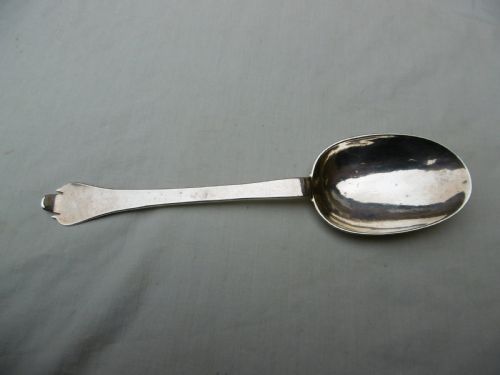


Early Silver Flatware
Early silver flatware brings centuries of dining history to the table, from seventeenth-century trefid spoons to Georgian table forks.
Early Silver Flatware
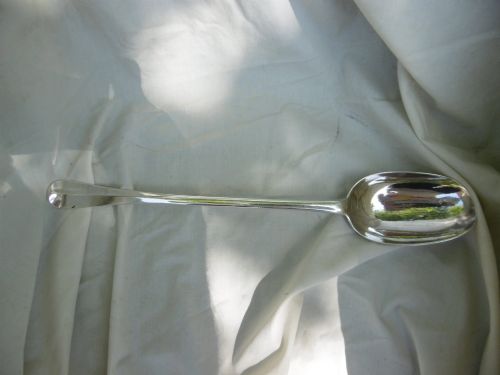
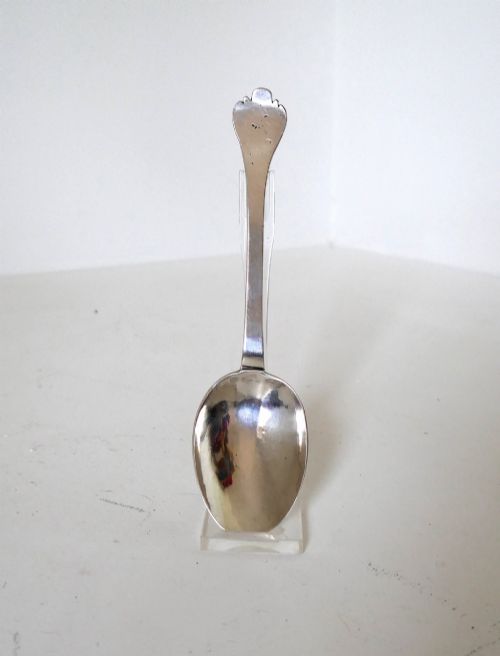
Early silver flatware spans practical domestic eating utensils and serving implements created across the seventeenth, eighteenth, and nineteenth centuries. These pieces encompass spoons, forks, ladles, marrow scoops, and caddy spoons shaped by changing dining habits.
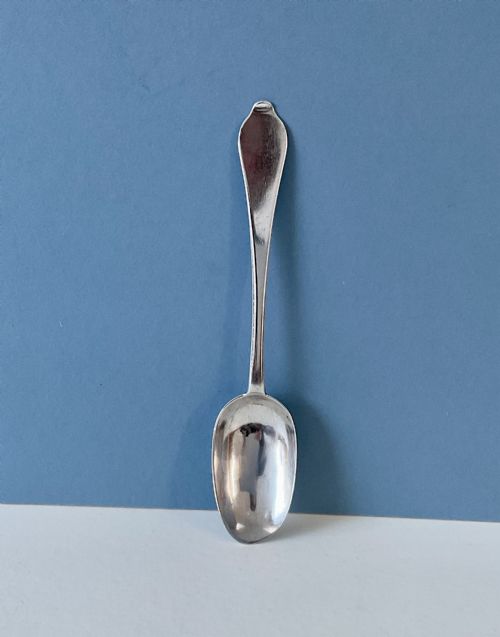
The most common survivals on this page are spoons, ranging from early slip top and seal top forms to Queen Anne dognose tablespoons and George I rat tail designs. Forks and specialised serving pieces appear less frequently but offer substantial historical depth.
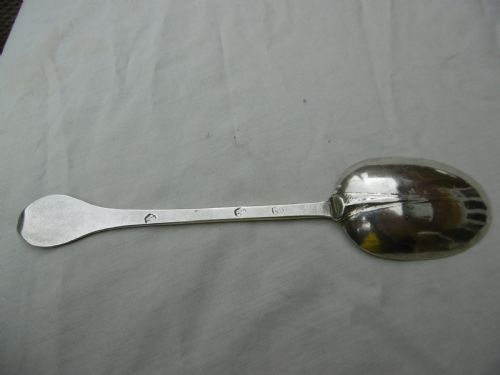
Makers working in London, provincial centres such as Exeter, Newcastle, and Southampton, and Scottish workshops produced these items in sterling or Britannia standard silver. Surviving examples often display maker marks, town marks, and period crests.
Factors that define quality
Quality rests upon the clarity of hallmarks, the crispness of engraved decoration, and the survival of original form without excessive thinning of the silver from centuries of cleaning. Pieces bearing distinct maker marks and verifiable town stamps command greater attention.
Proportion and weight dictate the tactile character of each piece, where heavy gauge metal and balanced handles separate utilitarian survival from exceptional craftsmanship. Retaining original rat tails, crests, and untouched surfaces elevates the standing of an item.
Early Silver Flatware Retail Price Guide 2026
Typical asking prices for early silver flatware among the pieces listed under this phrase on Sellingantiques today, from the lower quarter to the upper quarter. They describe what is for sale here now, not the wider market.
Listings feature solid silver, horn, steel, and wood across periods spanning the seventeenth century to the Edwardian era.
Joseph Willmore·Andrew Archer·James Tait·Benjamin Prosser·Stephen Coleman·Lawrence Coles·Daniel Cary·Peter Webb·John Walton·Archibald Knox·Whiting Co.
The Early Silver Flatware Glossary
- Dognose spoon
- A transitional flatware style featuring a rounded terminal that curves upward, evolving from the trefid into the standard Hanoverian profile.
- Rat tail
- A narrow tongue of metal extending down the back of a spoon bowl to reinforce the junction with the stem.
- Seal top spoon
- An early utensil featuring a small cast finial shaped like a signet seal at the end of a hexagonal stem.
- Slip top spoon
- A plain-handled spoon whose stem is cut off diagonally at the end, representing one of the earliest English dining forms.
Early Silver Flatware: Frequently Asked Questions
How do I date early spoons?
Dating relies heavily on stem shape, bowl geometry, and stamped hallmarks including maker ciphers and date letters.
Changes in terminal styles, from slip top and seal top to trefid and dognose, provide precise chronological markers across the seventeenth and eighteenth centuries.
What is Britannia silver?
Britannia silver is a higher purity standard containing ninety-five point eight percent silver, introduced by statute in England during the reign of Queen Anne.
Objects from this period often display the figure of Britannia and a lion's head erased instead of the traditional leopard's head mark.
Can I use antique spoons daily?
Many collectors utilise sturdy Georgian tablespoons and serving pieces for special dining occasions, provided they receive careful hand washing.
Fragile or very early seventeenth-century items are generally reserved for display and study rather than active table service.
Why do some spoons have rat tails?
The rat tail serves as a structural reinforcement welded down the back of the bowl to strengthen the joint with the thin stem.
This technique was standard practice on seventeenth and early eighteenth-century spoons before manufacturing shifts rendered it obsolete.