




Early Oak Bureau
An early oak bureau brings warmth and working space into a room, offering a fitted fall-front desk built for daily correspondence.
Early Oak Bureau
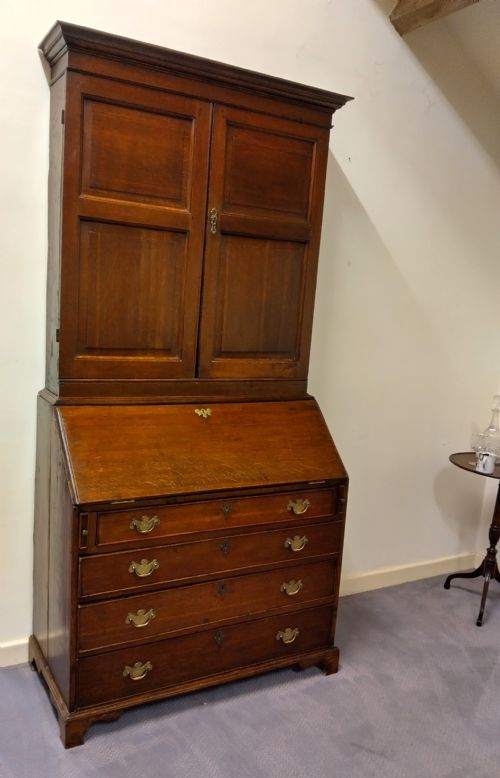
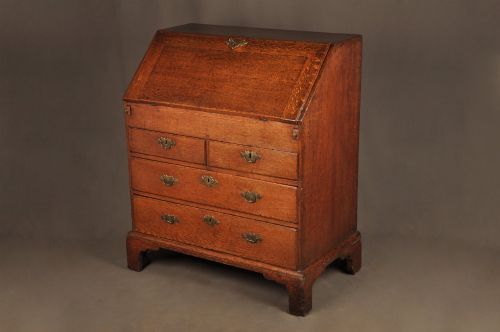
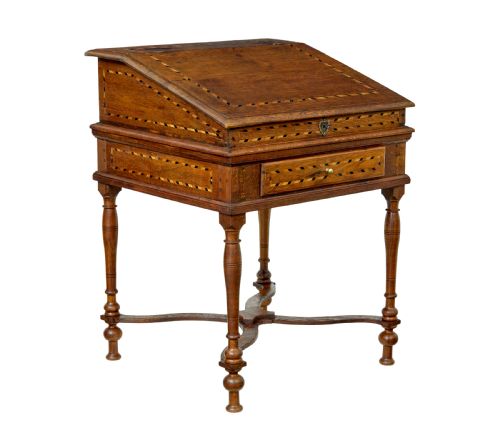
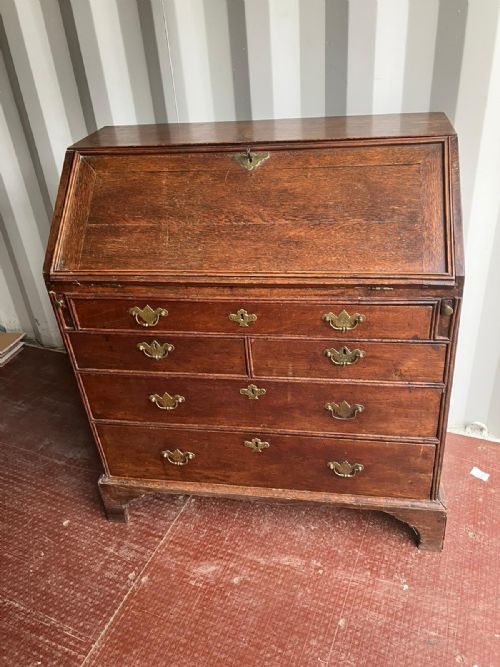
An early oak bureau is a fall-front writing desk that conceals a fitted interior of pigeonholes and small drawers behind its sloping writing flap. These pieces range from compact William and Mary and Queen Anne examples to larger Georgian and later country iterations.
Buyers meet solid oak forms alongside bureau bookcases and occasional bureau cabinets featuring upper display sections. The tradition extends from seventeenth-century provincial work through eighteenth-century forms into twentieth-century revivals.
The primary function remains writing and storage, combining a slant-front writing surface with banks of drawers below. Smaller proportions appear frequently, prized for fitting into compact modern rooms.
How they were made
Makers utilised solid oak, frequently paired with fruitwood for internal drawer linings and stringing, alongside brass drop handles and escutcheons on the exterior drawers. Iron fixings support internal mechanisms, while leather inserts occasionally line the writing slopes.
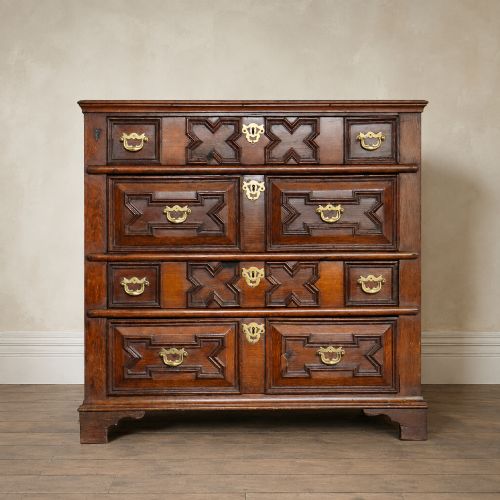
Construction relies on traditional framing methods, incorporating hand-cut dovetails on the drawer boxes and pegged joints on the carcase. Surfaces show geometric mouldings, carving, or simple panelled construction depending on the period.
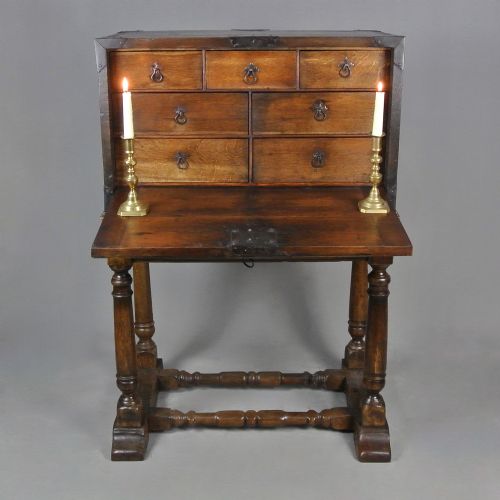
Secret drawers hidden behind sliding panels reward curious buyers with miniature hiding spots built by seventeenth-century joiners.
What varies in quality
The sophistication of the internal arrangement sets examples apart, distinguishing simple pigeonholes from complex stepped interiors with secret compartments and miniature drawers. Timber selection also dictates grade, with dense, figured oak and quarter-sawn boards commanding attention.
Proportion and execution drive the distinction between standard provincial work and finer cabinetmaking. Crispness in the mouldings, original brass hardware, and well-balanced proportions define the upper tier.
Heals of London
The Early Oak Bureau Glossary
- Fall-front
- The hinged sloping board that drops down to form the writing surface of a bureau. When closed, it conceals the interior compartments.
- Bureau bookcase
- A dual-purpose tall furniture form combining a slant-front desk base with an enclosed upper shelving or cabinet section. Glass doors frequently protect the upper compartment.
- Geometric moulding
- Raised decorative wooden mouldings applied to drawer fronts and carcases in geometrical patterns. This technique appears prominently on seventeenth-century pieces.
- Stepped interior
- An internal arrangement within a bureau where small drawers and pigeonholes ascend in tiers towards the back. This layout adds complexity and desirability to the desk.
- Strong box
- A heavy security chest designed for valuables, constructed from thick timber with reinforced iron straps. These predecessors to modern safes date to the seventeenth century.
Early Oak Bureau: Frequently Asked Questions
How do I use an early oak bureau today?
Drop the fall-front flap to create a compact writing desk for a laptop or notebook. The internal pigeonholes organise stationery while the lower drawers store household papers.
Position the bureau against a study or living room wall where the shallow depth preserves floor space. The enclosed writing surface keeps work out of sight when closed.
How do I tell seventeenth-century oak from later periods?
Seventeenth-century pieces display heavier framing, pegged joinery, and often geometric mouldings or panelled construction. The timber exhibits pronounced medullary rays from quarter-sawing.
Later eighteenth-century examples lean towards smoother drawer fronts and refined dovetailing. Twentieth-century revivals copy these earlier styles with more uniform modern machinery marks.
What is a stepped interior?
A stepped interior refers to the arrangement of small drawers inside the bureau that rise in tiered levels. This layout often frames a central lockable cupboard or secret well.
Cabinetmakers spent extra time shaping these miniature drawers to delight the user. Finding a stepped interior usually indicates a more considered piece of furniture.
How should I care for an oak bureau?
Feed the dry timber occasionally with a traditional beeswax polish to maintain the lustre of the grain. Avoid placing the desk near direct heat sources or strong sunlight.
Keep the leather writing insert, if present, conditioned with specialist balm. Ensure the fall-front supports bear weight properly when lowered.