

Early Georgian Walnut Chest
An early georgian walnut chest brings warmth and rich timber grain to a room, offering practical storage through centuries-old cabinetmaking.
Early Georgian Walnut Chest
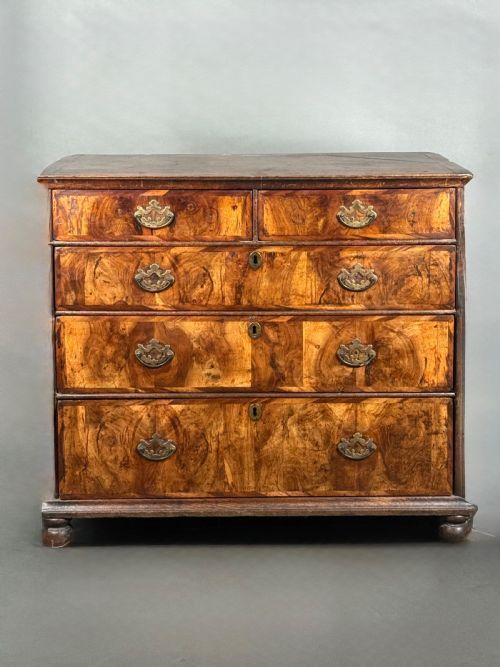
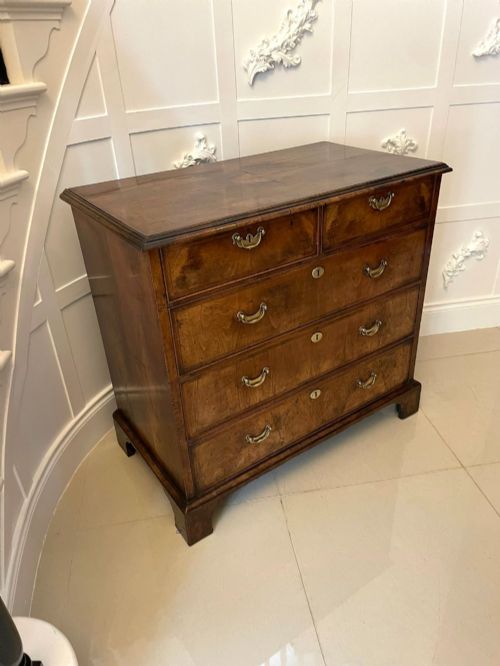
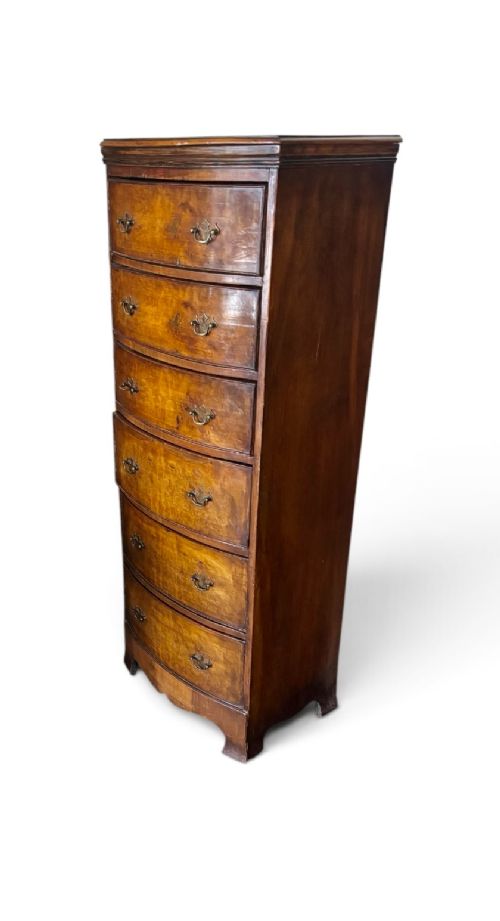
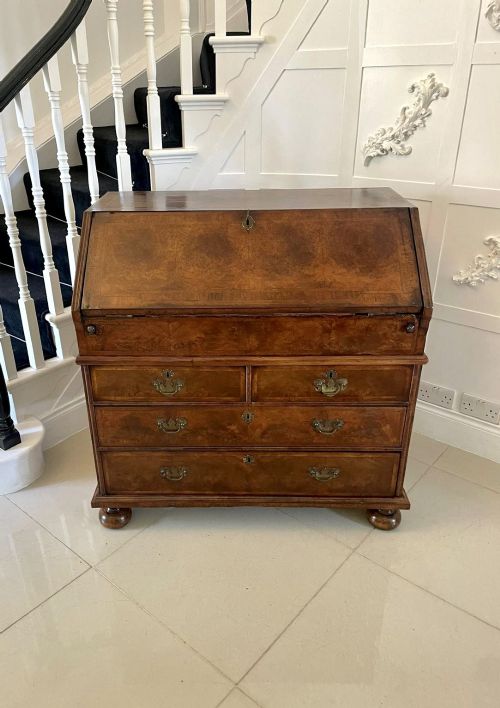
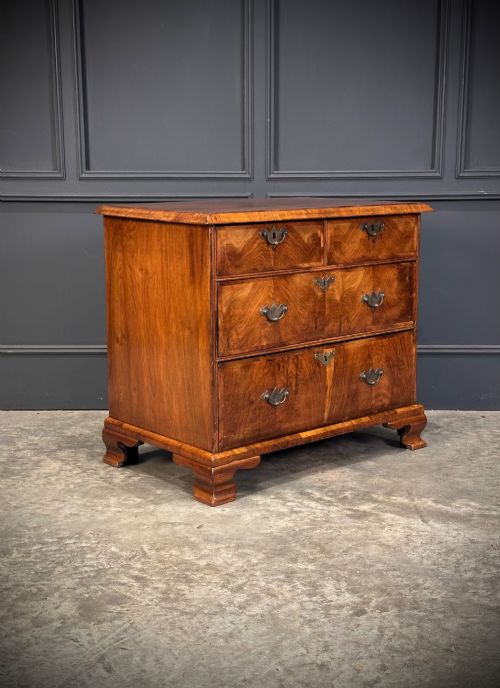
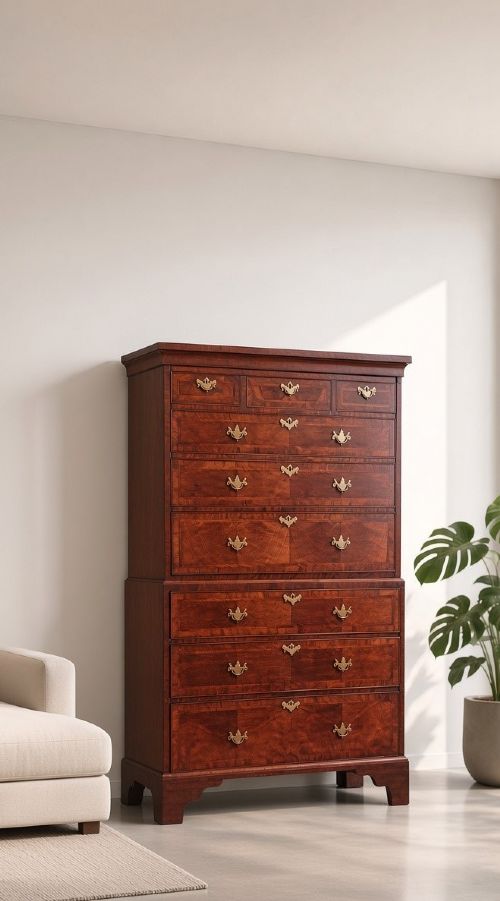
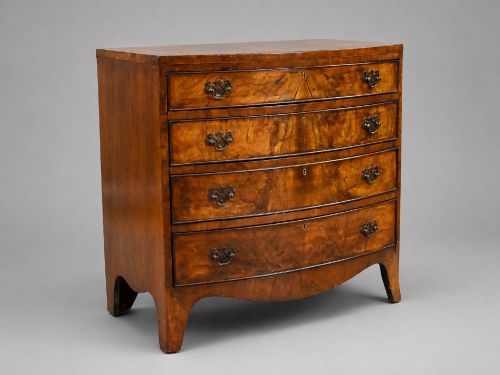
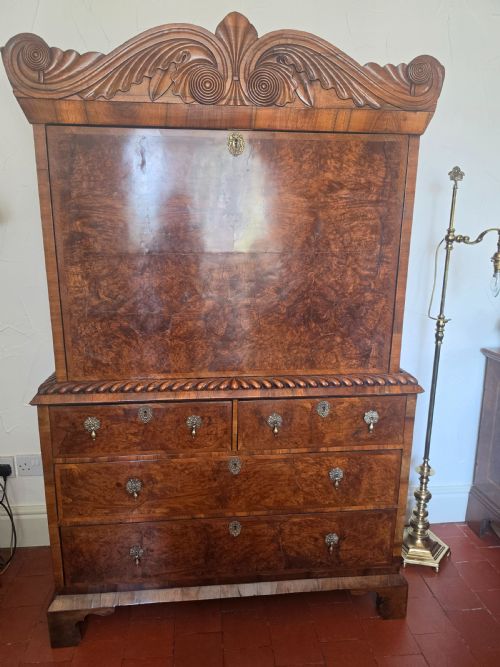
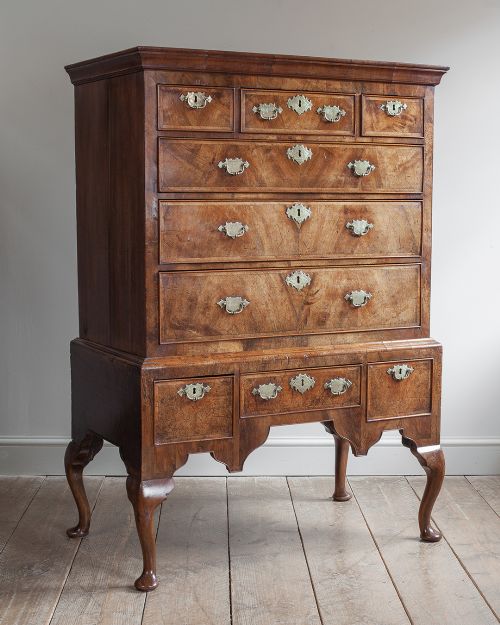
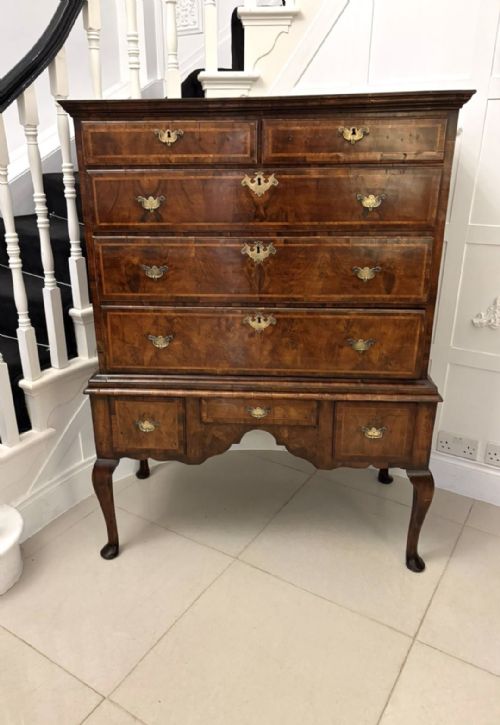
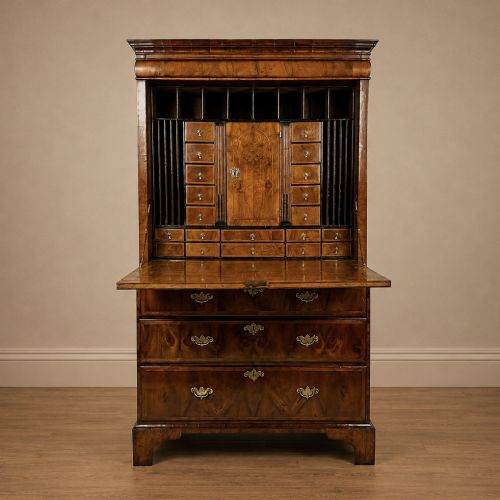
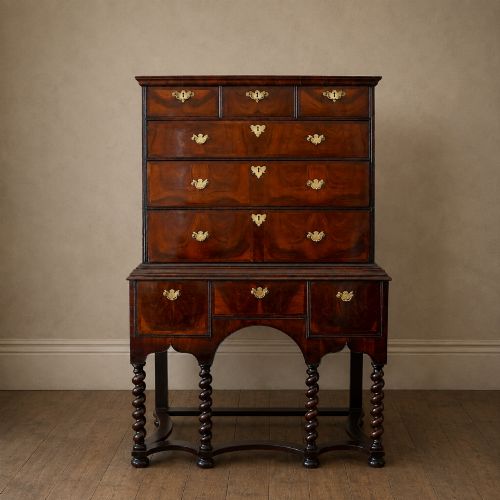
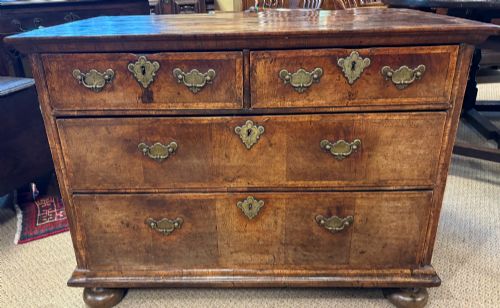
An early georgian walnut chest embodies the domestic storage forms of the eighteenth century, encompassing standard chests of drawers, desks, bureaux, and elevated formats like chests on stand and chests on chest.
The pieces appearing on this page span the Queen Anne, George I, and George II periods, alongside later revival interpretations from the early twentieth century.
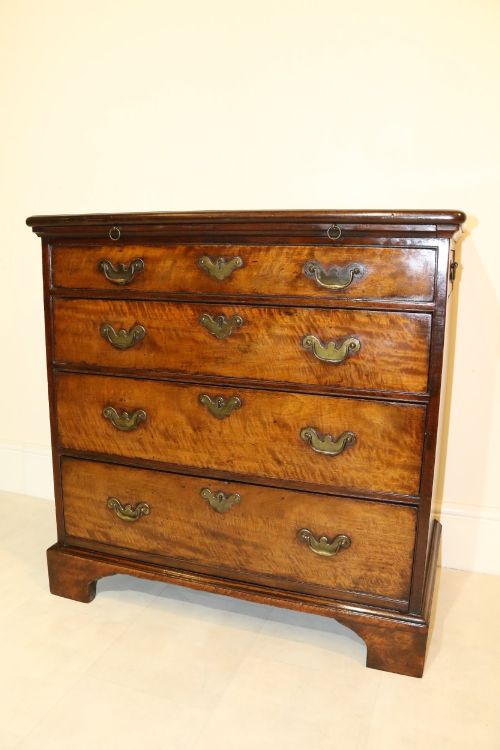
Buyers encounter compact bachelor chests with folding tops, small proportioned drawers, and monumental escritoires designed for writing and storage alike.
What varies in quality
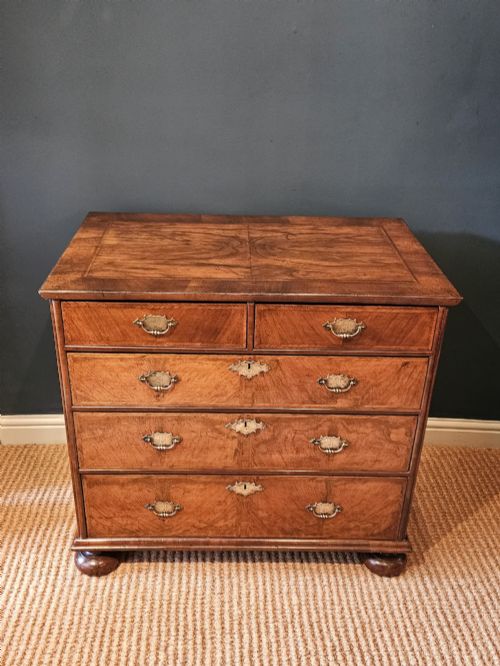
The visual hierarchy of an early georgian walnut chest depends heavily on the selection of timber veneers, where highly figured burr or matched grain creates a striking surface contrast against simpler, straight-grained carcases.
The sophistication of decorative borders, such as finely executed herringbone or feather-banding, distinguishes standard domestic examples from workshop pieces built for affluent patrons.
Proportion and scale also dictate distinction, with smaller proportions and intact, elevated stands commanding greater interest among collectors.
Miniature chests offered apprentices a chance to demonstrate their mastery of cabinetmaking before guild panels.
The Early Georgian Walnut Chest Glossary
- Cross-banding
- A decorative border technique where thin strips of veneer are laid across the grain of the primary surface. This frames the drawer fronts and top panels of walnut furniture.
- Herringbone inlay
- A delicate band of marquetry arranged in a V-shaped pattern resembling a fish skeleton. Cabinetmakers used contrasting timbers to create these intricate borders.
- Feather-banding
- Two strips of veneer laid diagonally to meet at a central line, producing a feathered effect. It serves as a subtle border on drawer fronts.
- Escritoire
- A writing cabinet featuring a fall-front panel that opens to reveal a fitted interior of small drawers and pigeonholes. These dual-purpose pieces combine desk and storage functions.
- Chest on stand
- A case of drawers raised on an open frame with legs, typical of earlier eighteenth-century cabinet design. This form lightens the visual weight of tall storage units.
Early Georgian Walnut Chest: Frequently Asked Questions
How do I spot a replacement top?
Examine the grain continuity and timber species across the top surface and the upper carcase moulding. Inconsistencies in colour or figuring often indicate later timber replacement.
Check the internal blocking and fixing methods from underneath to see if modern screws or glue blocks secure the top panel.
What is a bachelor chest?
A bachelor chest is a small domestic storage piece featuring a fold-over top or a brushing slide intended for writing and correspondence. These compact units date primarily from the early eighteenth century.
They provided elite homeowners with a dual-purpose surface for daily paperwork without requiring a full-sized desk.
Are walnut chests fragile?
Walnut timber is durable and stable when maintained in stable atmospheric conditions away from direct heat sources and strong sunlight. The primary structural framing is typically executed in sturdy oak.
Care involves regular waxing to preserve the finish and prevent the fine veneers from drying out or lifting over time.
How do I tell an 18th century piece from a revival?
Eighteenth-century examples exhibit hand-cut dovetails, timber shrinkage patterns, and historic tool marks inside the drawer linings and carcase backs. Revival pieces from the twentieth century often display uniform machine machining and modern fixings.
Examine the secondary woods and interior construction methods to confirm the period of manufacture.