

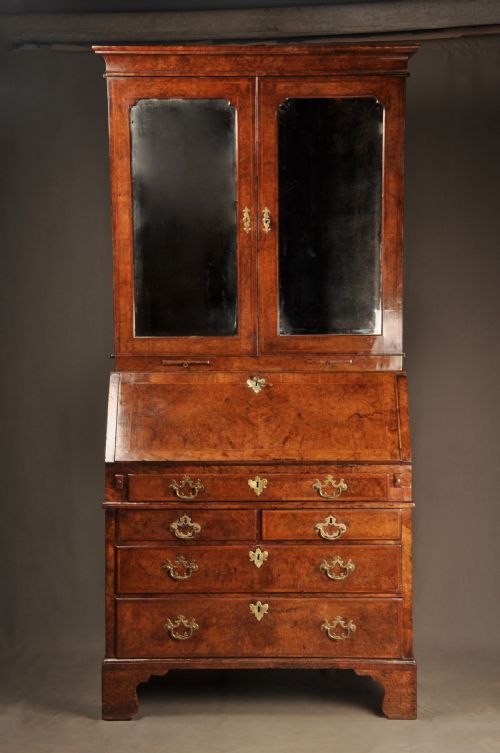


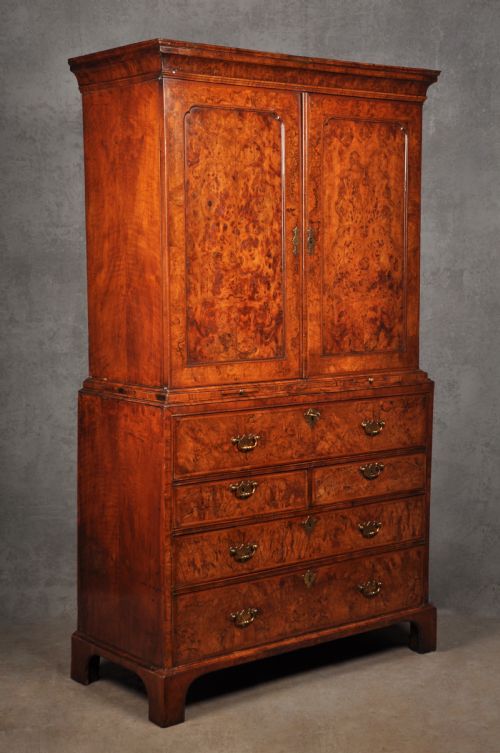


Early Georgian Secretary Bookcase
An early georgian secretary bookcase combines a fitted writing desk with a glazed upper cabinet, offering serious presence and practical storage for papers.
Early Georgian Secretary Bookcase
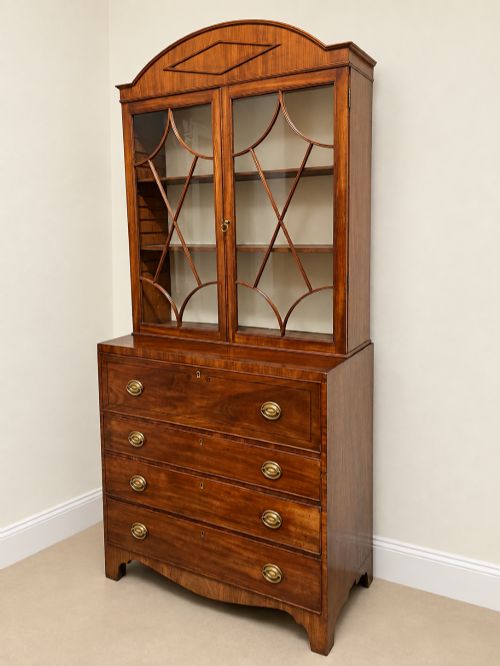
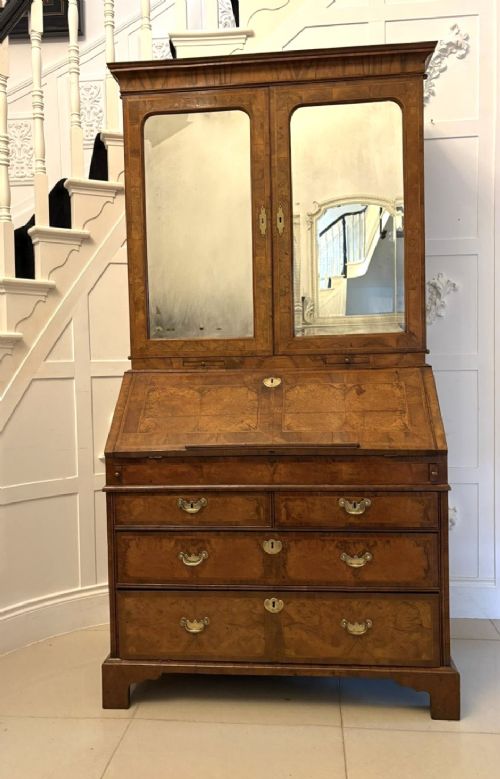
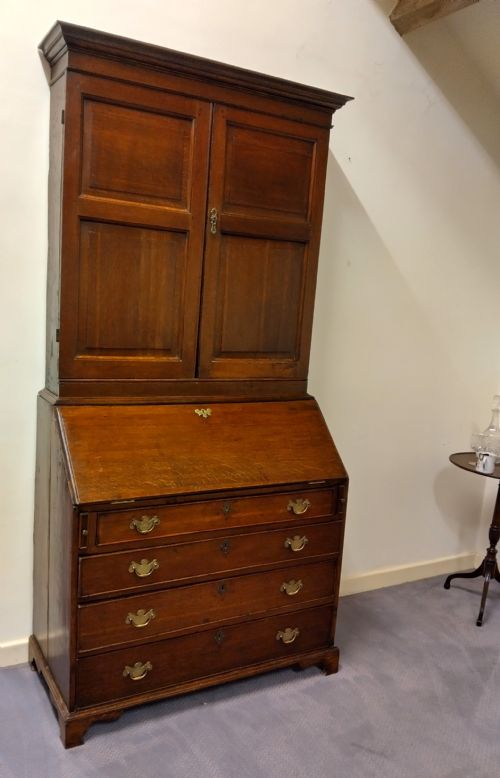
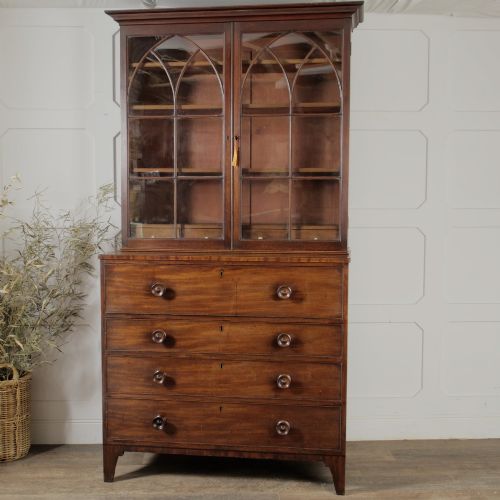
When you search for an early georgian secretary bookcase, you encounter tall, architectural double-part furniture designed to house books and provide a fall-front writing surface. These pieces generally divide into a glazed upper cabinet for display and a lower bureau section containing pigeonholes and small drawers.
The pieces appearing on this page span the 18th century and later interpretations, with a strong representation of George I, Queen Anne, and Georgian styles. Walnut, burr walnut, and mahogany dominate the construction, often built in three distinct sections for easier transport through domestic spaces.
Makers utilised heavy cornices, panelled doors, and candle slides above the fall front to assist evening writing. While some examples remain strictly faithful to early 18th-century proportions, later revival pieces also appear alongside oak and satinwood variants.
How they were made
Cabinetmakers constructed these large items using dense timbers such as walnut, oak, and Cuban mahogany, frequently applying burr walnut veneer to the primary facades to create complex grain patterns. Drawer linings and secondary woods typically relied on native oak or pine.
Glass panes in the upper doors were hand-blown and set into wooden glazing bars, whilst brass hardware including drop handles and escutcheons secured the drawers and doors. Internal compartments featured secret drawers, pigeonholes, and small central cupboards surrounding the kneehole space.
Early Georgian Secretary Bookcase Retail Price Guide 2026
Typical asking prices for early georgian secretary bookcase among the pieces listed under this phrase on Sellingantiques today, from the lower quarter to the upper quarter. They describe what is for sale here now, not the wider market.
Secret drawers hidden behind dummy pigeonhole pilasters offered 18th-century writers a place to stash love letters or spare house keys.
What varies in quality
The desirability of an early georgian secretary bookcase rests heavily on the choice of veneer figure, particularly the rich chatoyancy found in high-grade burr walnut or figured mahogany. Timber selection across the sides and secondary parts indicates the original workshop's commitment to materials.
Construction details such as hand-cut dovetails on the internal drawers and the retention of original brasses distinguish superior examples from later adaptations. The integration of the upper bookcase with the lower bureau, whether executed in three sections or two, dictates the structural harmony of the piece.
The Early Georgian Secretary Bookcase Glossary
- Bureau bookcase
- A dual-purpose item featuring a sloping writing flap above drawers combined with an upper shelving cabinet. This form became central to elite domestic interiors during the early 18th century.
- Secretaire cabinet
- A piece containing a dedicated writing drawer or pull-out shelf disguised as a standard drawer front. It serves a similar function to the bureau without the sloping lid.
- Burr walnut
- Timber harvested from walnut tree growths, producing swirling, highly decorative grain patterns. Cabinetmakers applied this veneer to primary surfaces to signal high status.
- Candle slide
- A pull-out wooden board mounted beneath the upper bookcase doors. These provided illumination for writing before the widespread adoption of domestic gas and electric lighting.
- Astral glazed
- Upper cabinet doors fitted with fine wooden bars holding individual glass panes. This glazing style became common on Georgian library furniture.
- Patina
- The surface sheen and colour developed by wood and polish over centuries of exposure and handling. It reflects the age and history of the piece.
Early Georgian Secretary Bookcase: Frequently Asked Questions
How were these bookcases used originally?
These tall cabinets served as private libraries and administrative desks for wealthy households during the 18th century. The upper section protected valuable leather-bound volumes behind glass, while the drop-front desk provided a secure space for correspondence and financial records.
Secret compartments inside the pigeonholes held private papers or valuables. Meanwhile, pull-out candle slides allowed owners to write letters safely after dark.
What is the difference between walnut and mahogany periods?
Walnut dominated English cabinetmaking during the late 17th and early 18th centuries under Queen Anne and George I. These pieces often feature figured veneers, herringbone banding, and softer golden-brown tones.
Mahogany gained prominence by the mid-18th century, particularly dense Cuban varieties favored during the Georgian and Sheraton eras. Mahogany examples generally offer darker red-brown hues and greater structural weight.
Are these pieces made in sections?
Many early Georgian secretary bookcases were constructed in two or three distinct sections to facilitate movement and installation. The upper bookcase lifts off the lower bureau base, and some larger examples also separate the cornice or base plinth.
This modular construction helped craftsmen transport heavy hardwood furniture up narrow staircases in historic homes. It remains a practical feature for modern home movers.