




Early 17th Century Chest
When you examine an early 17th century chest, you handle heavy timber built to hold valuables, documents, or household linen centuries ago.
Early 17th Century Chest
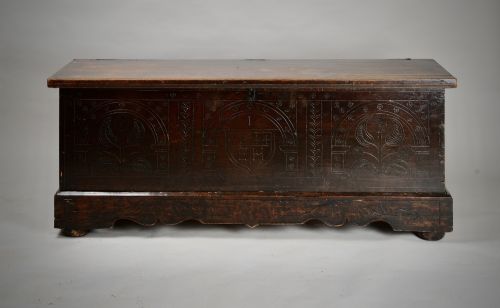
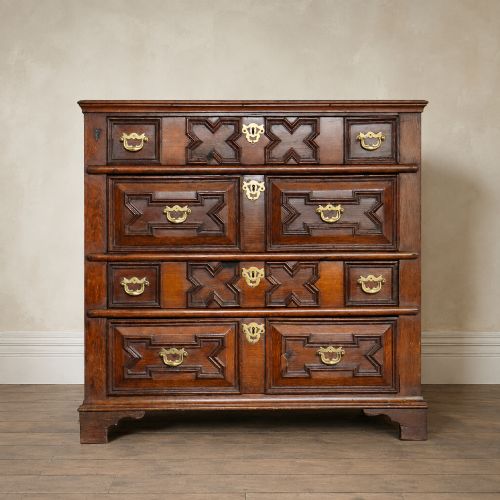
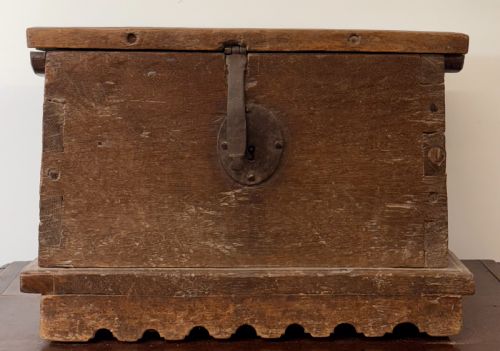
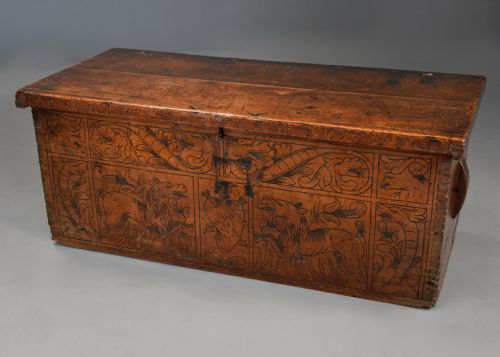
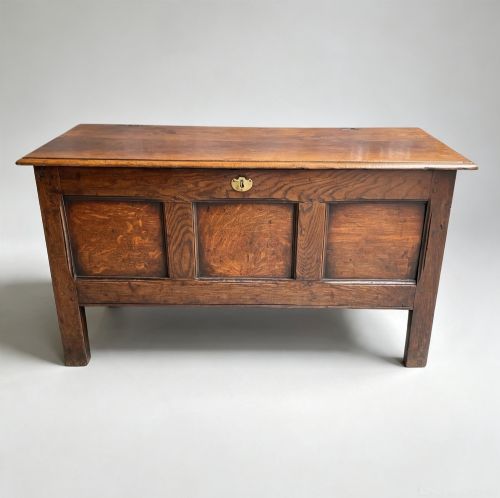
An early 17th century chest typically takes the form of a coffer, a blanket box, a six plank chest, or an early chest of drawers. These utilitarian storage pieces served domestic and institutional needs across English, Welsh, Flemish, and Italian households.
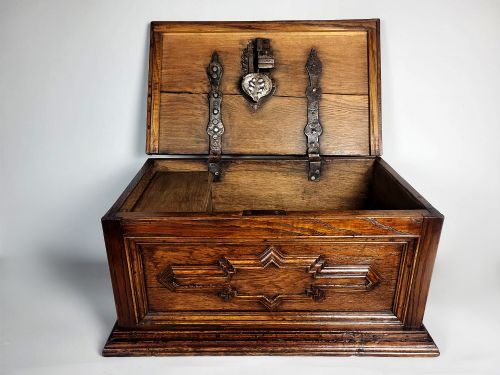
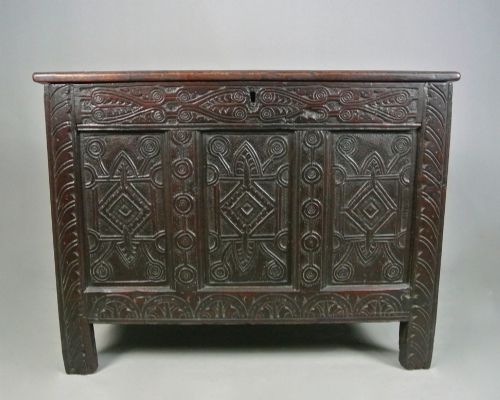
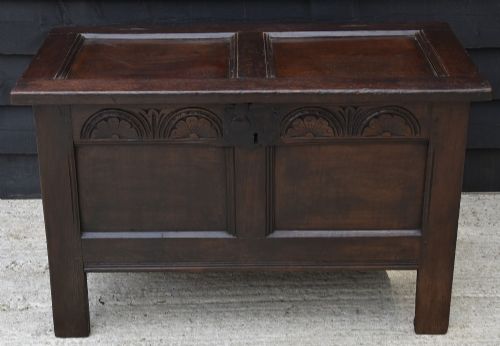
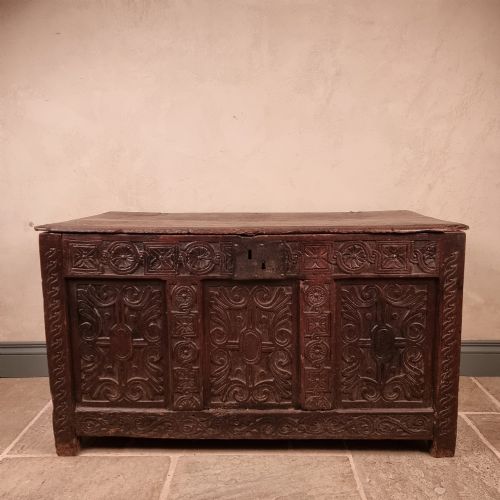
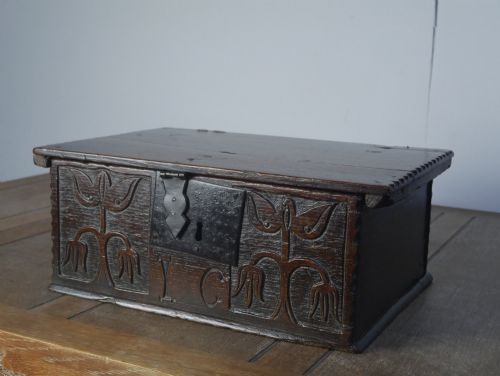
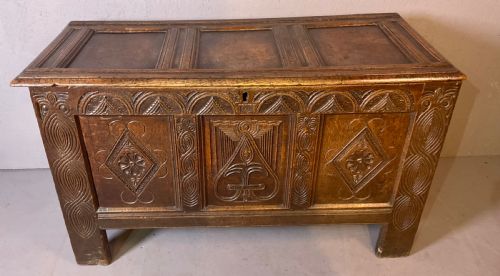
The most common version you will encounter on this page is the oak coffer or panelled chest, often bearing carved decorations or geometric mouldings characteristic of the period. Smaller variants such as bible boxes, deed boxes, and safe boxes also appear regularly among the larger storage forms.
How they were made
Carpenters constructed these pieces primarily from solid oak, walnut, cypress, and olive, frequently utilising joined or panelled framing techniques alongside simpler board construction. Iron, brass, and steel provided structural reinforcement and security through hinges, strapwork, and complex locks.
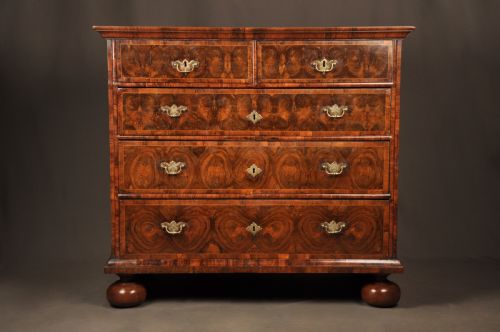
Surface decoration relied on hand-carving, geometric mouldings, arcading, and oyster veneering, leaving visible tool marks that evidence period hand-working methods. Timbers were selected for durability, resulting in heavy enclosures designed to withstand centuries of use.
What varies in quality
The degree of preservation in the original timber and surface patina dictates much of the distinction between average examples and superior survivals. Pieces retaining their original iron locks, complex hinges, and unblemished carved panels command greater interest from collectors.
Construction intricacy also marks the range, moving from utilitarian six plank boards nailed at the edges to sophisticated joined framing with pegged mortise and tenon joints. Finer woods like olive and walnut sit alongside standard regional oak, introducing variety in grain and colour across the selection.
The Early 17th Century Chest Glossary
- Coffer
- A heavy wooden chest traditionally used for storing valuables or dry goods. These sturdy containers represent the precursor to modern storage furniture.
- Cassone
- A large Italian chest intended for holding a bride's trousseau. These pieces frequently feature rich ornamentation distinct from utilitarian English storage.
- Mule chest
- A storage chest equipped with one or more drawers at the base beneath the main compartment. This hybrid form bridges the gap between simple coffers and chests of drawers.
- Six plank chest
- A primitive chest constructed from six individual boards joined directly at the edges. This method represents the earliest and simplest form of boarded furniture.
- Oyster veneer
- Slices cut transversely across small branches or roots to produce circular grain patterns resembling oyster shells. Cabinetmakers applied these decorative veneers to drawer fronts during the late seventeenth century.
Early 17th Century Chest: Frequently Asked Questions
What is the difference between a coffer and a chest?
A coffer strictly refers to a lidded box traditionally used for keeping valuables secure, whereas a chest generally denotes a broader category of storage furniture. In practical terms of the period, the words were often used interchangeably by makers and owners alike.
Over time, collectors have tended to apply the term coffer to panelled or heavily framed receptacles, while reserving chest for boarded constructions or later drawer-based formats.
How were early chests used in the home?
These pieces functioned primarily as secure storage for household textiles, silver, legal documents, and perishable foodstuffs. Because wardrobes were uncommon, families kept their belongings packed inside these heavy timber boxes.
They also served secondary roles as benches, tables, or travelling luggage when reinforced with iron straps and carrying handles on the ends.
How can I tell a Jacobean chest from a later piece?
Jacobean pieces display characteristic joinery methods, such as pegged mortise and tenon frames, alongside specific decorative motifs like guilloche carving, lunettes, and geometric mouldings. The timber weight and tool marks left by early saws provide further physical evidence of age.
Later copies or adaptations often betray themselves through machine-cut joints, incorrect secondary woods, or uniform surfaces lacking the natural wear accumulated over centuries.
Where were these pieces manufactured?
The listings encompass regional English and Welsh workshops, alongside continental centres in Italy and Flanders. Local timber availability heavily dictated production, with English makers relying on native oak while Italian craftsmen utilised cypress and walnut.
Regional styles often reveal themselves through specific carving patterns, construction quirks, and the choice of secondary woods used inside the compartments.