
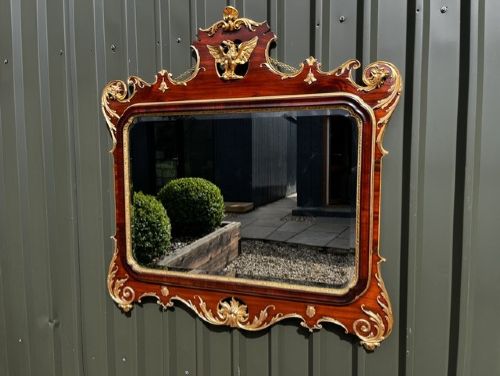
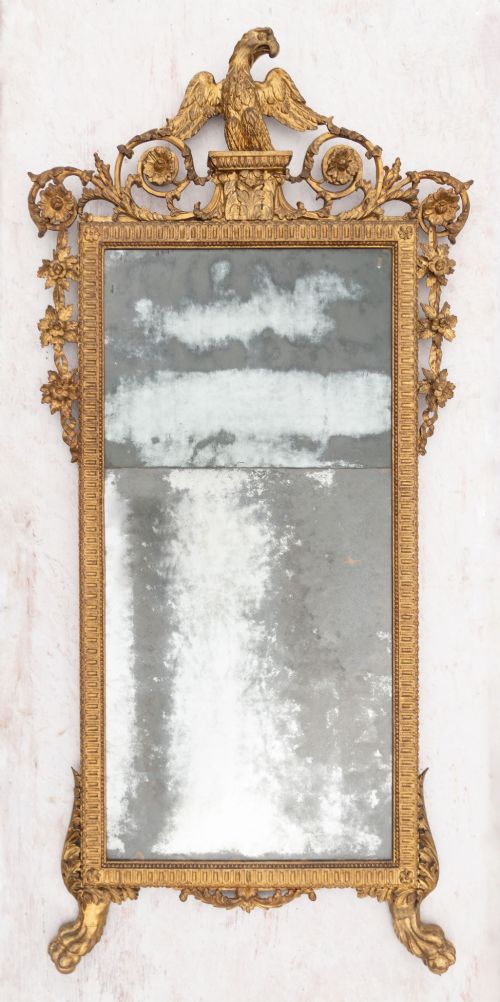
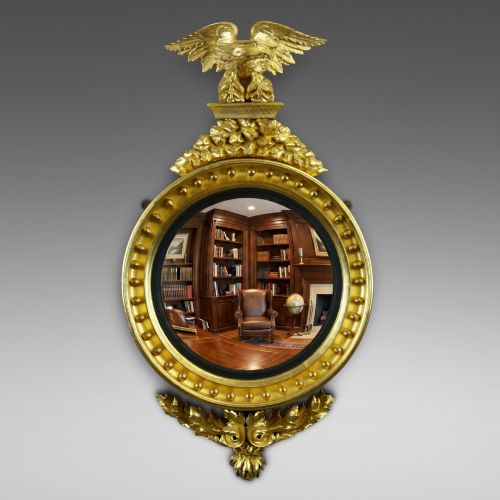
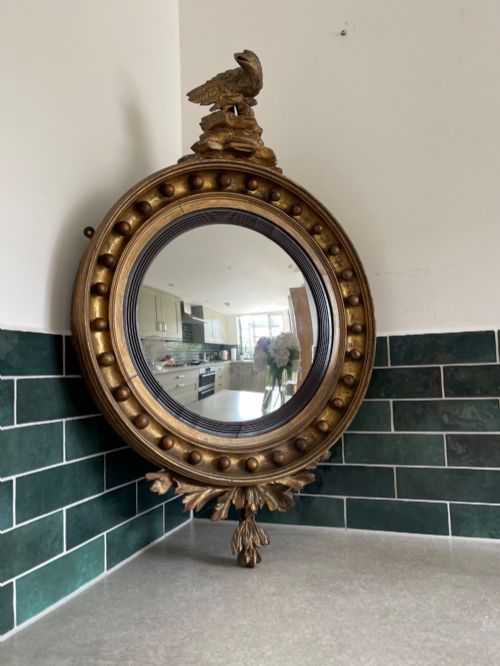

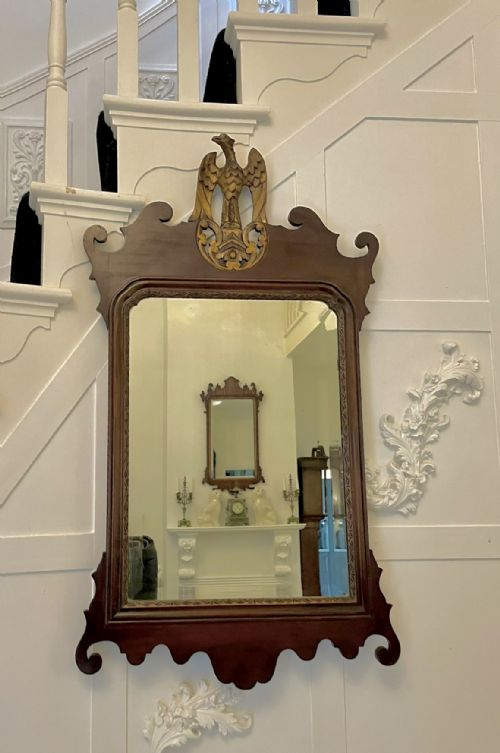
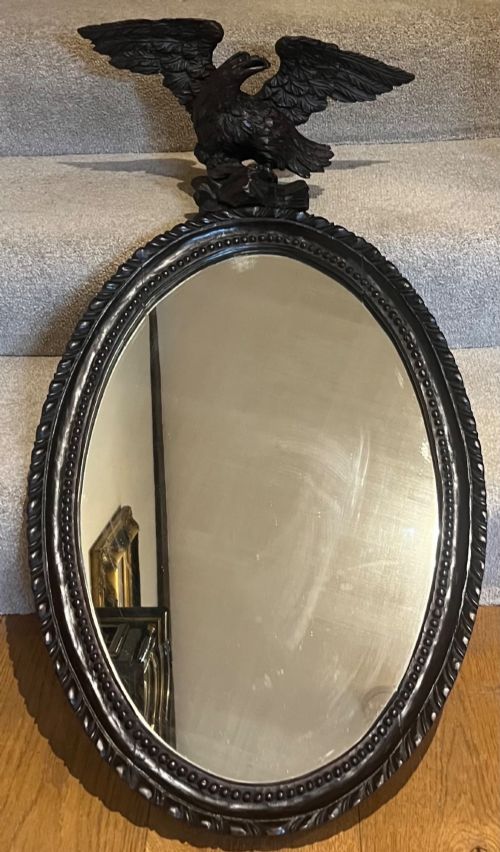


Eagle Crested Mirror
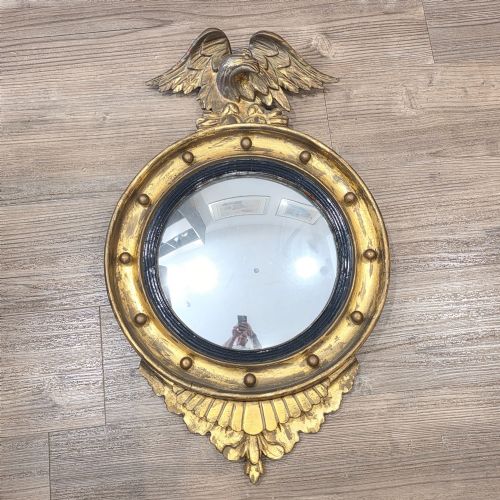
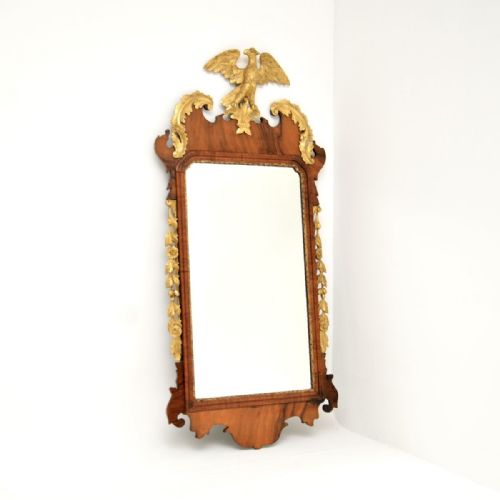
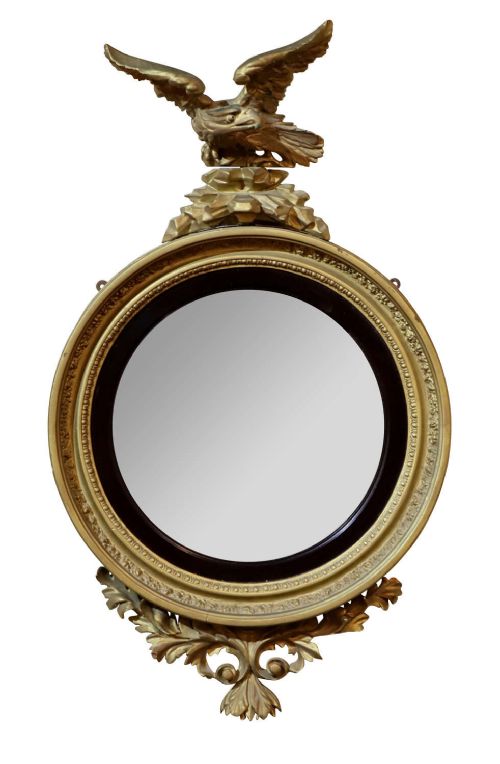
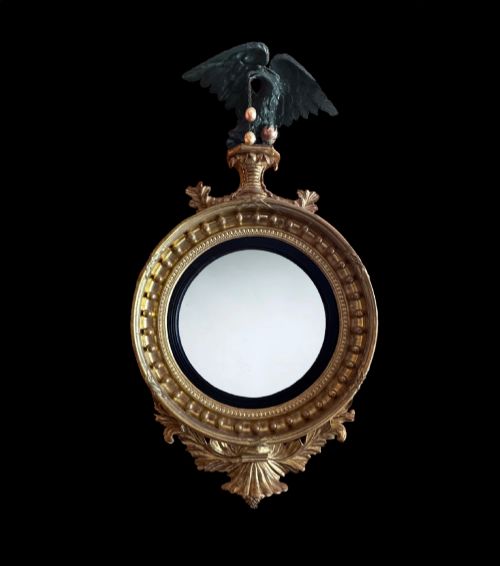
Eagle crested mirrors bring drama to a room, pairing convex or flat glass with a carved bird of prey surmount.

Eagle Crested Mirror
Most examples found here date from the Georgian, Regency and Victorian eras, alongside later revival pieces. Circular convex wall mirrors with a perched eagle and gilded frames appear most frequently in the listings.
Materials and construction methods
Craftsmen built frames using solid timbers such as mahogany and walnut, frequently applying a layer of gesso before gilding. Giltwood surfaces combine carved wood and composition ornaments finished in gold leaf or paint.
Convex mirror glasses provide distinctive curved reflections, while flat Vauxhall mirror plates demonstrate historic bevelling techniques. Ebonised details and brass accents occasionally accent the primary wood or gilt structure.
Watch out for eagles clutching thunderbolts or peering haughtily down from convex frames.
Distinctions in craftsmanship and design
Quality rests in the crispness of the carving, particularly around the eagle's wings, talons and beak. Superior pieces display fluid, deep relief work rather than flat or cast substitutes.
The proportion between the bird, the frame and the mirror glass dictates visual harmony. Finer examples integrate the crest organically into the overall design, maintaining balance across the entire object.
The Eagle Crested Mirror Glossary
- Convex mirror
- A circular mirror glass with a rounded outward surface that curves to reflect a wide field of view. These glasses are often housed in gilded frames topped with eagles.
- Giltwood
- Timber coated with gold leaf over a prepared gesso base. This finish provides the characteristic metallic sheen seen on period frames.
- Parcel gilt
- A decorative technique where only specific portions of a wooden frame receive gilding while the underlying timber remains visible. This treatment highlights carved details against dark mahogany or walnut.
- Pier mirror
- A tall, narrow wall mirror designed to hang on the wall space between windows. These pieces often incorporate elaborate crests and lower brackets.
- Vauxhall mirror
- A historic mirror plate featuring a bevelled edge, named after the famous London glasshouse. These plates are typically found in 18th century frames.
Eagle Crested Mirror: Frequently Asked Questions
Where should I hang an eagle crested mirror?
These mirrors command attention and work best above a fireplace mantelpiece, a sideboard or a principal console table in a reception room. Ensure the wall structure can support the weight of a framed wooden and mirrored object.
Position the glass at a height that captures favourable light from windows or lamps, allowing the convex curve or flat plate to brighten the surrounding space.
How do I clean a giltwood frame?
Dust the carved surfaces gently with a soft, dry brush to remove particles without disturbing the delicate gold leaf or gesso. Avoid water, liquid cleaners and harsh rubbing, which strip historic finishes.
Consult a professional restorer if the gilding shows flaking or structural instability rather than attempting DIY repairs with modern adhesives.
How can I tell a Regency mirror from a Victorian one?
Regency mirrors frequently employ crisp neoclassical motifs, ebonised reeded sight edges and bold convex forms with spirited eagle crests. The gilding tends to be bright and the timber preparation follows earlier Georgian traditions.
Victorian and later revival pieces often display heavier proportions, different joinery techniques behind the frame, or machine-prepared components that diverge from handmade Regency standards.