
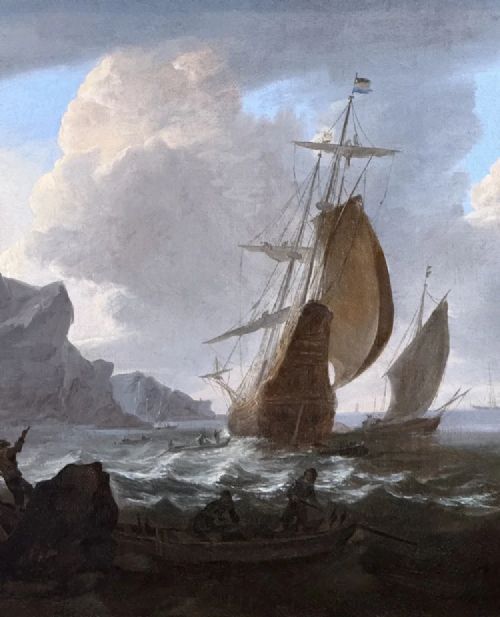
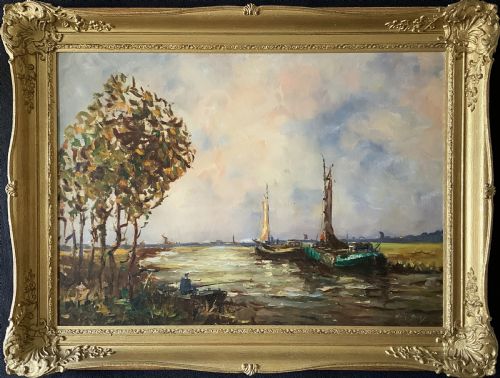
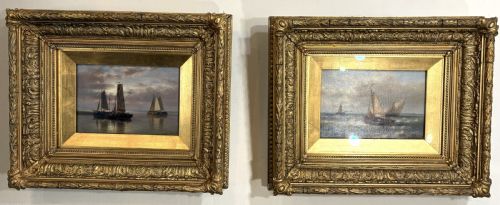


Dutch Seascape Oil Painting
A dutch seascape oil painting brings the movement of coastal tides and historical sailing vessels directly into a room.
Dutch Seascape Oil Painting
A dutch seascape oil painting captures maritime life, coastal shores, and open waters through historical and decorative works. Buyers encounter compositions ranging from 17th century golden age sea battles to 19th century marine scenes depicting fishing boats and harbours.
Most examples available represent the 19th century Dutch school alongside later interpretations from the early decades of the 20th century. These works frequently feature canvas stretched over wood frames, accompanied by period giltwood and gesso framing.
Subject matter often centres on sailing vessels caught in gales, tranquil estuaries, and shorelines populated by local craft. The tradition spans works by named continental artists and atmospheric pieces from anonymous followers of classic marine painters.
Materials and construction
Artists built these works using oil paint applied to canvas or wood panel supports. The layering of oil pigment allowed painters to achieve deep tonal shifts in water and sky.
Frames play an integral structural and aesthetic role, constructed from wood finished with gesso and gold leaf. Giltwood surrounds provide both physical protection and optical depth to the painted surface.
Materials recorded include oil paint, canvas, wood panels, gesso, and gold leaf.
Evaluating quality and execution
Quality reveals itself in the handling of light on water and the rigorous perspective of rigging and hull structures. Superior examples demonstrate confident brushwork that conveys atmospheric moisture and wind.
The preservation of the original canvas and the integrity of the underlying paint layer separate finer works from heavily restored alternatives. Original frames retaining their period gold leaf also elevate the character of a piece.
Bonaventura Peeters·Willem Bos·Abraham Hulk I·Pieter Cornelis Dommersen·Adrian Van Porten·Hendrik Willebrord Jansen·Owen Bowen·William Raymond Dommersen·Paul Jean Clays·Hendrik Yan Wolter·Frank Myers Boggs·Charles Martin Powell·Abraham Storck·Alfred Montague·Maud E. Dickinson
The Dutch Seascape Oil Painting Glossary
- Giltwood
- Wood carved and coated with gold leaf or a metallic substitute. This material defines the traditional frames housing many maritime oils.
- Gesso
- A plaster mix applied to wooden frames as a smooth base for gilding. It provides the foundation for intricate moulded frame decoration.
- Oil on Canvas
- Pigment mixed with drying oil applied to a woven fabric support. This combination forms the primary medium for the majority of these marine works.
- Dutch School
- A collective term for artists working in the Netherlands or following its traditional aesthetic. These painters shared common techniques in capturing coastal light and maritime subjects.
Dutch Seascape Oil Painting: Frequently Asked Questions
What subjects appear in these paintings?
The compositions focus on marine subjects including fishing vessels, shipping fleets, and coastal estuaries. Many depict boats navigating choppy seas or resting near historical shorelines.
Artists also recorded specific coastal architecture, harbour activities, and dramatic sea battles under expansive skies.
How do I date a maritime painting?
Dating relies on stylistic clues, costume details of figures on the shore, and the rigging style of the depicted vessels. Canvas preparation and frame construction offer additional chronological markers.
Signatures, artist records, and historical attribution provide the most precise dates for verified works.
Where should I hang a seascape?
These paintings suit spaces with steady light away from direct heat sources that could dry out the canvas or wood. Wall placement at eye level allows the viewer to appreciate the fine brushwork of the water and sky.
Pairing the work with a compatible period interior enhances the presence of the giltwood frame.
Are frames usually original?
Many pieces retain their period giltwood frames, though some have been re-gilded or replaced over centuries of ownership. The relationship between the painting and its frame often reflects the era of creation or a subsequent Victorian restyling.
Examining the gesso and corner joints helps determine whether the framing matches the age of the canvas.