



Antique Sailboat Canvas Art
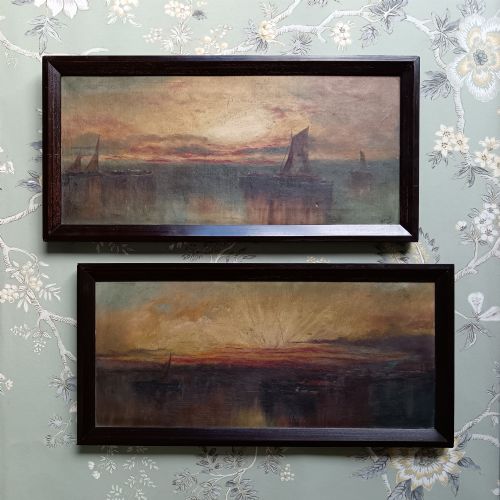
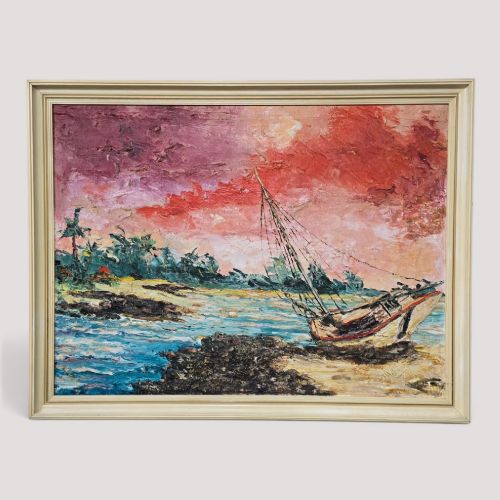
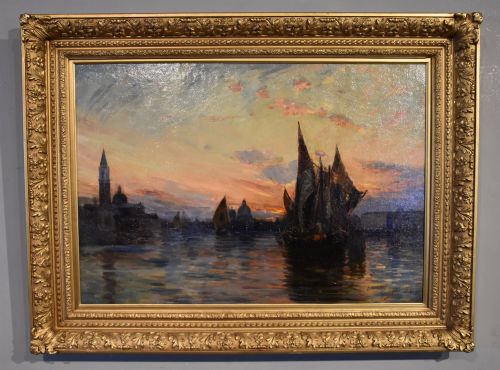
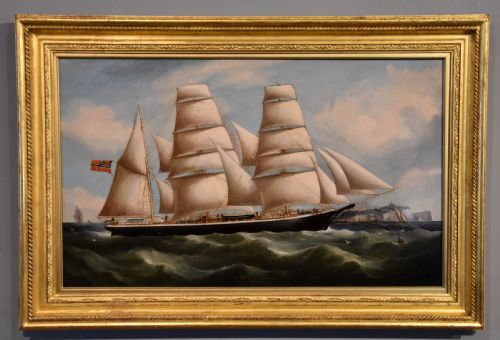
These antique sailboat canvas art pieces capture maritime life through oil paint applied to woven surfaces across the nineteenth and twentieth centuries.
Antique Sailboat Canvas Art
When you search for antique sailboat canvas art, you encounter oil paintings depicting marine subjects, harbour scenes, and coastal waterscapes. The examples available on this page span from the Victorian period through the Edwardian era and into the mid-twentieth century.
The subjects range from tranquil river landscapes and moonlit seascapes to bustling harbour views and named vessels navigating open water. Most pieces present maritime subjects rendered by named artists or regional schools working within impressionist and traditional marine traditions.
The physical form is typically an oil painting executed on a stretched canvas support, frequently retained within its original or period-appropriate wood and giltwood frame. These works record shipping vessels, fishing boats, and coastal leisure craft across British, French, Dutch, and Belgian coastal settings.
Materials and construction
The foundational support for these works is woven canvas, typically stretched tightly over a wooden strainer or mortise-and-tenon stretcher frame. Artists applied oil paint directly to the prepared fabric surface, often building texture with brushwork and palette knives.
Pigments mixed in oil binders provide the colour and luminosity characteristic of these marine scenes, capturing the shifting light on water and sky. Frames fashioned from wood, frequently embellished with gilt or giltwood finishes, complete the construction.
Several artists braved choppy waters just to capture the exact tilt of a five-masted barque's rigging.
Assessing quality in marine canvases
Quality rests upon the artist's ability to render water, light, and atmosphere convincingly with oil paint on canvas. Skilled brushwork captures the movement of waves and the rigging of vessels with precision and confidence.
The integration of the painting with its frame matters greatly, as period frames matching the era of the canvas preserve the integrity of the piece. Works by listed and exhibited painters display a superior command of perspective, tonal balance, and maritime detail.
Thomas Hodgson Liddell·Richard B. Spencer·Louis Suire·Norman Lloyd·Adrian Van Porten·Edward Seago·Hendrik Willebrord Jansen·Jane Vivian·George Henry Knight·John Callow·Gustave de Breanski·Paul Jean Clays·Charles Euphrasie Kuwasseg·Johan Jens Neumann·Bertram Priestman·John William Gilroy·William Edward Webb·Samuel Bough
The Antique Sailboat Canvas Art Glossary
- Oil on canvas
- A painting medium where pigments suspended in drying oils are applied to a woven fabric support. This combination allows for rich blending and textured impasto.
- Giltwood
- Wood that has been treated with a thin layer of gold leaf or gilt finish. Frames of this material frequently accompany nineteenth-century marine paintings.
- Marine art
- Artistic representation of ships, maritime scenes, and coastal environments. This genre encompasses calm harbour views as well as dramatic open-sea passages.
- Impressionism
- An art style characterised by relatively small, thin yet visible brush strokes and open composition. It emphasises accurate depiction of light in its changing qualities.
- Stretcher
- A wooden framework upon which canvas is fastened and pulled taut. Antique stretchers often show wedge keys in the corners for adjusting tension.
Antique Sailboat Canvas Art: Frequently Asked Questions
Are these paintings signed by the artist?
Many pieces feature artist signatures or monograms inscribed directly into the pigment, often in the lower corners. Others remain unattributed or represent specific regional schools of painting.
Documentation, exhibition labels, or attribution records on the reverse frequently help identify the creator when a visible signature is absent.
How should I frame and hang marine art?
Select a period-appropriate wood or gilt frame that complements the style and scale of the canvas. Ensure the piece hangs away from direct sunlight and damp environments to protect the oil paint and fabric.
Stable indoor humidity and temperature prevent the canvas support from slackening and safeguard the wooden stretcher frame.
How can I tell the period of a canvas?
Examine the preparation of the canvas, the construction of the wooden stretcher frame, and the style of the giltwood frame. Nail types, canvas weave, and labels on the reverse offer further clues to the decade of creation.
Brushwork techniques and the rigging style of depicted ships also align with specific artistic movements from the Victorian era onward.