



Dutch Repousse Silver
Dutch repousse silver brings high-relief hand-hammered domestic objects into your room, prized for their complex traditional scenes and chased ornamentation.
Dutch Repousse Silver
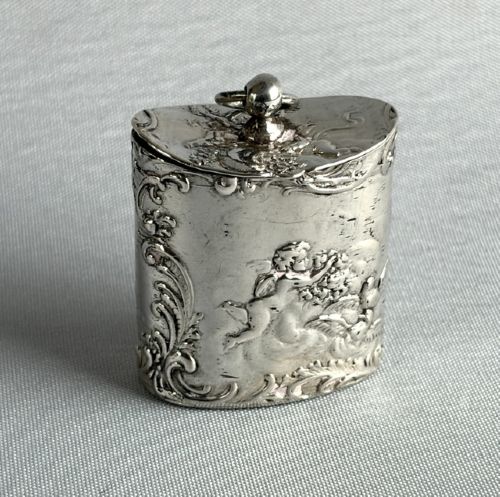
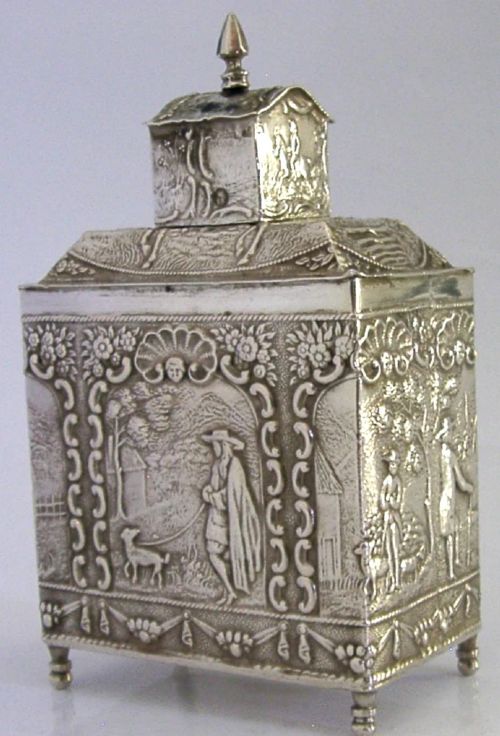
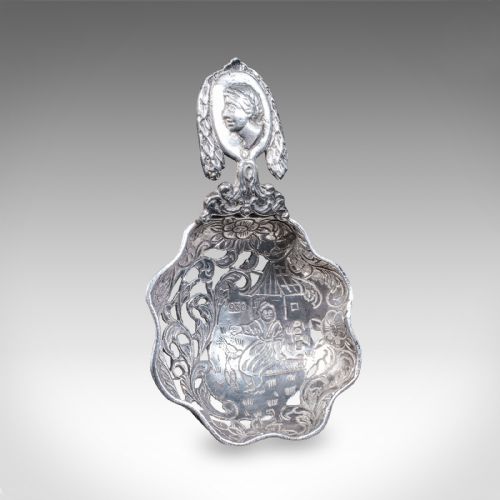
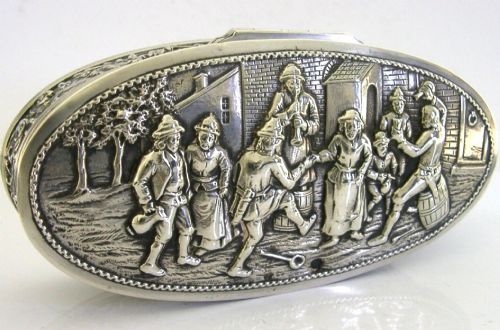
When you search for dutch repousse silver, you are looking at domestic silver items shaped with raised ornamentation hammered from the reverse side. The listings on this page show these pieces appearing primarily across the Victorian and Edwardian periods, stretching from the nineteenth century into the early twentieth century.
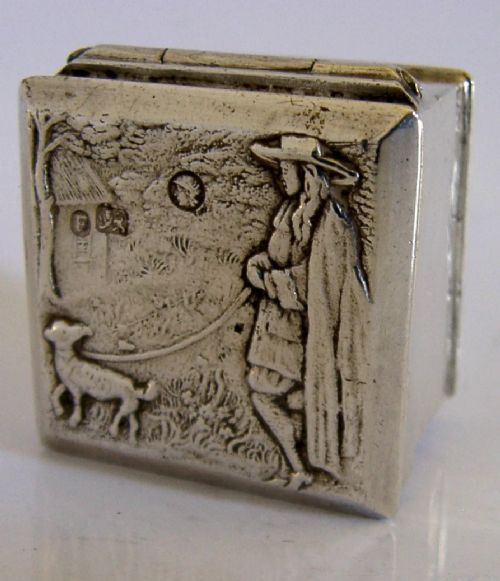
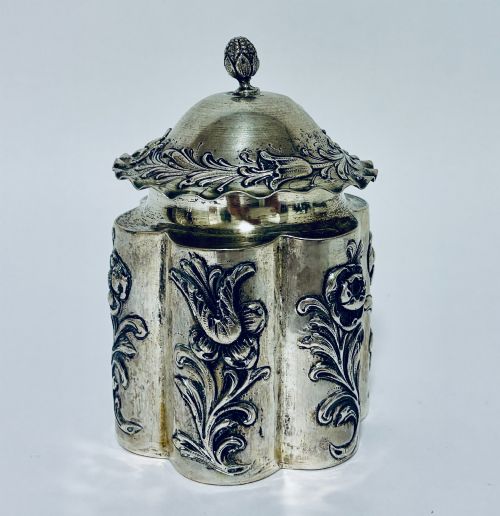
The forms you are most likely to meet on this page include small storage containers and servers. These pieces comprise tea caddies, desk boxes, trinket boxes, snuff boxes, sugar casting spoons, caddy spoons, and wall mirrors utilising brass or wood alongside silver.
The styling draws heavily on historical motifs. You will encounter objects bearing the characteristics of Rococo Revival, Dutch Rococo Revival, Dutch Baroque, and Dutch Traditional designs.
How they were made
Makers shaped solid silver and continental silver by hammering the metal from the reverse side to create raised, three-dimensional designs in high relief. This repousse technique required careful control of the metal's thickness to ensure the raised patterns remained structurally sound.
Chasing tools were then applied to the front surface to refine details, sharpen lines, and add texture to the figures and foliage. Artisans often combined these silver elements with structural supports in wood or brass, particularly in wall mirrors and heavy desk boxes.
Dutch Repousse Silver Retail Price Guide 2026
Typical asking prices for dutch repousse silver among the pieces listed under this phrase on Sellingantiques today, from the lower quarter to the upper quarter. They describe what is for sale here now, not the wider market.
Someone spent decades ensuring sugar casting spoons match the exact curve of a Victorian tea caddy.
What varies in quality
The distinction between standard and superior pieces lies in the crispness and depth of the hammered relief. Skillful artisans achieved sharp undercut details and clean definition in crowded figural scenes, whereas lesser examples show flattened contours and blurred edges.
The weight of the metal and the integration of the repousse work across the entire form dictate the substance of the object. Heavier gauges of silver maintain structural integrity under deep hammer work, while lighter sheets can appear tinny and lose definition at the high points of the design.
The Dutch Repousse Silver Glossary
- Repousse
- A metalworking technique where the artisan hammers the design from the reverse side to form a raised pattern in relief. This method creates tactile surface decoration on boxes and spoons.
- Continental Silver
- A term used to describe silver items manufactured outside of Britain that carry different assay standards. These pieces often feature import hallmarks when sold through British channels.
- Rococo Revival
- A design style inspired by the eighteenth-century Rococo movement, characterised by asymmetrical scrolls, C-scrolls, and organic plant motifs. This style heavily influences the ornamentation on these silver pieces.
- Caddy Spoon
- A short-handled spoon specifically designed for measuring loose tea leaves from a caddy. They frequently feature chased bowls and decorative handles matching the teaware.
- Solid Silver
- Silver material that possesses a consistent composition throughout the object rather than being plated over a base metal. This ensures durability across frequently handled items.
Dutch Repousse Silver: Frequently Asked Questions
What is Dutch repousse silver?
Dutch repousse silver consists of decorative metal objects featuring motifs hammered in high relief from the reverse side. These pieces span from the nineteenth century into the Edwardian era.
The items on this page include tea caddies, snuff boxes, and mirrors that showcase traditional Dutch and Rococo Revival design themes.
How do I identify import hallmarks?
Import hallmarks are official marks stamped onto foreign silver items when they enter Britain to certify their metal standard. These marks help distinguish continental pieces from domestic production.
They appear alongside the standard hallmarks on spoons and boxes originating from outside the country.
What were caddy spoons used for?
Caddy spoons served to scoop dry tea leaves from storage containers into the teapot. Their compact size allowed them to sit neatly alongside or inside tea caddies.
Craftsmen decorated the bowls and handles with chased patterns to match the tea caddies they accompanied.
How should I clean repousse silver?
Cleaning repousse silver requires soft brushes to clear tarnish from the deep recesses without abrading the raised details. Harsh dips can strip the dark patina that highlights the hammered design.
Gentle polishing maintains the contrast between the raised shiny surfaces and the shaded background work.