


Dutch Marine Landscape Painting
Dutch marine landscape painting captures the movement of coastal waters and shipping under vast skies, offering a traditional window into maritime heritage.
Dutch Marine Landscape Painting
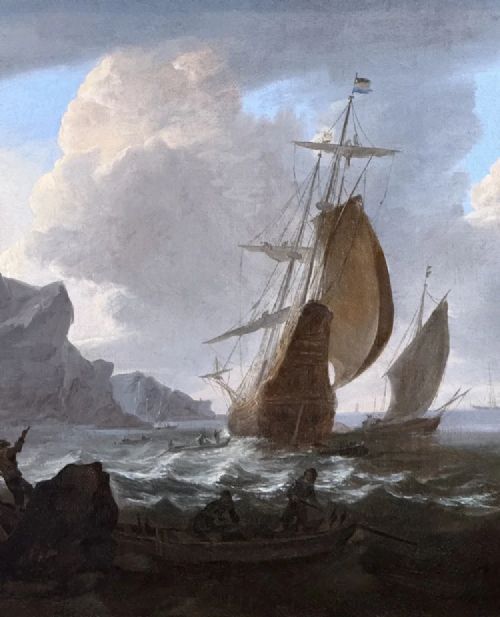
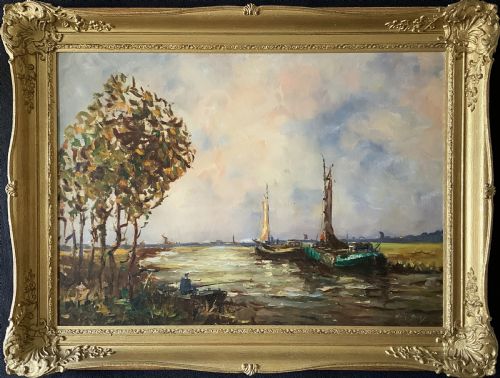
A dutch marine landscape painting depicts maritime scenes, coastal views, and bustling waterways associated with the Netherlands. These works range from early seventeenth-century panels to nineteenth-century canvases and later twentieth-century interpretations.
The compositions frequently centre on sailing boats, fishing vessels, and estuarine waters beneath expansive skies. Canalscapes and coastal ports also appear regularly across the selection.
Nineteenth-century examples from the Dutch School and later movements dominate the works available, alongside occasional seventeenth-century pieces and mid-twentieth-century oils.
Materials and construction
Most pieces utilise oil paint applied to canvas or wood panels, capturing the translucent quality of water and atmosphere. Giltwood frames with gesso and gold leaf often house these works.
Artists built up the surface with layered pigments to render the play of light upon the sea and clouds. The physical support ranges from traditional stretched canvas to wooden boards.
Materials span oil on canvas, wood panels, giltwood, and gesso across several centuries.
Factors of quality
The skill in handling atmospheric perspective and the movement of water distinguishes finer works from simpler compositions. Subtle tonal control in the skies and water surface elevates a piece.
The preservation of the original paint layer and the character of the associated frame contribute to the overall standing of the artwork.
Bonaventura Peeters·Willem Bos·Pieter Cornelis Dommersen·Thomas Bush Hardy·Adrian Van Porten·Abraham Hulk Snr·Hendrik Willebrord Jansen·Paul Jean Clays·Frank Myers Boggs·William Dommersen·Charles Martin Powell·Jacob Knyff·Alfred Montague
The Dutch Marine Landscape Painting Glossary
- Marine painting
- Artwork depicting ships, sea views, coastal scenes, and maritime activities. These works focus heavily on water and atmospheric conditions.
- Estuary
- The tidal mouth of a large river where the tide meets the stream. Such locations provide sheltered waters frequently recorded by maritime artists.
- Gesso
- A plaster mix used as a base coat for wooden panels and frames before gilding or painting. It provides a smooth surface for the application of gold leaf.
- Canvas
- A heavy woven fabric used as a surface for oil painting. It is stretched over a wooden frame to support the pigment layers.
Dutch Marine Landscape Painting: Frequently Asked Questions
What subjects appear in these paintings?
The works primarily show sailing boats, fishing vessels, and coastal shorelines. Canals, windmills, and estuarine ports also feature frequently.
Many compositions concentrate on the shifting weather and light above Dutch and European waters.
How do I date a painting?
Dates are indicated through artist signatures, stylistic markers, and the materials of the canvas and frame. Nineteenth-century works often show distinct romantic or realist tendencies.
Seventeenth-century examples display earlier techniques and darker, earthier palettes typical of the golden age.
Where should I hang these artworks?
These pieces suit spaces with controlled natural light away from direct heat sources. Placing them on neutral walls allows the gilt frames and oil pigments to stand out.
Ensure the room maintains stable humidity to protect both the canvas and the wooden frame.
What framing is typical?
Many works are housed in traditional giltwood frames featuring moulded gesso ornamentation. These frames often complement the maritime subject matter.
Some pieces retain their period frames while others have been reframed at a later date.