
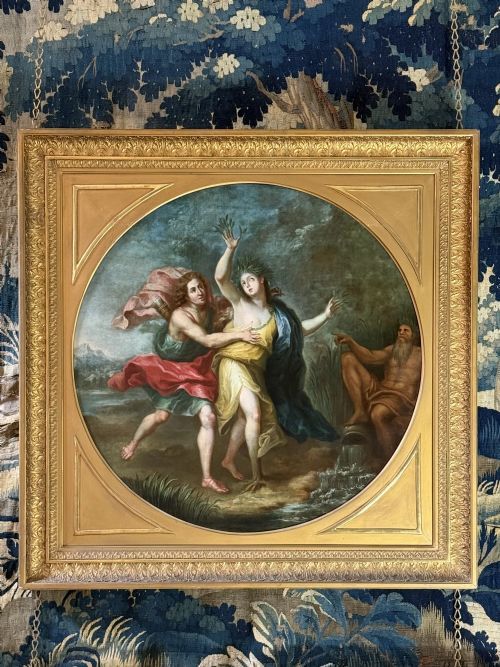
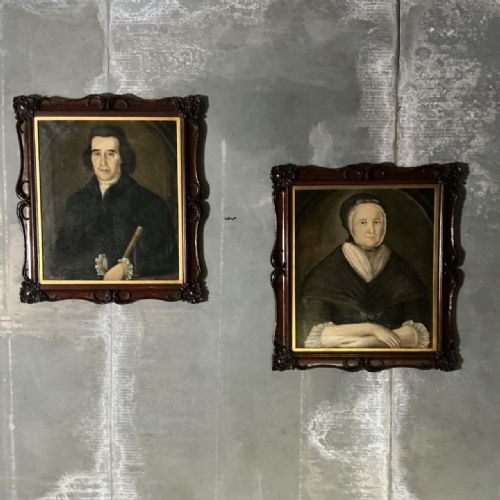
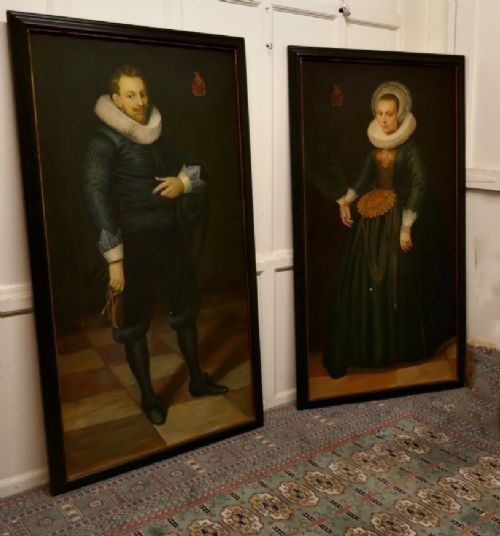
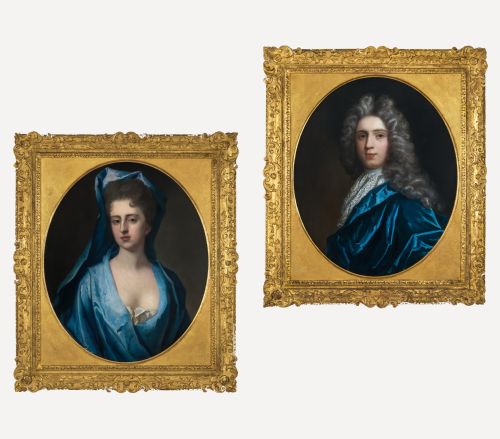
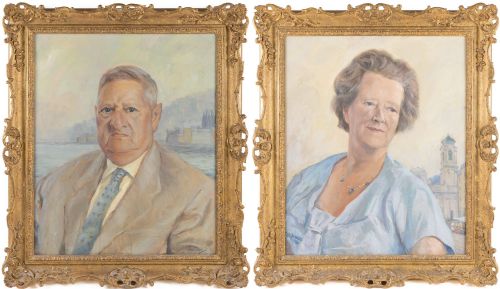
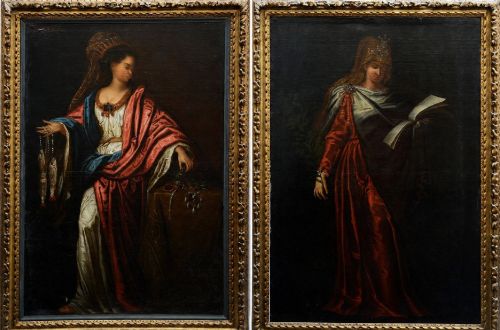
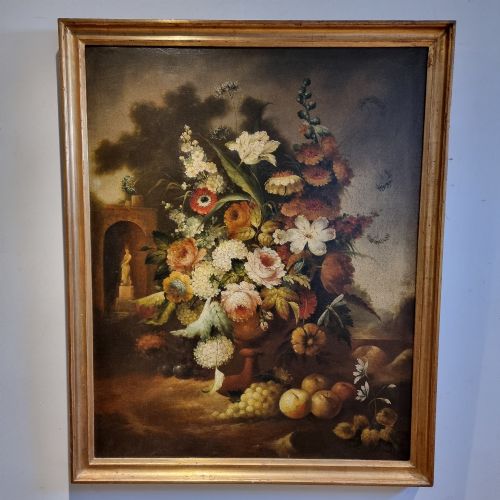
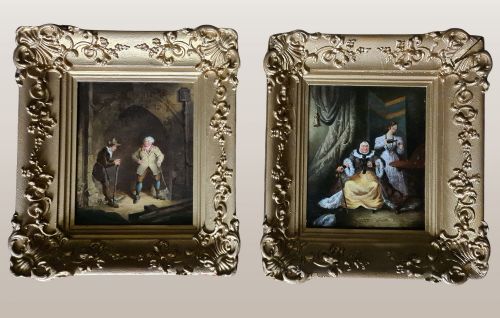
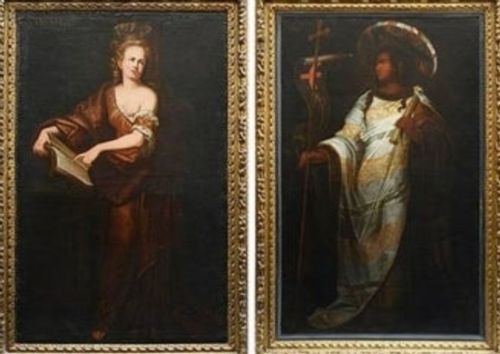
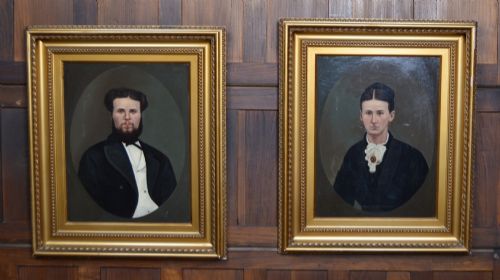
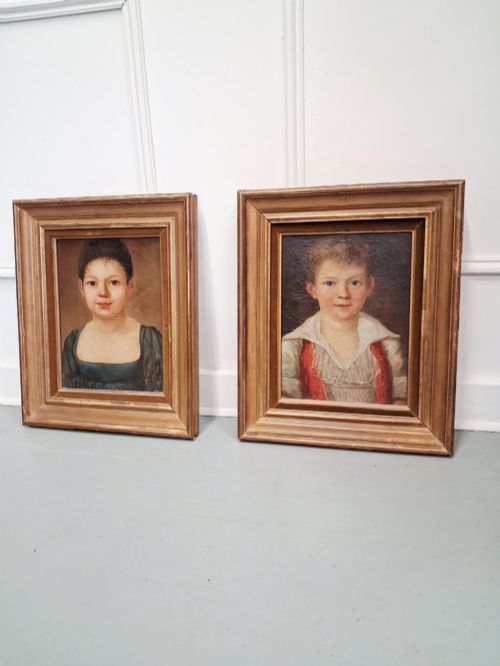
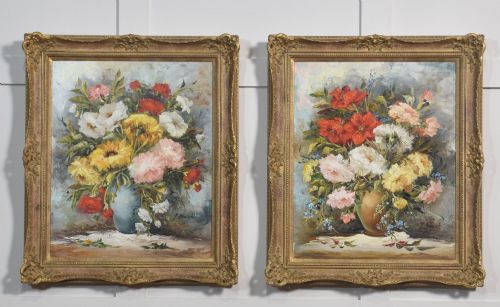
Pair of Oil Canvases
A pair of oil canvases brings symmetry and narrative depth to a room, offering matching artistic visions from centuries past.
Pair of Oil Canvases
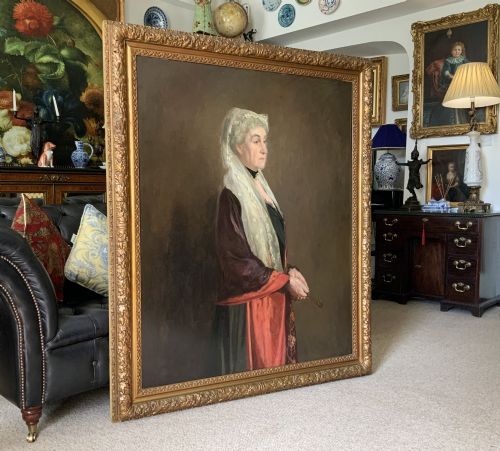
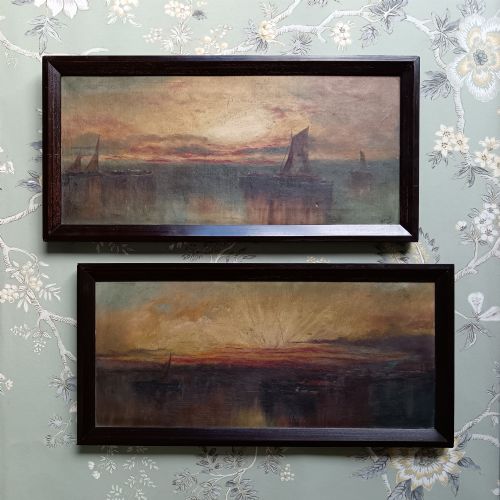
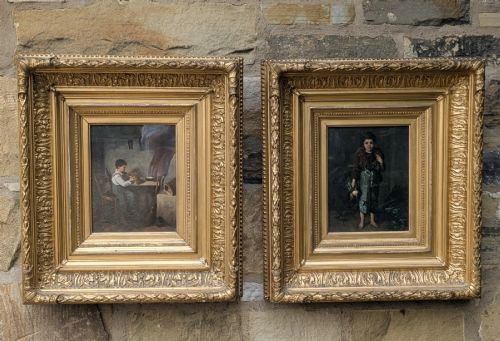
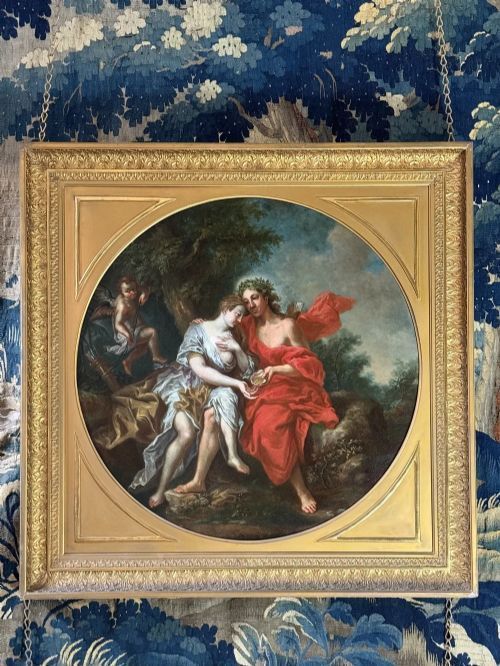
A pair of oil canvases consists of two matching or complementary paintings created in oil paint on stretched fabric, designed to hang together as a balanced set. Buyers searching for a pair of oil canvases often encounter portraits, pastoral landscapes, maritime scenes, and still lifes from the eighteenth, nineteenth, and early twentieth centuries.
The pieces on this page span diverse aesthetic traditions, including Dutch Golden Age works, Regency portraits, Victorian animal studies, and Edwardian coastal views. Many are housed in their original giltwood or gesso frames, preserving the intentional pairing conceived by the artist or early patrons.
How they were made
Artists built these works using oil paint applied to woven canvas stretched over wooden frames, often supported by ornate gesso and giltwood mouldings. The combination of slow-drying oil pigments allowed for subtle tonal gradations and rich textures that have endured across centuries.
Makers prepared the canvas surfaces with grounds before applying layers of paint to achieve depth in portraits, landscapes, and still life compositions. Original frames constructed from wood and gesso were frequently tailored specifically to house the matching pair.
Pairs range from solemn nobility in ruff collars to mischievous cherubs playing amidst trompe l'oeil settings.
What varies in quality
The distinction between ordinary and exceptional works rests on the surety of the brushwork, the psychological depth of portraits, or the atmospheric harmony in landscapes. Superior pairs demonstrate consistent technical control across both canvases, ensuring neither piece overpowers the other when displayed in tandem.
Preservation of the original canvas support and the integrity of the matching frames significantly influence the standing of a pair. Works retaining their period giltwood surrounds and untouched paint layers command greater regard among collectors.
Charles Antoine Coypel·Michael Dahl·Thomas Murray·Johann Friedrich Voltz·Abraham Hulk I·Gustave De Bréanski·Clarence Henry Roe·Frank Hider·Frederick James Knowles
The Pair of Oil Canvases Glossary
- Canvas
- A heavy woven fabric, typically linen or cotton, stretched tightly across a wooden frame to serve as the foundation for oil paintings. This durable surface accepts multiple layers of ground and pigment.
- Gesso
- A paint mixture consisting of a neutral binder mixed with chalk, gypsum, or pigment, used to prepare wood and canvas surfaces. It also forms the sculpted relief details on decorative picture frames.
- Giltwood
- Wood carved and coated with a thin layer of gold leaf or gold paint. It frequently frames antique oil paintings to enhance their visual weight.
- Trompe l'oeil
- An art technique involving extreme realism to create the optical illusion that the depicted objects exist in three dimensions. It appears in playful decorative compositions on canvas.
- Provenance
- The chronological history of the ownership of a work of art, establishing its authenticity and origin. Documentation of past owners adds historical context to a matched pair.
Pair of Oil Canvases: Frequently Asked Questions
Why were oil canvases painted in pairs?
Artists often created companion pieces to depict contrasting subjects like sunrise and sunset, or to portray married couples and family members together. This balanced arrangement suited the symmetrical interior design preferences of period homes.
Hanging matching works on either side of a fireplace or architectural feature created a sense of visual equilibrium in formal rooms.
How do I care for antique oil canvases?
Keep these paintings away from direct sunlight, high humidity, and rapid temperature fluctuations to protect the canvas and the oil paint layers from cracking or warping. Dust the surfaces very gently with a soft, dry brush without applying pressure.
Avoid using water, chemical cleaners, or modern cloths on either the canvas or the giltwood frame, as moisture can permanently damage historic materials.
How can I tell the period of a pair?
Stylistic clues such as costume details in portraits, brushwork techniques, and the composition of the landscape or still life often point toward a specific era. Additionally, the construction methods of the underlying wooden stretchers and frames offer chronological evidence.
Examining the materials used in the canvas preparation and the ageing of the oil paint helps narrow down the century of creation.