



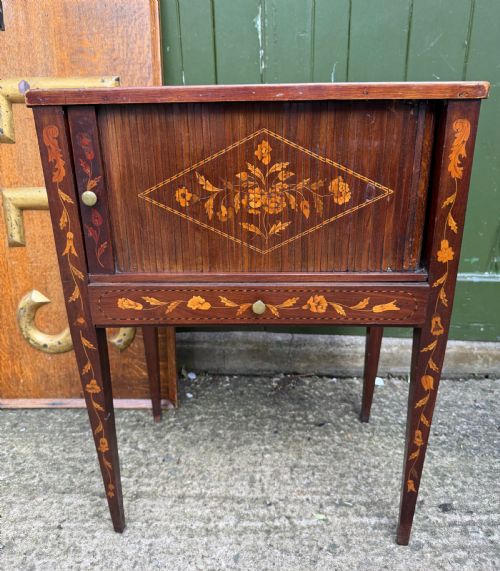

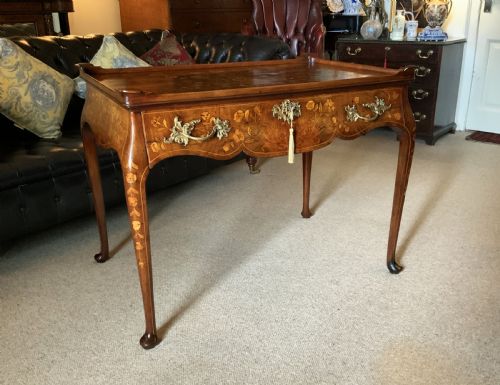


Dutch Floral Inlaid Table
A dutch floral inlaid table brings vibrant marquetry flora and birds into a room through centuries of cabinet-making skill.
Dutch Floral Inlaid Table
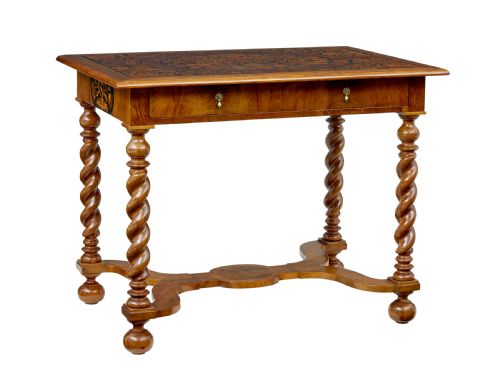
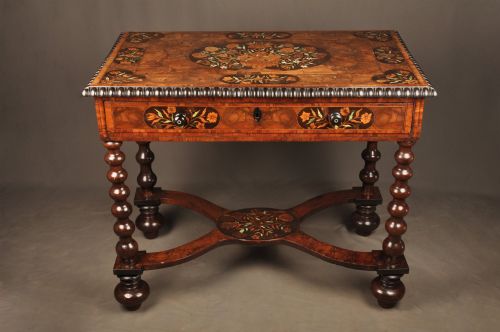
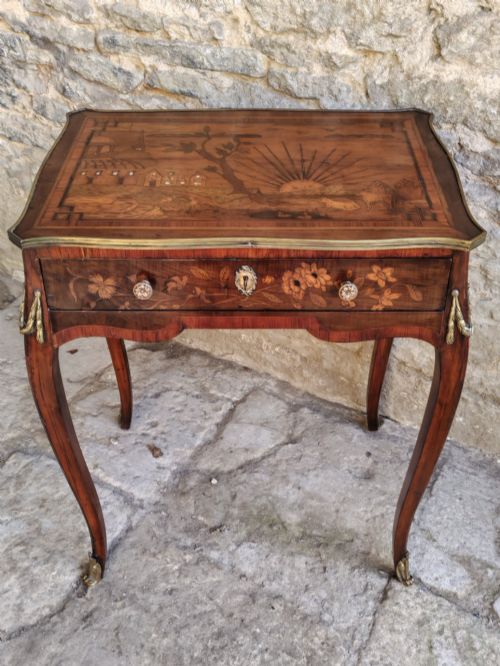
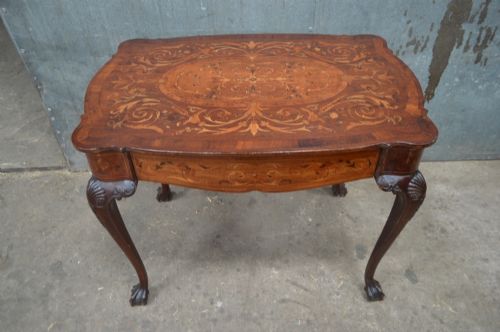
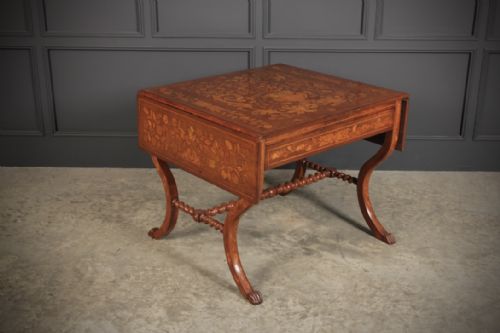
When you search for a dutch floral inlaid table, you encounter a specialised form of antique furniture defined by intricate wood veneers. These pieces emerge primarily from the 17th, 18th, and 19th centuries, capturing periods including the Georgian era and Dutch Baroque.
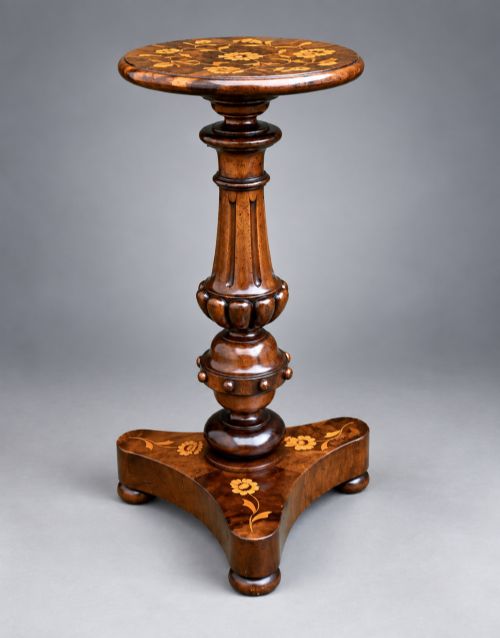
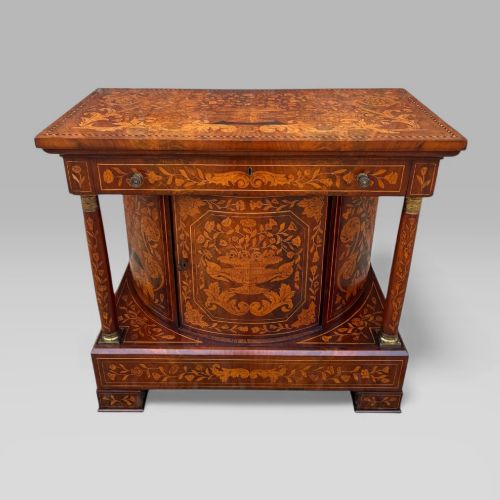
The selection here encompasses side tables, card tables, console tables, desks, and dressing table mirrors. Side tables and card tables appear frequently alongside games tables and console wall tables.
Makers utilised distinct regional styles such as Dutch Marquetry, Dutch Rococo, and Dutch Neo-Classical. The common thread across these forms is the elaborate depiction of floral motifs executed in contrasting timbers.
How they were made
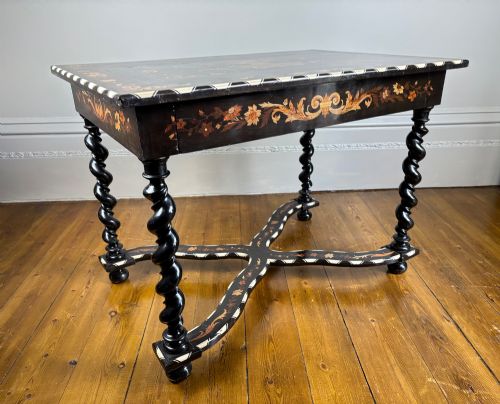
Craftsmen built these tables using foundational woods such as walnut, mahogany, and fruitwood. They applied complex marquetry inlay and fruitwood marquetry over these carcasses to form detailed floral and bird scenes.
Artisans integrated contrasting materials like boxwood, bone inlay, and brass details to delineate petals, stems, and borders. Some examples incorporate glass elements or silver-top surfaces to enhance the visual impact of the floral compositions.
Cabinet-makers shaped these timbers into serpentine fronts, gate-leg frames, and folding card table tops. The meticulous fitting of contrasting veneers required precise hand-cutting to achieve the characteristic pictorial surfaces.
Dutch Floral Inlaid Table Retail Price Guide 2026
Typical asking prices for dutch floral inlaid table among the pieces listed under this phrase on Sellingantiques today, from the lower quarter to the upper quarter. They describe what is for sale here now, not the wider market.
Birds frequently hide among the inlaid blooms, keeping watch over centuries of card games.
What varies in quality
The refinement of the marquetry cutting dictates the upper echelon of these pieces. Superior examples display microscopic precision in the fit of each fruitwood and boxwood leaf, whereas lesser pieces show wider kerf lines and simpler botanical repeats.
The choice of primary timber and secondary veneer creates a distinct hierarchy. Tables fashioned from densely grained walnut or figured mahogany with extensive bone and fruitwood inlay sit above plain fruitwood versions.
Proportion and structural complexity separate standard items from exceptional ones. Serpentine curves, functioning games mechanisms, and integrated architectural drawers demand greater joinery skill than flat-front side tables.
The Dutch Floral Inlaid Table Glossary
- Marquetry
- A technique where small pieces of coloured wood veneer are assembled into pictorial designs. This method covers the top surfaces and drawers of floral tables.
- Fruitwood
- Dense timber derived from fruit-bearing trees such as pear or apple. Artisans valued these woods for their warm tones and smooth grain when cutting floral inlays.
- Serpentine
- A furniture front or table edge shaped with a central concave curve flanked by convex sweeps. This undulating line appears on sophisticated 18th-century walnut tables.
- Gate leg
- A hinged table leg that swings outward to support a folding leaf or table top. This construction supports card tables and games tables in the selection.
- Card table
- A specialised table featuring a fold-over top designed for playing games. These tables often conceal a baize-lined playing surface beneath the inlaid lid.
Dutch Floral Inlaid Table: Frequently Asked Questions
What woods were used in these tables?
Cabinet-makers relied primarily on walnut and mahogany for the main structure and carcase of the furniture.
They added fruitwood, boxwood, and bone veneers to create the contrasting colours needed for the intricate floral and bird marquetry.
How do I identify an 18th-century piece?
Eighteenth-century examples typically display specific period characteristics such as Dutch Rococo or Queen Anne influences, including cabriole legs and serpentine outlines.
They also employ period-specific construction methods and older walnut or mahogany substrates beneath the floral veneer.
Were these tables used for dining?
Most of these tables served decorative or social functions rather than heavy dining purposes. Side tables, console tables, and occasional wine tables held display items.
Card tables and games tables were specifically built for indoor recreation and entertainment.
How do I care for inlaid wood?
Inlaid surfaces require protection from direct sunlight to prevent the fruitwood and boxwood veneers from fading. Maintaining stable room humidity stops the delicate marquetry from lifting or cracking.
Apply traditional wax polish sparingly to nourish the timber without dampening the fine veneer joints.