

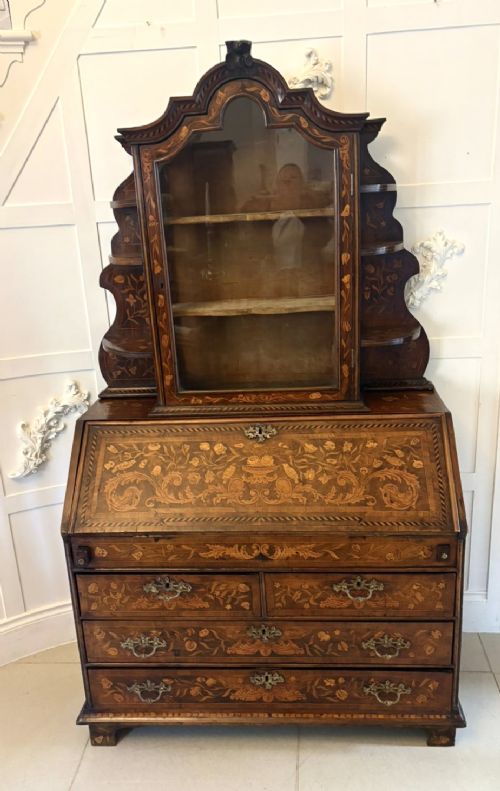
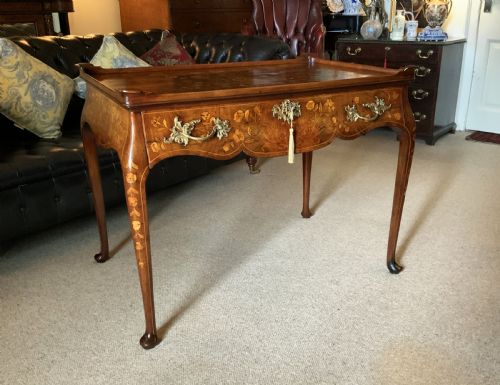


Dutch Floral Inlaid Desk
A dutch floral inlaid desk brings together centuries of meticulous cabinet-making and striking botanical imagery for the collector.
Dutch Floral Inlaid Desk
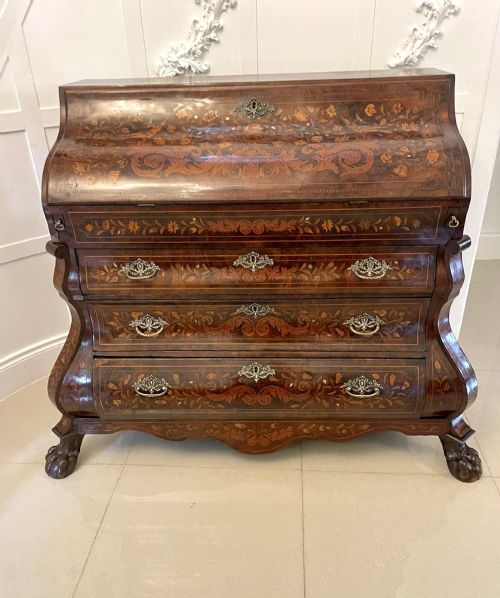
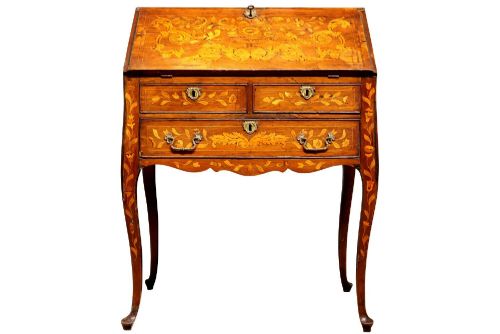
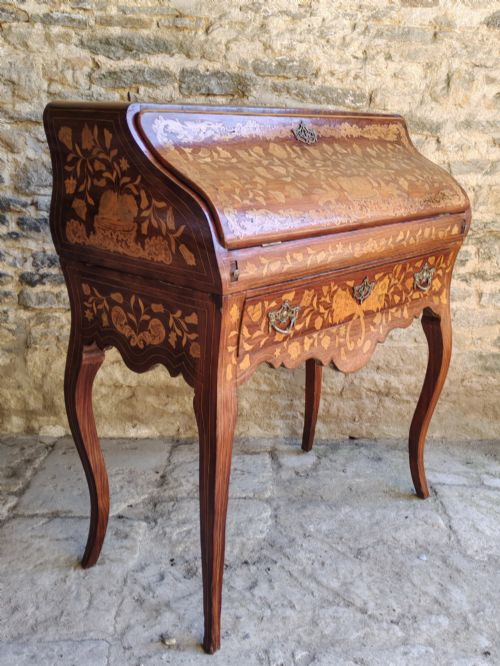
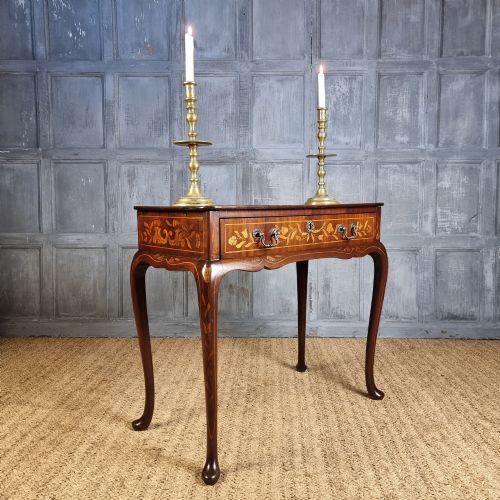
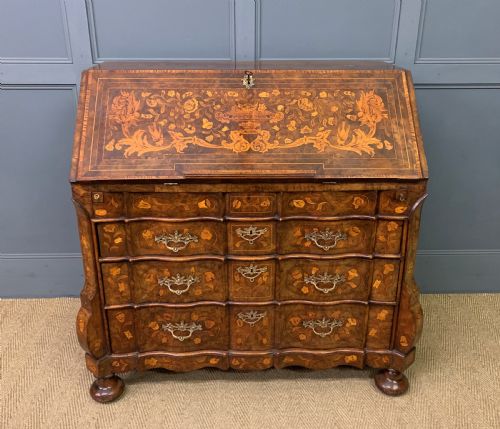
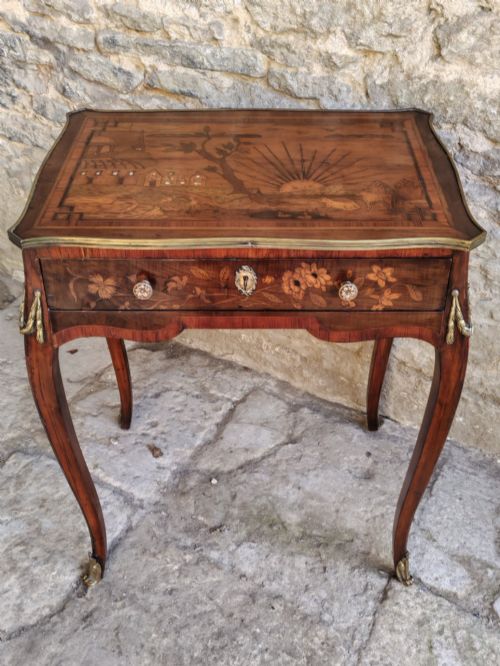
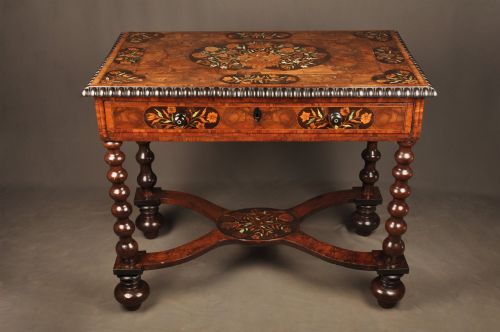
A dutch floral inlaid desk encompasses practical writing furniture embellished with detailed floral marquetry, most commonly appearing as drop-front bureaux, bureau bookcases, and occasional writing tables. These pieces span several centuries, with eighteenth-century examples showing characteristic walnut and burr walnut surfaces alongside nineteenth-century interpretations.
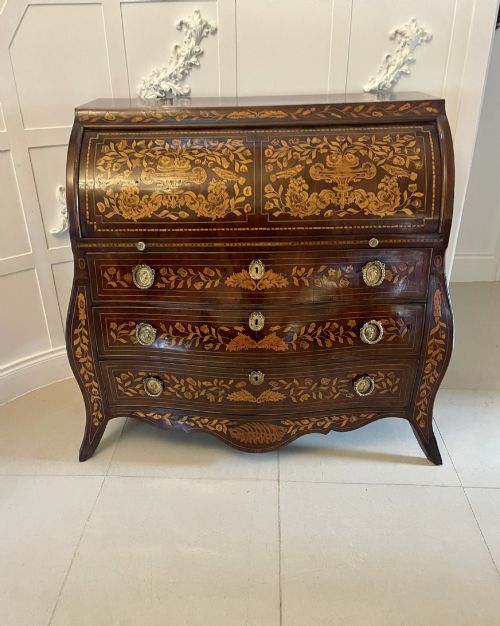
The buyer encounters varied forms on this page, ranging from bombe-fronted writing cabinets to cylinder desks and compact side tables. Eighteenth-century pieces frequently employ elaborate floral and bird motifs across sloping lids, while later nineteenth-century examples continue the tradition of dense fruitwood inlay upon mahogany or walnut structures.
Materials and construction
Makers constructed these surfaces using solid and veneered timbers including walnut, burr walnut, mahogany, and diverse fruitwoods. Artisans applied intricate marquetry and fruitwood inlay directly to the carcase, creating botanical compositions of flowers, leaves, and occasionally birds.
Structural integrity relied upon traditional joinery supporting complex forms like the bombe contour. Certain pieces incorporated supplementary materials such as brass fittings, bone inlay, and glass panel doors for bookcase sections.
Listings feature walnut, mahogany, and fruitwood alongside brass, glass, and bone inlay across multiple centuries.
Craftsmanship and design
The precision and density of the floral marquetry dictate the distinction between standard and superior examples. Finer pieces demonstrate careful selection of burr walnut and fruitwood veneers to achieve naturalistic shading within the floral and bird motifs.
Architectural complexity also defines the range, where bombe-shaped carcases and fully fitted bureau interiors require advanced carpentry skills. The cohesion of the overall design, from the fall-front writing surface down to the supporting legs or bracket feet, separates masterwork furniture from simpler iterations.
Morison of Edinburgh
The Dutch Floral Inlaid Desk Glossary
- Marquetry
- Decorative veneer work arranged in pictorial patterns using various coloured woods. Artisans cut thin pieces of timber and assembled them like a jigsaw puzzle to form floral and avian scenes.
- Bombe
- A swollen, outward-curving profile found on the sides and fronts of certain case furniture. This undulating shape demands advanced woodworking techniques to apply veneer smoothly.
- Bureau
- A writing cabinet featuring a sloping lid that opens to reveal a fitted interior of small drawers and pigeonholes. Many examples in this category incorporate extensive floral inlay across the drop-front surface.
- Cylinder bureau
- A writing desk fitted with a curving, quarter-circle wooden shutter that rolls back to uncover the writing slide and interior compartments. The exterior is frequently decorated with marquetry panels.
Dutch Floral Inlaid Desk: Frequently Asked Questions
How do I date a bureau?
Examine the construction methods, secondary timbers, and overall silhouette to determine the period of origin. Eighteenth-century pieces often utilise walnut or burr walnut with hand-cut dovetails, whereas later nineteenth-century examples introduce different structural traits.
Look closely at the style of the floral inlay and the hardware used on the drawers. Rococo influences and bombe shaping point toward earlier eighteenth-century craftsmanship.
Were these desks used for writing?
These pieces served as functional writing furniture for correspondence and bookkeeping. The drop-front flap or rolling cylinder opened to provide a stable writing surface above organised rows of small drawers.
Secret compartments and pigeonholes inside helped owners store letters and documents securely. Many retained their utility while acting as prominent display pieces in reception rooms.
What is the difference between inlay and marquetry?
Inlay involves setting pieces of wood or other materials into a depression carved directly into a solid wooden surface. The surrounding timber frames the inserted design.
Marquetry creates an entire veneer picture by assembling many small pieces of tinted and figured wood onto a backing sheet before applying it to the furniture carcase.
How do I care for inlaid wood?
Protect the surface from direct sunlight and fluctuating humidity to prevent the delicate fruitwood veneers from drying out and lifting. Maintain a stable indoor environment.
Apply a light microcrystalline wax periodically to nourish the wood and preserve the finish. Avoid using modern silicone sprays or harsh chemical cleaners.