


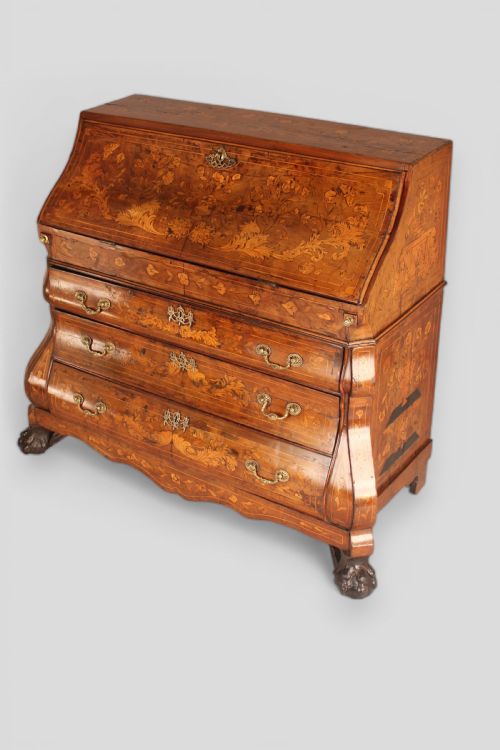


Dutch Floral Bureau
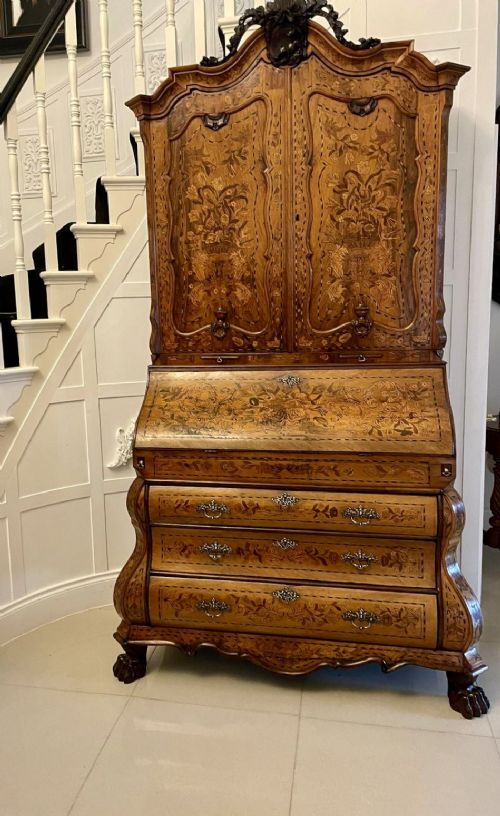
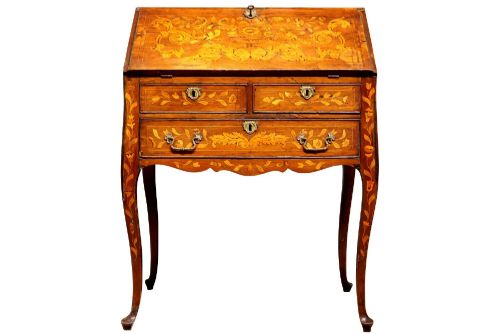
A dutch floral bureau brings together rich woods and elaborate floral marquetry, offering a functional writing slope alongside intricate cabinetwork.
Dutch Floral Bureau
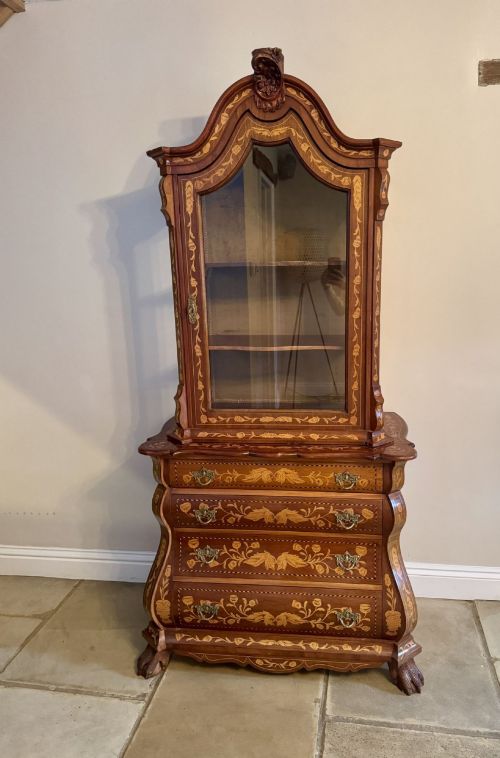
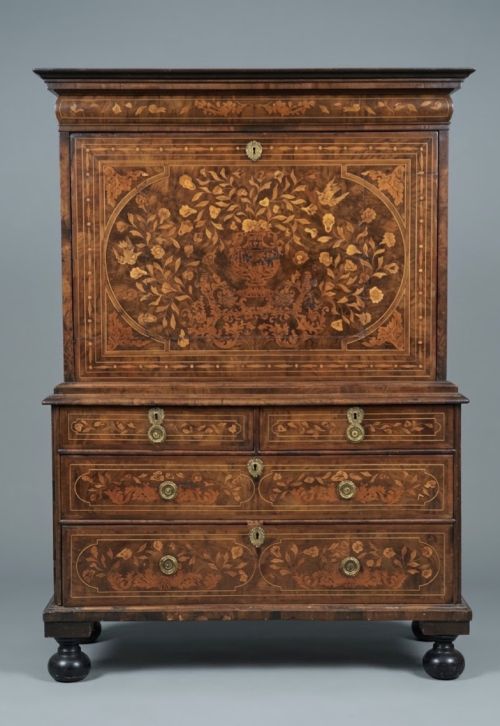
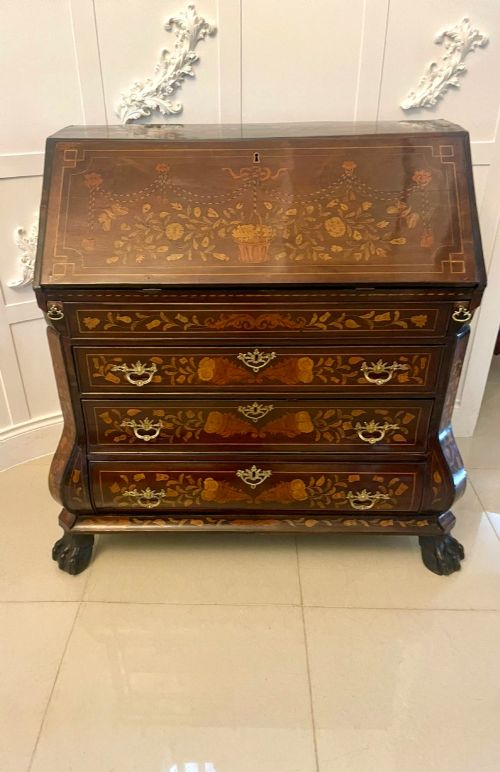
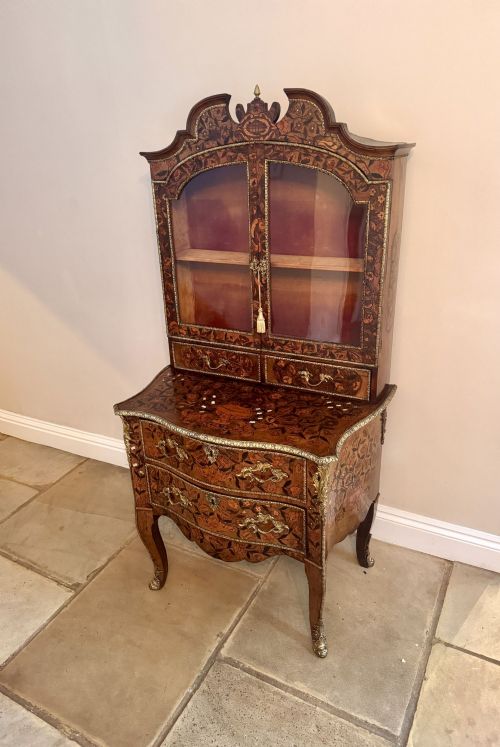
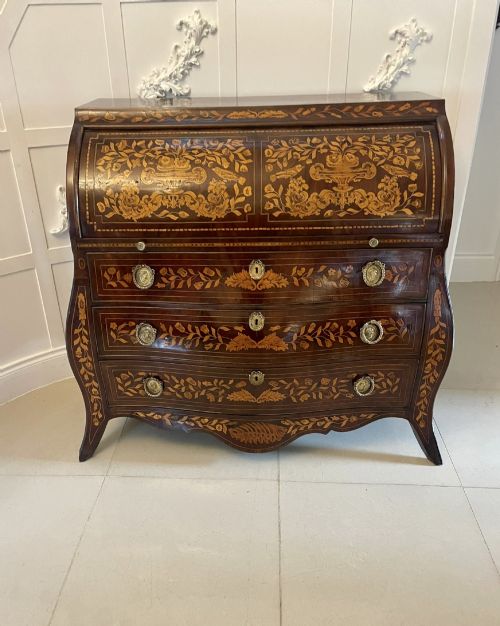
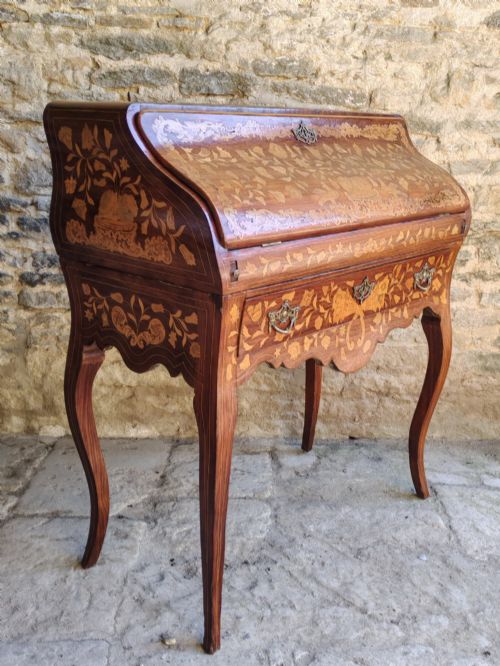
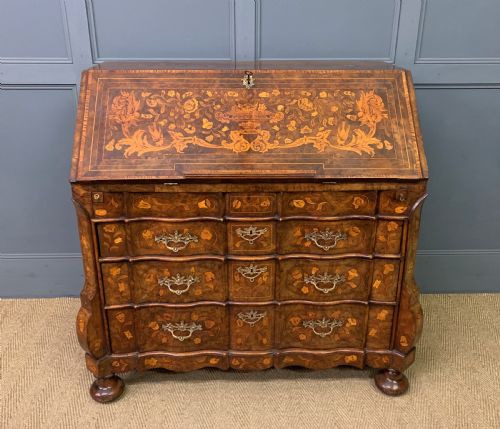
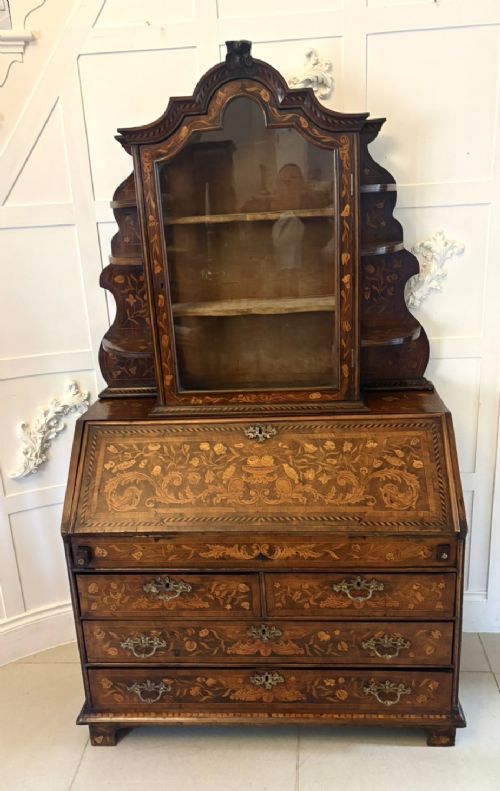
A dutch floral bureau combines a fitted writing desk with storage, frequently taking the form of a slant-front slope, cylinder desk, or an expansive bureau bookcase. These pieces are defined by their substantial presence, combining practical compartments for correspondence with deep drawers or upper display sections.
The versions most commonly met on this page date from the eighteenth and nineteenth centuries, spanning periods such as Georgian and the wider eighteenth century. They frequently appear in walnut, burr walnut, and mahogany, decorated extensively with inlaid floral motifs across the fall front and drawer faces.
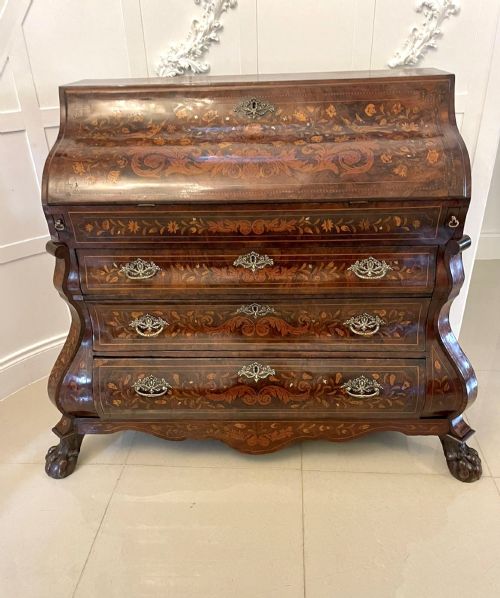
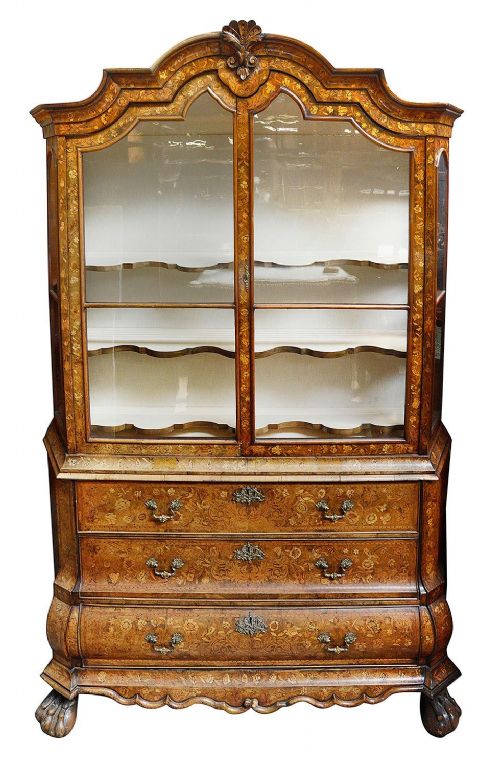
Beyond the standard sloping desk, variations in this selection include bombe shaped fronts and tall cabinet configurations. These forms showcase the traditional craftsmanship associated with Dutch marquetry and cabinetry from distinct historical eras.
How they were made
These pieces rely on solid carcases of walnut, burr walnut, oak, and mahogany, providing a stable foundation for decorative veneers. Cabinetmakers shaped primary woods into bombe profiles and straight fronts using traditional joinery methods suited to heavy furniture.
Surface decoration is achieved through fruitwood marquetry, where contrasting timber veneers are cut and fitted into intricate floral designs. Brass hardware, including drop handles and escutcheons, is integrated to secure drawers and fall fronts.
Dutch Floral Bureau Retail Price Guide 2026
Typical asking prices for dutch floral bureau among the pieces listed under this phrase on Sellingantiques today, from the lower quarter to the upper quarter. They describe what is for sale here now, not the wider market.
Listings span multiple eras, encompassing eighteenth century production, the Georgian period, and nineteenth century revivals.
What varies in quality
The sophistication of the floral marquetry dictates much of the distinction between pieces, particularly the precision of the fruitwood cuts and the complexity of the botanical motifs. Finer examples display tightly rendered petals and stems that flow naturally across the curved surfaces of the bureau.
The choice of primary and secondary timber also separates standard cabinetwork from exceptional production. Pieces utilising highly figured burr walnut or rich mahogany veneers on substantial carcases demonstrate a higher tier of period craftsmanship.
Morison of Edinburgh
The Dutch Floral Bureau Glossary
- Marquetry
- Decorative veneer work where pieces of wood are fitted together to form pictorial designs. On these pieces, floral patterns dominate the surface.
- Bombe
- A swelling, convex curved shape found on the front and sides of furniture. This contour requires advanced woodworking skill to veneer successfully.
- Bureau
- A writing desk featuring a sloping hinged lid that opens to reveal pigeonholes and small drawers. Many examples sit upon a chest of drawers.
- Secretaire
- A piece of furniture containing a drawer or compartment that pulls down to serve as a writing surface. It often conceals fitted interior compartments.
- Escritoire
- A traditional writing cabinet with a fall-front flap. It serves a similar function to the bureau but generally maintains a more architectural cabinet form.
Dutch Floral Bureau: Frequently Asked Questions
How were these bureaus used historically?
These desks functioned as private spaces for managing correspondence, keeping accounts, and storing important documents. The internal pigeonholes and small drawers organised stationery and letters.
The sloping lid provided a firm surface for writing when open, and concealed the private compartments from view when locked shut.
How do I style a bureau in a room?
Placing a bureau against a clear wall allows the detailed floral marquetry and shaped front to serve as a focal point. Pairing it with a simple, understated chair lets the cabinetwork command attention.
The upper surface or accompanying bookcase top can hold subdued lighting or a few curated objects, keeping the visual weight balanced.
How do I tell different periods apart?
Eighteenth-century examples frequently showcase pronounced bombe curves and rich burr walnut veneers with naturalistic fruitwood floral inlay. Later pieces from the nineteenth century sometimes adopt more restrained block fronts or revival styles.
Construction details, timber selection, and the complexity of the marquetry patterns help anchor a piece to its specific era of production.