



Dutch Baroque Marquetry Table
A dutch baroque marquetry table brings extraordinary floral veneers and rich dark timbers into a room, offering both a functional surface and a dense display of period artistry.
Dutch Baroque Marquetry Table
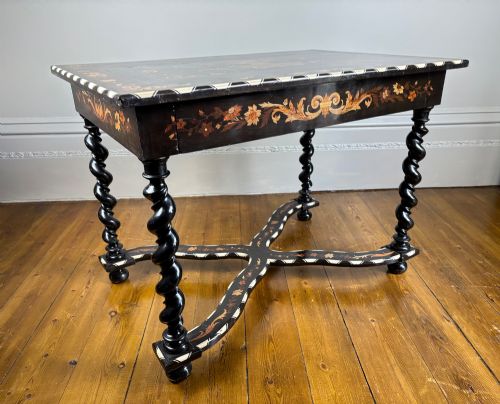
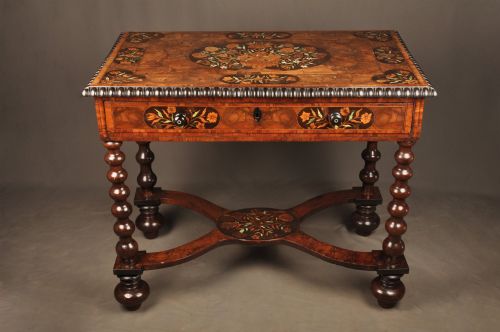
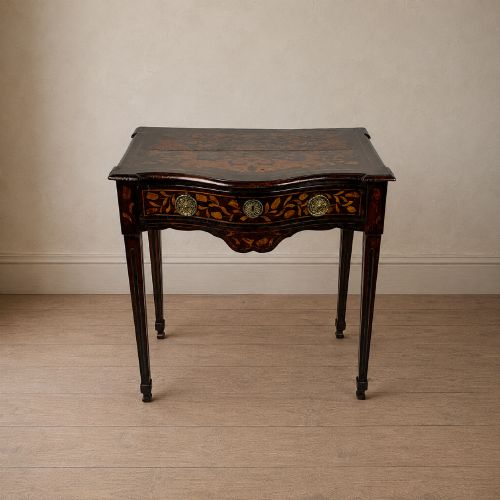
When you search for a dutch baroque marquetry table, you encounter heavy timber forms adorned with intricate floral and scrollwork designs spanning the seventeenth and eighteenth centuries, alongside later nineteenth century revivals. These surfaces range from expansive centre tables and architectural writing desks to folding card and games tables with clever folding leaves or dog eared corners.
The dominant examples found here lean heavily on walnut, oak, and ebonised wood foundations, overlaid with elaborate fruitwood marquetry and occasional bone inlay. You will meet sturdy draw leaf dining tables, serpentine side pieces, and compact dressing tables, each demonstrating the deep historical roots of Netherlandish cabinet making across multiple centuries.
How they were made
Cabinet makers constructed the foundational carcases of these pieces using sturdy timbers like oak and walnut, establishing a robust framework capable of supporting elaborate surface decoration. Over these stable wooden bases, artisans applied finely sliced fruitwood marquetry veneers, carefully arranging contrasting natural grains to form detailed floral patterns, urns, and scrolling foliage.
Detailing was further enhanced through the use of ebonised wood for stark visual contrast, alongside occasional bone inlay to highlight specific motifs within the intricate parquet and floral designs. Traditional joinery techniques held the draw leaves, folding card table tops, and serpentine aprons together without relying on modern synthetic adhesives.
Dutch Baroque Marquetry Table Retail Price Guide 2026
Typical asking prices for dutch baroque marquetry table among the pieces listed under this phrase on Sellingantiques today, from the lower quarter to the upper quarter. They describe what is for sale here now, not the wider market.
Some tables hide clever folding mechanisms and secret compartments beneath their flowery veneers, built specifically for centuries-old card games.
What varies in quality
The distinction between ordinary and exceptional specimens rests primarily on the crispness and complexity of the fruitwood marquetry cutting, where tighter joints between contrasting veneers signal superior workshop execution. Simpler geometric parquetry yields to dense, meticulously shaded botanical compositions that demand advanced skill from the artisan.
Structural integrity of the underlying walnut, oak, and ebonised carcase dictates longevity, particularly in moveable formats like draw leaf dining boards or folding games tables where hinges and sliding frames experience friction. The subtle interplay of natural timber tones and the survival of original bone inlay details elevate certain examples far above standard production.
The Dutch Baroque Marquetry Table Glossary
- Marquetry
- Decorative veneer work cut and fitted into intricate patterns resembling a picture on wood surfaces. It utilises various tinted woods and fruitwoods to create detailed floral or architectural motifs.
- Parquetry
- Geometric mosaic woodwork used for flooring or table tops, formed by geometric patterns of wood blocks. It creates repeating symmetrical shapes across the surface.
- Ebonised wood
- Timber treated with a dark stain or finish to imitate ebony. It provides a dramatic, deep black contrast against lighter fruitwood marquetry.
- Bone inlay
- Small pieces of carved bone inserted into recesses within the wooden surface to highlight specific details. This technique adds bright white accents to dark timber backgrounds.
- Draw leaf table
- A dining or centre table equipped with pull out leaves stored beneath the main surface. It allows the top area to expand smoothly when needed.
Dutch Baroque Marquetry Table: Frequently Asked Questions
How do I use a marquetry table daily?
These tables function well as central display surfaces in reception rooms or as functional side and card tables when entertaining. Their decorative tops deserve protection from heavy daily wear and moisture.
Using coasters and avoiding direct sunlight helps preserve the delicate fruitwood veneers and ebonised finishes over decades of everyday domestic life.
How do I distinguish seventeenth from nineteenth century pieces?
Seventeenth century examples typically show heavier construction timbers like oak and walnut combined with simpler, deeper relief marquetry and robust draw leaf mechanics. Nineteenth century revival pieces often exhibit cleaner internal construction methods alongside brighter fruitwood colour variations.
Examining the underside joinery and the ageing characteristics of the wood reveals the true manufacturing era.
What is the difference between a centre table and a side table?
A centre table is finished on all sides so it can stand freely in the middle of a room, showcasing elaborate marquetry across the entire top. A side table is generally designed to sit flat against a wall.
This distinction affects how the decorative floral veneers are arranged and whether the back edge receives the same detailed attention as the front.