



Dutch Baroque Armoire
A dutch baroque armoire is a heavy timber storage piece built for linens, carrying centuries of walnut, oak and marquetry in its bold panels.
Dutch Baroque Armoire
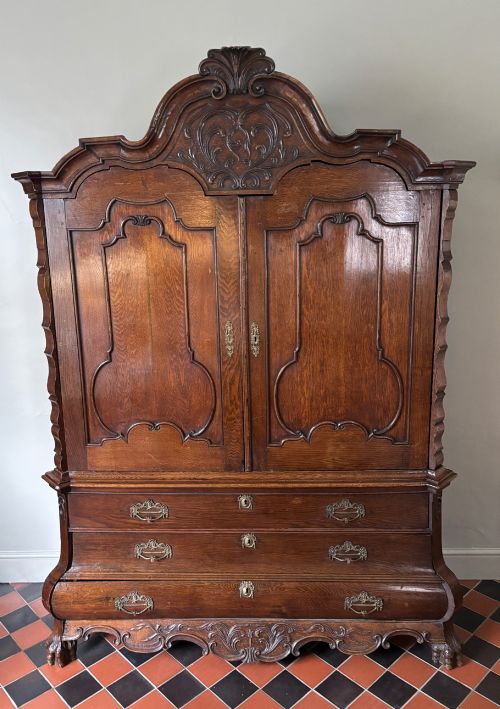
When you search for a dutch baroque armoire, you find large timber storage furniture built as linen presses, cabinets and kasten across the seventeenth and eighteenth centuries, alongside later nineteenth-century revivals. These forms originate from the Netherlands and Flanders, appearing in heavy oaks, burr walnut and fruitwoods.
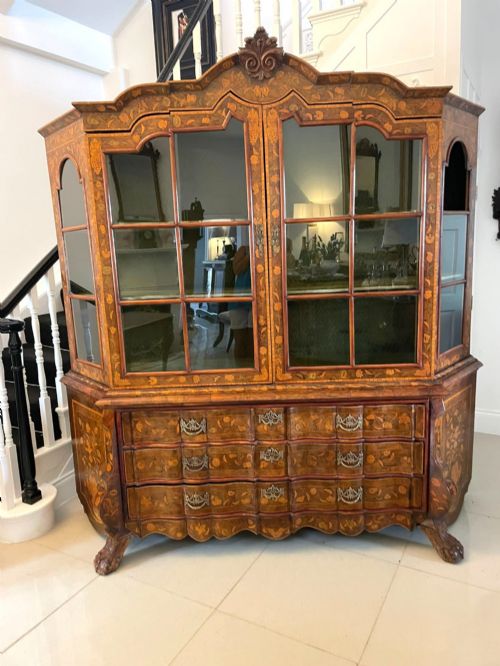
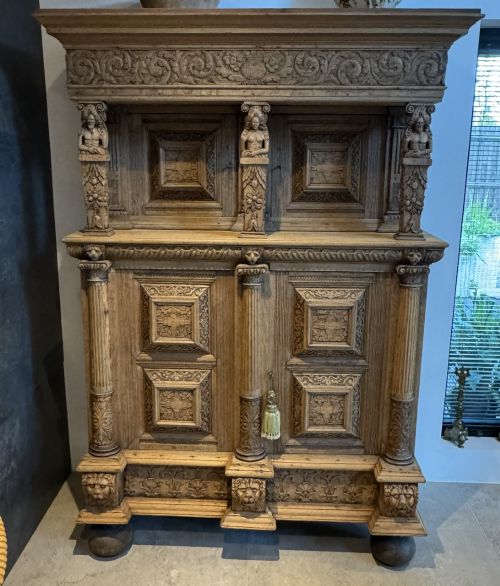
The pieces you meet on this page range from plain seventeenth-century oak examples to eighteenth-century walnut marquetry cabinets with floral inlay and nineteenth-century burr walnut interpretations. They serve primarily as deep cupboards and linen presses, often featuring distinct architectural proportions and substantial panel construction.
How they were made
Constructed primarily from oak, walnut, burr walnut and fruitwood, these pieces utilise dense native and imported timbers decorated with rosewood and ebony veneers. Cabinetmakers built the primary carcase in solid timber before applying elaborate marquetry panels and floral inlay.
Iron and brass hardware secures the heavy doors and internal shelving, while specialist joinery techniques accommodate the massive proportions of the kussenkast and linen press forms without warping the timber.
Listings feature pieces spanning the seventeenth, eighteenth and nineteenth centuries, constructed from oak, burr walnut, fruitwood, rosewood and ebony.
What varies in quality
Quality rests in the depth of the timber figure, particularly where burr walnut and intricate floral marquetry determine the visual weight of the facade. The crispness of the architectural mouldings and the precision of the ebony and rosewood contrasting details set the finer examples apart.
The integrity of the structural joinery in the heavy carcase dictates longevity, distinguishing standard utility cupboards from master-carved regional pieces produced during the seventeenth and eighteenth centuries.
The Dutch Baroque Armoire Glossary
- Kast
- A large Dutch or Flemish wardrobe or cupboard used primarily for storing linen and household valuables. These pieces typically feature deep proportions and substantial panelled doors.
- Marquetry
- The art of applying decorative veneer slices in various timbers to form pictorial or floral patterns. Walnut and fruitwood veneers are common in these designs.
- Linen Press
- A tall cabinet fitted with internal shelves specifically designed for pressing and storing household linen. They often sit on a lower chest base.
- Kussenkast
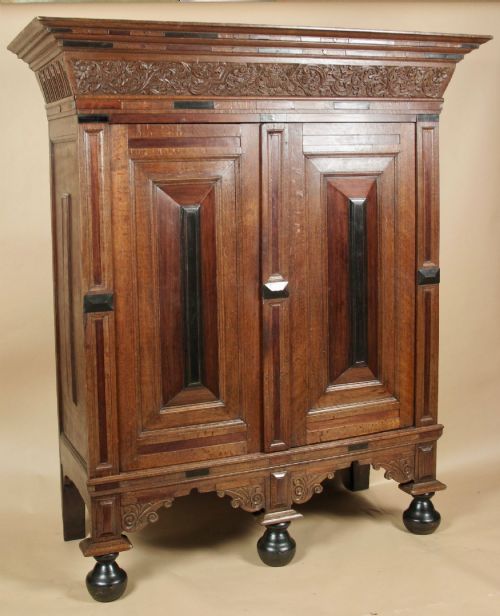
- A distinctive seventeenth-century cupboard type featuring cushion-moulded panels on the doors and facade. These mouldings project boldly from the surface.
Dutch Baroque Armoire: Frequently Asked Questions
What is a dutch baroque armoire used for?
These large timber pieces serve primarily for storing household linens, garments and valuables behind heavy panelled doors. Their deep internal shelving accommodates bulky textiles.
Historically, they formed the central storage fixture in prosperous European households, combining display with utilitarian function.
How do I date a dutch baroque armoire?
Dating relies on timber selection, joinery methods and decorative styles spanning the seventeenth through nineteenth centuries. Early pieces utilise heavy oak and ebony details, while eighteenth-century examples favour burr walnut and floral marquetry.
Nineteenth-century revivals often adopt lighter internal constructions while imitating earlier baroque proportions and decorative motifs.
What is the difference between an armoire and a kast?
A kast is a specific regional Dutch or Flemish form with particularly heavy architectural mouldings and deep storage capacity. Armoire is a broader term applied to large wardrobes and linen presses.
Both serve the same primary storage function but exhibit distinct regional carpentry traditions from the Low Countries.
How do I care for a walnut and marquetry cabinet?
Keep the timber away from direct heat sources and sudden humidity changes to protect the delicate veneer and marquetry inlay. Regular dusting with a dry cloth preserves the polished surface.
Avoid commercial polishes that can build up residue over the traditional timber finishes.