


Dublin Furniture
Dublin antique furniture brings heavy Irish timber and crisp carving straight into a room, offering genuine regional character for any interior.
Dublin Furniture
When a buyer searches for dublin antique furniture, they are looking at case pieces, seating, and tables originating from Irish workshops during the Georgian, Regency, and Victorian eras. These items display distinct local cabinet-making traditions that set them apart from standard English equivalents of the same period.
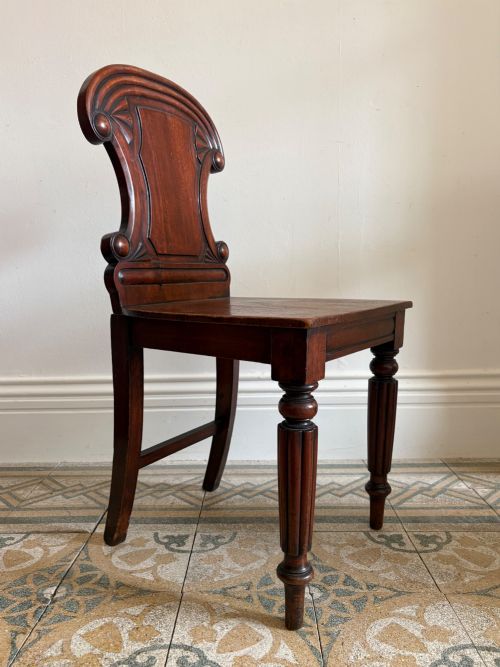
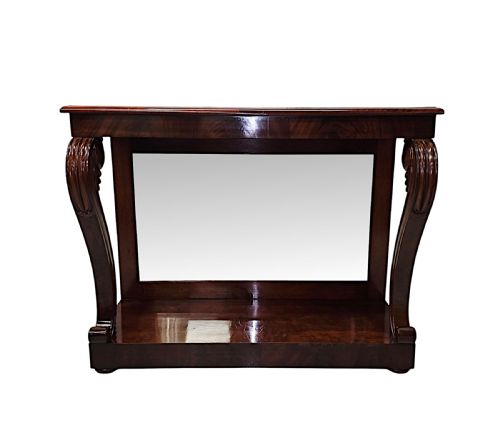
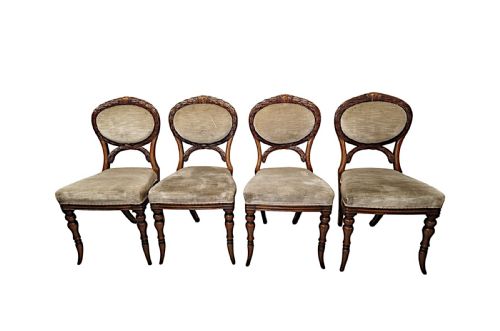
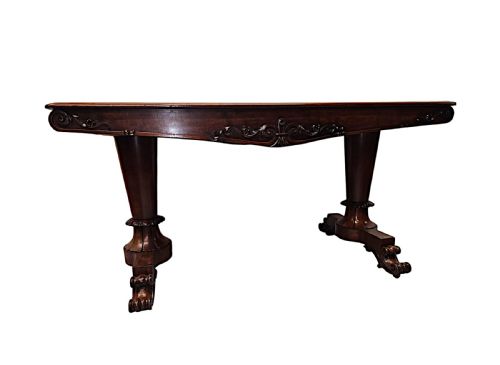
The pieces listed on this page span several decades, featuring console tables, library tables, dining chairs, and cellarettes. Mahogany remains the dominant timber, often enhanced by rich grain and solid construction.
Makers and workshops from the Irish capital left distinct marks on their output, ranging from grand serving tables to intimate tea poys. Buyers encounter both labelled pieces and attributions that point directly to notable Dublin cabinet-makers.
Materials and Technique
Makers utilised solid mahogany and oak for structural integrity, shaping heavy timber into robust dining chairs, breakfront wardrobes, and library tables. Giltwood and gesso appear on decorative mirrors, while brass fittings and velvet upholstery complete the finer surfaces.
Carving technique defines much of this furniture, showing deep relief work on console tables and serving tables. Workshops employed skilled joiners who relied on pegged joints and substantial secondary woods to anchor large case pieces.
Mahogany and oak dominate the timber selection across these Dublin listings, appearing alongside brass, glass, and velvet elements.
Judging Quality and Origin
The presence of an authentic stamp or label from a notable Dublin firm elevates a piece, connecting it directly to documented workshops. Maker marks offer clear provenance that separates ordinary regional items from significant examples.
Depth of carving and timber selection dictate the upper tier of the range, where dense mahogany displays strong figuring and crisp secondary mouldings. Lesser pieces show simpler lines and standard secondary timbers without distinct workshop markers.
Gillingtons of Dublin·Strahan of Dublin·Williams and Gibton·Hicks of Dublin·Robert Strahan and Co·Arnott and Co Dublin
The Dublin Furniture Glossary
- Cellarette
- A low cabinet or box designed to hold bottles of wine near the dining table. They often feature fitted interiors and heavy timber construction.
- Console Table
- A wall-mounted or freestanding table designed to sit against a flat surface, frequently topped with marble or carved wood. These pieces often feature elaborate apron carvings.
- Teapoy
- A small stand or caddy used for holding tea, typically supported on a central pillar with tripod legs. They reflect the high status of tea in period households.
- Giltwood
- Wood that has been coated with gold leaf or gold paint for decorative effect. This finish appears frequently on period mirrors and console frames.
- Secretaire
- A cabinet or desk featuring a pull-down writing flap that conceals small drawers and pigeonholes. These items combine storage with a dedicated writing surface.
Dublin Furniture: Frequently Asked Questions
How do I identify Dublin furniture?
Look for specific regional timber choices, deep carving styles, and workshop stamps or paper labels attached to the frame. Many pieces share structural characteristics unique to Irish cabinet-makers working in mahogany and oak.
Documentation or attribution to local firms provides further confirmation of origin. Comparing the secondary woods and joinery against known examples helps verify the piece.
What rooms suit a library table?
Library tables work well as freestanding centre desks in home offices, studies, or spacious living rooms. Their finished backs allow them to sit comfortably in the middle of a space rather than pushed against a wall.
The substantial proportions and large top surfaces also make them practical for everyday workspace needs. Pairing them with period dining chairs creates a functional historic setup.
How should I care for mahogany?
Keep mahogany furniture away from direct sunlight and heat sources to prevent the timber from drying out and splitting. Regular dusting with a soft, dry cloth preserves the finish without building up heavy wax residues.
Maintain a stable room humidity to protect the joints and polish. Avoid placing damp items directly onto the wood surface.
Are Irish Regency pieces different?
Irish Regency furniture often incorporates heavier proportions and bolder carving than contemporary English work. The local interpretation of classical motifs results in distinct profiles on table legs and frame borders.
Craftsmen utilised high-grade local and imported timbers to achieve a solid, imposing finish. This regional variation gives the pieces a distinct presence.